“It all gets blurred,” Melanie Lischker’s father responds early in her film Life On Tape (Bilder (m)einer Mutter, a world-premiere in DOK.deutsch competition) when the director asks about her mother Gabi. It’s many years since Gabi ceased having a role in the family and memories of her are growing very indistinct.
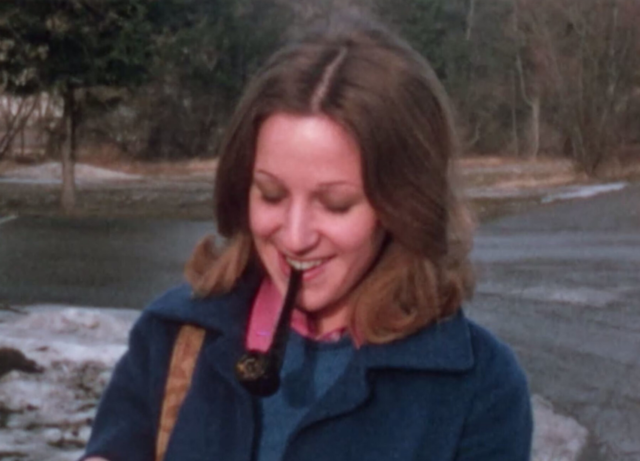
However, Lischker discovered a huge archive of home movies that her father had built up over the years. These include images of her mother when pregnant with her. There are diaries too, full of raw and confessional entries.
The director first watched the old hi-8 video cassettes her father had shot of the family in 2015. “I couldn’t really find any close moments of me and my mother. I didn’t really miss my mother but I heard what a mother should be from the voice of society…so I started to research why my mother was so different from how a mother should have been. Then I went deeper into the story and asked the questions that have never been asked before,” the director explains how she started working on the documentary.
For 20 years, Lischker and her brother had never talked about the death of their mother. This was one of the great taboos in their family.
“I wanted to hear his (her brother’s) memories. I recorded that very, very first call to him. This is what you find in the film,” Lischker says. “And I wanted to know if my mother was as she was in the videos. I wanted to know if that was the real her.”
How does the director feel about exposing such personal material in a documentary that will be watched by many strangers?
“I don’t want to show my personal life to the audience. I really don’t want to. But there is no other way sometimes,” the director reflects. “You can’t exclude the parts that make you uncomfortable…I knew the story of my mother would have had a huge impact on others too and this is what makes it worth it.”
Her mother grew up in a small conservative town in Bavaria. This was the era of the women’s movement but the “new wave of emancipation” sweeping across the rest of the country was very slow to arrive there. She eventually went too Munich to study to become a teacher – but soon decided this wasn’t the career for her.
The director sees her mother as an emblematic figure whose struggles were similar to those of many other women in Germany at the time. She had the dream of throwing off the shackles of her provincial background and “living the high life.” Sadly, this didn’t happen. She had a lot of dreams and plans, few of which she was able to fulfil.
As Gabi put it in her diary, she was “never really free” but was always “bound by invisible threads.” She wanted to be liberated, happy and to focus on herself. Instead, she was confronted with parenthood and domestic drudgery. She realised the kids always had to come first.
“I wish I could just drop everything and go away,” she said of her claustrophobic existence as a young mother and housewife. And as she distanced herself from her family, fate had some cruel tricks left to play on her and her body…
Lischker has recently shown the film to her brother. “He gave me a really, really nice feedback. He said ‘if I had known this all before, I would have seen everything in another perspective.’”
The director is planning a new film on the women’s movement. She is also contemplating a loose sequel to Life On Tape. This will be “about how you grow up without a mother as a role model.” The working title is My Teenage Years. And, yes, there is plenty more home movie footage to draw on.
“This is all documented because my whole life is documented on video – so I’m thinking about making this second part.”
Lischker has already been working on another project, #Staythefuckathome, a pandemic documentary about people in isolation.
“It was a very spontaneous idea,” the German director says of the film which looks at how people [primarily women] all over the world have been coping with the loss of freedom caused by the Covid lockdowns over more than a year of their lives. “We go with the flow. We want to see how this ends,” she says of the project.
Life On Tape was made through Koberstein Film and co-produced by WDR and ARTE and world-premiered at DOK.fest Munich. The music for the film was composed by Jens Heuler and Freya Arde, featured in this in German Films’ Face to Face programme of film talents.