Photo: FrankieF
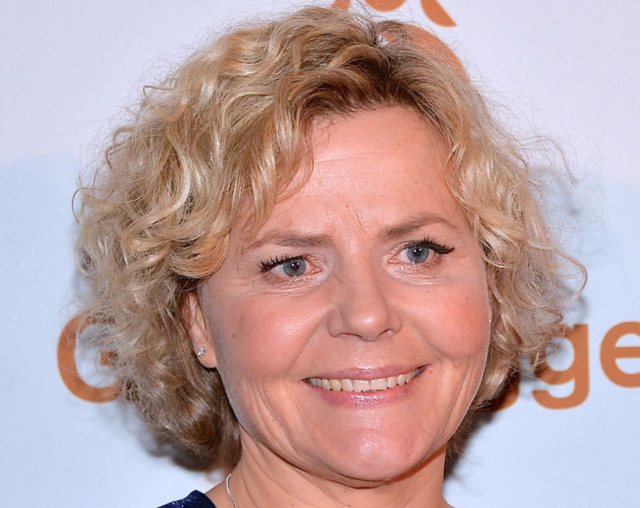
After 10 years, pioneering film executive and equal rights campaigner Anna Serner will be stepping down from her position as CEO of the Swedish Film Institute later this autumn. On the eve of Sunny Side Of The Docs, which will include her contribution to the June 21 Diversity panel, Serner looks back at a decade in which there has been huge change within the global film industry.
“It’s a mix of a lot of emotions,” she sums up her feelings as she prepares to leave the SFI. “One is a kind of sadness, because I really, really love my job…”
This has been all-encompassing work. The Swedish Film Institute isn’t just Sweden’s main funder for film production. It is also responsible for everything from film literacy to film heritage, from overseeing the national film archive to running the cinematheque. “There are so many aspects. I believe I have one of the most privileged and stimulating jobs you can ever have,” Serner states.
“At the same time, it is a relief because, of course, having a lot of power is always very demanding and you are always the target of a lot of emotions…it’s a relief not to have to carry the burden of everyone’s opinions, because there’s a lot of opinions.”
Serner believes that those in positions of power at public bodies like the SFI shouldn’t stay in their jobs for too long. It’s to the benefit of everybody if there is constant renewal. This wasn’t a philosophy shared by SFI founder Harry Schein, who stayed on as its managing director from 1963 to 1978.
Serner will be taking part in a panel June 21 at Sunny Side Of The Doc titled “Diversity: The initiatives driving action, not just talk! “ This is one subject she is supremely well qualified to talk about. Long before the Harvey Weinstein scandal and the start of the #MeToo Movement, Serner launched the 50/50 programme in Sweden. This was the initiative designed to ensure that at least half of all films in Sweden were written, directed and produced by women.
The SFI CEO seemed ahead of the curve then and is encouraged by what has changed over the last 10 years.
“That really is something energising. Of course, there is so much more that has still to be done,” Serner says. She expresses her satisfaction that “the big streamers, who are kind of the new world, have adapted into diversity, inclusion and gender equality with full force.”
When Serner launched her action plan for gender equality in Cannes in 2013, it was greeted with scepticism. There was a press event on the beach followed by a party to mark the 50th anniversary of the Swedish Film Institute.
“There were some journalists coming but everyone was heading for the bar. They didn’t listen to us because they wanted to go to the party. I was standing on the stage, talking to almost no-one,” Serner remembers. Nonetheless, the impact was immediate. In the following years, big names like Cate Blanchett, Meryl Streep, Patricia Arquette and Emma Watson began to talk openly at events like the Oscars about the real experience of being a woman in the film industry.
“We [at the SFI} were already out there, talking about it and that gave us more spread and more impact.”
As other individuals and organisations spoke out about gender equality, they would often cite Serner and her team as an inspiration.
The change has been seismic. Now, every self-respecting festival will make sure it has women on its juries while organisations like Netflix have put in place diversity and inclusion plans.
Serner sees the next 10 years as “both an opportunity and a threat.” In periods of turbulence, many will cling to what they know – which (Serner believes) is often the old, outdated attitudes. That’s the downside. “But, on the other hand, when everything is turned upside down, and you have nothing to lose, you can really do the change. So, of course, I hope it will be the latter which will be the trajectory in this matter.”
The outgoing SFI CEO says that everyone still has their “blind spots.” In Sweden, for example, there have been rapid gains in gender equality. However, when it comes to racial inclusion, the country is “lagging.”
“We were a very closed country,” Serner reflects on why this is the case. Immigration numbers have risen sharply in recent years. “It has become very obvious for us now that when we show only white people on the screen, that is not how Sweden looks like any more.”
If cinemagoers don’t “recognise the films to be contemporary, they don’t believe in the films. That has meant the bigger Swedish films have lost a lot of audience,” Serner points out the credibility problems facing some local movies that don’t fully reflect the society around them.
What’s more, certain depressing trends are still evident. Serner mentions “the money issue…the bigger the budget, the fewer the women.”
She is calling for the Swedish film industry to be made accessible to every part of Swedish society, regardless of “class, geography and cultural background” – and not just to those in “the cities where the public funding is very concentrated.”
“It’s a huge issue that we don’t reach out with public money. There are so many groups in society that just don’t know that we exist. We need to work with the regions.”
Yes, it has been a tumultuous final year at the helm, dealing with the pandemic. However, Covid restrictions have had their upside. “In one way, it has been a very good thing because it made distance disappear. My international relations have really been able to deepen,” she says of the months spent communicating remotely on zoom calls.
“But, of course, the other side of it is that you need to relate to people. It’s much easier to relate to someone you’ve met before when it’s digital. That makes it harder to reach out on a deeper level to new people.”
On a personal level, as a “social and extrovert” person, she has missed the travelling and the physical festivals. She has also been working “harder than I have ever done” during the Covid period. “[But] I shouldn’t complain. I am a privileged person. I have a lovely home I can work from.”
The Swedes have a strong documentary tradition. The country’s docs have consistently been selected for major international festivals. When it comes to gender equality, documentary has often been far more inclusive than fiction. The sector remains in rude health on an artistic level. “But on a financial level, I think documentary has a real challenge,” Serner warns. “Yes, the streamers look for documentaries. But it’s not like they’re jumping onto the documentary production houses in Sweden and buying rights. What they do is take the talents, they keep the rights, keep the profits…”
Documentary makers, Serner continues, are working on “very low salaries.” This isn’t a golden age of plenty for them, in spite of the growing strength of the streamers.
Like many others, Serner was dismayed by the recent decision of the Nordic Council of Ministers to eliminate all support for Nordisk Panorama (NP) in 2022.
“I think that is very strange. This is a Nordic Council of Ministers that has taken the decision to cut down on culture and this very important festival for the Nordic region. That’s not only the place where the films meet an audience in the festival, but it is really the market and forum that is important…we need to make them aware of how important the public funding from our region [is]. If we want to have an independent, and open, democratic, artistic freedom, they [the Nordic Council] need to step up!”