An open letter signed by ‘former’ Sheffield Doc/Fest programmers Juliano Gomes, Qila Gill, Carlos Pereira, Christopher Small, Rabz Lansiquot, Soukaina Aboulaoula and Herb Shellenberger, claims that, within days of the August 19 announcement of Cíntia Gil’s departure as festival director, “we had been silently locked out of our email accounts and all traces of our presence at the festival—names, photos, information about our work—were scrubbed from the website.”
“We received no note of termination, no thanks for our work, no acknowledgement that we had played any role in the 2020 and 2021 editions of the festival, both of which took place in a pandemic. We wrote to the board and, after receiving tepid thanks, we were told that we could reapply for our jobs when the positions were advertised again,” the statement further claims.
The August 19 Sheffield Doc Fest statement said that Cíntia Gil resigned from her position as Festival Director “as a result of artistic differences over the present and future direction of the Festival with the Board of Trustees,” with Director of Partnerships Sylvia Bednarz to act as Interim Managing Director with immediate effect.
This week, Sheffield Doc/Fest announced that new trustees will join the existing board. These are are Fozia Khan, Creative Executive at Amazon Studios; Daniel Gordon, BAFTA-winning Producer/Director; Jennifer Kimber, Head of Policy and Strategy at ScreenSkills; Gali Gold, Head of Cinema at the Barbican Centre, and Beejal-Maya Patel, commissioning editor at BBC Documentaries. The festival also announced that the next edition will run June 23-28 2022.
Today’s [27 August] statement from the programmers continues: “The day after the board responded to our request for clarity, the festival began to advertise passes for the 2022 edition, with no artistic team in place. It will soon reopen filmmaker submissions. At the same time, it has announced a slate of new board members, featuring new representatives from familiar broadcasters and from the likes of Amazon Studios.
“With all this in mind, we note again that there has been no information given publicly on the continuity of the artistic programme, nor on the broader artistic vision recently implemented by Cíntia and the artistic team, both for the arts as well as the film programmes.
“The exchange established between artists and curators over the last two years to develop an artistic approach to various aspects of the festival is now in vain. What is the future of the artistic programme at Sheffield Doc/Fest? How does it fit into the new vision of the board?”
Later they stress: “As programmers, we again question the purpose and ethics of festivals run by boards predominantly made up of broadcasters and commissioners with a vested interest in showcasing projects whose distribution future is already predetermined. We take our cue from Luke Moody, the previous Director of Programming, in his own public comments after resigning from the festival in 2019, in which he noted the intractability of the Sheffield Board of Trustees.”
“We are suspicious of institutions paying lip service to ‘diversity’ whilst simultaneously resisting the essential work that must be done to address systemic issues of exclusion and injustice in the industry. Film festivals like Sheffield Doc Fest should be a tool to deconstruct pathways of power that prioritise one film, one national cinema, one distribution model, one filmmaking movement over another. At its best, festival programming challenges audiences, and the industry, to think critically and to remain open to absorbing perspectives and styles that may be new and unfamiliar.
“The “artistic differences” that here are the basis for transforming Sheffield Doc/Fest are exactly the kind of differences off which a festival must necessarily thrive.
“We are eternally grateful for the opportunity to be part of an artistic team led by Cíntia. We’ve learned from each other and thank her for creating a brave space to listen and learn. Each of our regular meetings to discuss the programme, coming at the start of the year when the pandemic was at its peak in many of our countries, was an oasis.”
The statement in reads in full:
Former Sheffield Doc/Fest Programmers: “What is a film festival even for?”
From 2019 to 2021, we worked in the programming team for Sheffield Doc/Fest. We all joined the festival while Cíntia Gil headed it as Festival Director. We now ask, “What is a film festival even for?”
Last week, it was announced to the press that Cíntia “had left her position” at the festival due to “artistic differences over the present and future direction of the Festival with the Board of Trustees”.
Within a couple of days of the press articles being published, we had been silently locked out of our email accounts and all traces of our presence at the festival—names, photos, information about our work—were scrubbed from the website.
We received no note of termination, no thanks for our work, no acknowledgement that we had played any role in the 2020 and 2021 editions of the festival, both of which took place in a pandemic. We wrote to the board and, after receiving tepid thanks, we were told that we could reapply for our jobs when the positions were advertised again.
Over the past two years, we developed—with Cíntia, associate programmer Agnès Wildenstein, and our international consultants Yu Shimizu, Jeremy Chua, and Jonathan Ali—a programme that was widely recognised in the world of international cinema. It featured many films by BIPoC, LGBTQ+, and young filmmakers. It championed independent filmmakers who were otherwise entirely removed from any pathways of funding or distribution. It featured a Black British Cinema retrospective curated—crucially—by Black British artists and filmmakers. It contained two new competitive strands created for independent British film. It had a thriving International Competition at its centre, promoting international cinema that is diverse in all senses of the word. We hosted the premiere of Questlove’s Summer of Soul and a new film by Mark Cousins, The Story of Looking. The statistics in our public festival report speak for themselves.
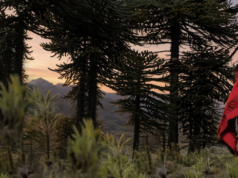
Many of the films premiered at Sheffield have subsequently gone on to be selected and screened at other international festivals, continuing the legacy of this programme. Notably, the Sheffield jury chose the miraculous Nũhũ Yãg Mũ Yõg Hãm: This Land Is Our Land! by Indigenous Brazilian filmmakers Isael Maxakali and Sueli Maxakali (with Carolina Canguçu and Roberto Romero) as the main prize winner, giving artists working with no support and even active hostility from the Brazilian state a rare high profile emphasis on the international film scene.
The day after the board responded to our request for clarity, the festival began to advertise passes for the 2022 edition, with no artistic team in place. It will soon reopen filmmaker submissions. At the same time, it has announced a slate of new board members, featuring new representatives from familiar broadcasters and from the likes of Amazon Studios.
With all this in mind, we note again that there has been no information given publicly on the continuity of the artistic programme, nor on the broader artistic vision recently implemented by Cíntia and the artistic team, both for the arts as well as the film programmes.
The exchange established between artists and curators over the last two years to develop an artistic approach to various aspects of the festival is now in vain. What is the future of the artistic programme at Sheffield Doc/Fest? How does it fit into the new vision of the board?
We are naturally critical of the careless way events have unfolded and question DocFest’s commitment to properly valuing its workers, whose situation has here gone right from precarity to quiet termination without any word from the management. But moreso, we ask: if these are the “differences” the board of Sheffield Doc//Fest cannot make peace with, and cannot work productively with as a basis for building a festival, what is the alternative? What is the Sheffield Doc/Fest they want to create—or revert to? Which aspects of the board’s vision for the festival did the 2020 and 2021 editions fail to uphold? Why is there no statement to this effect, clarifying for filmmakers the essence of these “differences” before they are again asked to submit their films?
As programmers, we again question the purpose and ethics of festivals run by boards predominantly made up of broadcasters and commissioners with a vested interest in showcasing projects whose distribution future is already predetermined. We take our cue from Luke Moody, the previous Director of Programming, in his own public comments after resigning from the festival in 2019, in which he noted the intractability of the Sheffield Board of Trustees.
We are suspicious of institutions paying lip service to ‘diversity’ whilst simultaneously resisting the essential work that must be done to address systemic issues of exclusion and injustice in the industry. Film festivals like Sheffield Doc/Fest should be a tool to deconstruct pathways of power that prioritise one film, one national cinema, one distribution model, one filmmaking movement over another. At its best, festival programming challenges audiences, and the industry, to think critically and to remain open to absorbing perspectives and styles that may be new and unfamiliar.
The “artistic differences” that here are the basis for transforming Sheffield Doc/Fest are exactly the kind of differences off which a festival must necessarily thrive.
We are eternally grateful for the opportunity to be part of an artistic team led by Cíntia. We’ve learned from each other and thank her for creating a brave space to listen and learn. Each of our regular meetings to discuss the programme, coming at the start of the year when the pandemic was at its peak in many of our countries, was an oasis.
Juliano Gomes
Qila Gill
Carlos Pereira
Christopher Small
Rabz Lansiquot
Soukaina Aboulaoula
Herb Shellenberger
27th August 2021