Still: Courtesy of Venice FF
In late 60s Italy, the three best directors of spaghetti westerns were all called “Sergio.” Sergio Leone, the maestro behind The Good, The Bad And The Ugly and Once Upon A Time In The West was the greatest. Sergio Sollima was also a master of the genre. However, the undisputed number two in the all-time list was Sergio Corbucci (1926-1990).
This, at least, is the opinion of the celebrated American director Quentin Tarantino whose 2012 feature Django Unchained owes a very obvious debt to Corbucci’s ultra-violent Django (1966), starring Franco Nero. Many other agree.
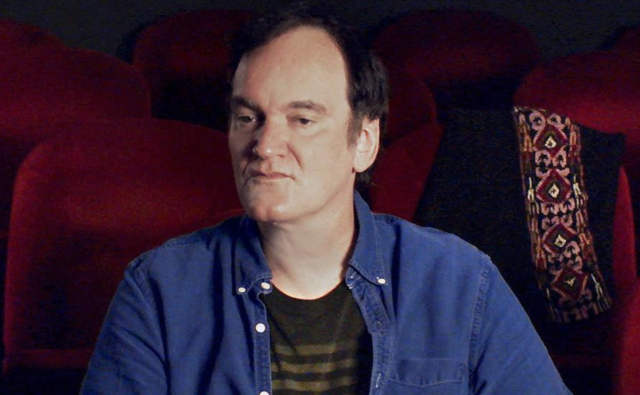
Now, Tarantino is “narrating” the new feature documentary Django & Django, directed by Luca Rea and which premieres out of competition in Venice this week. The film will be released in Italy through Lucky Red.
In the film, Tarantino is shown on camera, riffing away about the genius of Corbucci. However, the project actually originated with producer Nicoletta Ercole. She is a renowned costume designer who worked with Corbucci.
“She [Ercole] was part of the family for Sergio and wanted to pay homage to him. So she called me last year and said I ‘want to make a documentary about Sergio,’” Rea recalls.
He and Ercole then approached Tarantino. Rea had known him since 2004 when they worked together on a Venice Festival retrospective of cult Italian B movies.
“We became friends and we stayed in touch all those years. Since I knew that Quentin had such a great love for Sergio (Corbucci), I asked him if he wanted to give an interview and to collaborate on this project. He said yes.”
Rea and his screenwriter partner Steve Della Casa were looking for a way of making the film accessible not just to film buffs and critics but to as big an audience as possible. That’s where Tarantino came in. He was the perfect face to front the movie. After all, his most recent feature, Once Upon A Time In Hollywood, is full of references to Corbucci. Al Pacino is shown in the movie telling Leonardo DiCaprio that, yes indeed, Corbucci is the second best spaghetti western director in the world.
Part of Django & Django is shot as if it is a mockumentary, There is animated footage showing an imagined encounter between Corbucci and Rick Dalton, the fictional movie star played by DiCaprio in Tarantino’s movie.
When the interview with Tarantino was shot, the American director had prepared all his answers in advance. He may sound on camera as if he is improvising and talking off the hoof but he knew exactly what he was going to say. One key part of his thesis about Corbucci is that the westerns all reflected Corbucci’s experiences growing up under Mussolini in fascist Italy.
Yes, Rea has his own opinions about Corbucci but he largely agrees with Tarantino’s interpretation of the director’s life and career.
The filmmakers had assembled plenty of old interviews featuring their subject. In these, the director never discusses his films as allegories about the Mussolini. However, Rea did eventually find old Dutch footage of Corbucci finally acknowledged that his 1968 The Great Silence was a movie about fascism.
“I never had such a radical approach as Quentin’s, but he really convinces me,” Rea reflects.
Tarantino isn’t the only figure featured in the film. Django star Franco Nero is also interviewed as is Ruggero Deodato, an assistant director who worked with Corbucci and knew him very well. However, Rea didn’t want to make the typical talking heads doc in which “everybody says his vision and everyone puts himself at the centre of the story. I wanted to have one straight point in the story. You can like it or not, but that is the story we are telling.”
The director hopes the audience will feel that they are up close and personal with Corbucci. “I wanted to have a time machine effect, when you actually see how he directs and how he was on set.”
Rea himself first encountered Corbucci’s work when he was a kid. “My love story with cinema started very early, when I was about 5 or 6 years old,” Rea remembers his childhood. His father would shoot and project super 8mm movies – and even once rented For A Few Dollars More in that format. Rea was also a regular cinemagoer from a young age. This was also a period when there were hundreds of private TV stations, showing all sorts of films. “They paid no rights. They screened every movie at every hour.”
Once, when Rea was ill in bed with flu, unable to go to school, he spent the morning watching Ken Russell’s Tommy instead.
No, Corbucci wasn’t upset that he was considered only the second best spaghetti western director after Leone. He was too modest to feel any envy about his friend. “I also think he didn’t care. He was a funny man. He liked his job. He was very intelligent,” Rea suggests of the even-tempered filmmaker.
Corbucci’s films are often very bloody. Characters are killed in huge numbers. Some are tortured and have their ears cut off. There was heated debate in late 60s about the extent of this violence. However, younger viewers regarded the sadism in the westerns as being similar to what they encountered in the comic books they loved to read. Even if their parents were horrified, these kids realised the violence was stylised and tongue in cheek.
The film focuses very specifically on the period in which Corbucci made his best known spaghetti westerns in the late 1960s and early 70s. Only fleeting references are made to the films he made before and afterwards. “Corbucci made more than 70 movies (but) I wanted to have one straight point to investigate. Too much, it’s not always the best thing to do.”
Besides, for Corbucci, the westerns were always the films that mattered most, the ones that (as Rea puts it) burned “into his soul.”
World sales for Django & Django are handled by Glorious Films