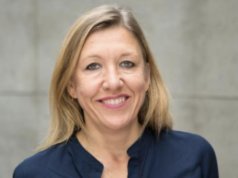
Boganim’s film tells the story of the community of non-European Mizrahim Jews who settled in the newly formed State of Israel in the 1950s, and the discrimination they feel they have suffered across four generations. The documentary further tells of the Israeli Black Panthers, led by her father Charlie in the 1970s, who squared up to this sense of injustice. The director explains more to Business Doc Europe.
“Only a cry of revolt could break the solid walls of Israeli society,” proclaimed Israeli Black Panther leader Charlie Boganim in the 1970s, and it is a rallying call that daughter Michale takes up in her feature documentary The Forgotten Ones (Mizrahim, Les Oubliés de la Terre Promise), selected for Venice Giornate degli Autori.
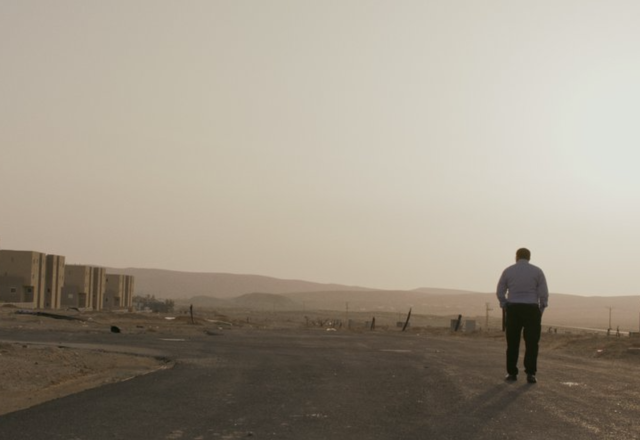
Boganim’s film tells of how the newly formed State of Israel (the “Promised Land”) failed to deliver on the dream that so many hoped for, offering up instead a new life of segregation, discrimination and despair, all played out in the development towns within the Negev Desert. The Mizrahim Jews, hailing from North Africa and the Middle East, were sprayed with DDT on their arrival and were forced to play second fiddle to the ostensibly European Ashkenazim, the documentary tells. Thereafter they eked out a sub-prime and “stigmatized” existence within the “periphery”, the film further alleges, far away from the privileged cities of Jerusalem and Tel Aviv.
As Boganim says in her film notes: “The film relates a personal story, that of a wound and of a dream that turned out badly for some… because of their origins, the colour of their skin, their accents, their music and their Arab nature.”
For a while in the 1970s, Boganim’s father led the revolt against the injustice that he and his people suffered, but the situation was never satisfactorily resolved, and he ended up migrating with his family to Paris, once again settling beyond the city’s “peripherique”. Michale therefore undertakes a road trip through Israel, the country of her birth, to record testimonies from individuals representing the new generations of Mizrahim, all of whom articulate their discontent with the prevailing political situation in Israel.
“A new generation of ‘Panthers’ is rising up from this cracked desert soil, this borderland where surges of rage and bitterness still seem so vibrant,” the director writes. “Those three generations whose rage has given way to acceptation. Or could acceptation have been replaced by rage?”
“I had the support of the CNC so it was a French producer (Marie Balducchi of Ex Nihilo) that also gave me a lot of strength to really think that it was an important and unknown subject to speak of,” she tells Business Doc Europe, adding how, in her investigations, “the urge came from the resistance to speaking about the subject, the fact I felt that it was complicated to speak about it in Israel.”
In the film she speaks to Yemeni women within Israel who believe that their children were forcibly taken from them after birth for adoption within childless Ashkenazi families. “A lot of people say it’s not true, that it doesn’t exist, but when I met them, you know, it was in front of me…You know, it’s not just rumours, it’s not just not a mythology, it’s reality….The more resistance I felt in Israel about the subject, the more I wanted to do it, the more important was the fight for me.”
She also records an interview with an orthodox Mizrahi lawyer who has dedicated his life to fighting perceived systemic injustice meted out to his community. He tells of the story of a school he encountered in the settlement town of Immanuel in 2008 where he saw the segregation of Mizrahi and Ashkenazi children. There was a dividing wall in the playground, he alleges, separate entrances, different uniforms and staggered recesses. He further alleges that when a government minister was alerted to the problem, the minister replied, “what problem?”
“The State of Israel and its authorities are not there for Sephardi and Mizrahi parents, nor for the parents from the periphery,” the lawyer concludes. “I see no equality in Israel.”
For director Boganim the film makes a universal case. “Even if it touches a very specific subject, it’s very universal in the question of discrimination, identity, immigration, and everybody can relate to that.” She adds, however, that she was initially reluctant to make it, despite having such a great story in her personal locker, that of her father’s link with the Black Panthers. “I was close to my father and I was always very political, but as I said, for a long time, this aspect of the political side that he was involved in, I was completely denying it.”
But before his death she felt the urge to tell his story and to launch her wider political investigation into the discrimination that her film’s subjects have encountered. “It was a kind of warning. Also, the film is also a kind of an homage to my father and his fight and all his activism. I kind of discovered that very late. I appreciated it very late….But I am the daughter of my father and I have something to say about it [the plight of the Mizrahim in Israel]. I cannot just avoid it.”
The Forgotten Ones is sold by Reservoir Docs.