When Posy Dixon attended the British Independent Film Awards earlier this month, the British-American director’s debut feature Keyboard Fantasies, nominated for Best Documentary, was actually already two years old. It is, though, entirely in keeping with the film’s subject matter that it has taken so long to reach audiences.
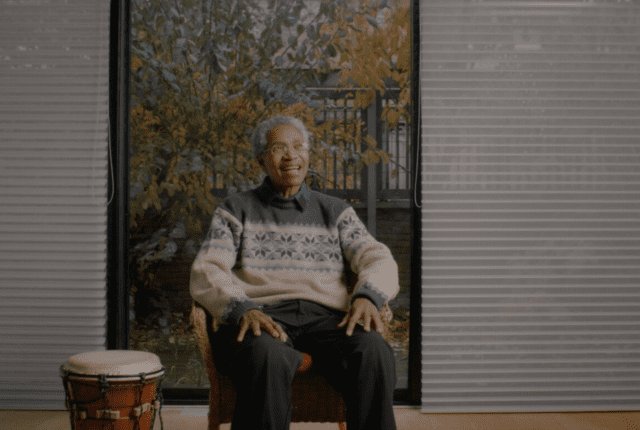
Keyboard Fantasies tells the story of the septuagenarian Canadian trans musician Beverly Glenn-Copeland. It was produced by Liv Proctor through Luca Film, the company Dixon co-founded.
When Glenn-Copeland first self-released the musical work ‘Keyboard Fantasies’ on 200 cassettes in the mid-1980s, he expected to sell 50 copies if he was lucky. However, two decades later, a Japanese record collector who had fallen in love with the album contacted the musician, asking for more copies. This set in motion the process which has seen Glenn’s trippy, home-made electronic album turned into a huge cult hit.
Eve Gabereau’s London-based outfit, Modern Films, finally released the film of Keyboard Fantasies in the UK in November in an expanded version including more live musical performances from Glenn-Copeland.
“Although a version of the film was shown in festivals in 2018/19, this 2021 release edition is new and expanded to include recent footage of live musical performances and recordings. It brings the life-long story beyond the pandemic in a beautiful, thoughtful, poetic, and very lively, way,” Gabereau commented of the release.
Greenwich Entertainment handled the US release.
Dixon herself was first introduced to the album by a friend in 2017 not long after it had been re-issued by Brandon Hocura through the label, Séance Centre. DJs were then beginning to play it.
“I grew really obsessed by it,” the filmmaker remembers of how entrancing she found Glenn-Copeland’s work. “There is something about the vocals and the melody of it that is very instantaneous. You hear that record and you feel like you’ve heard it before. I’ve yet to meet a single person who doesn’t feel that way about it. There is something very universal about it.”
Smitten by the ‘Keyboard Fantasies’ recording, Dixon began to look for more music by Beverly Glenn-Copeland but couldn’t find any. Her search eventually led her to the composer/songwriter himself. They made friends on Facebook and had many conversations via Skype. “We had like a one-year long Skype friendship…over that time, [the album] Keyboard Fantasies started getting more and more popular. We started talking about doing some filming together and recording him playing the music,” Dixon says of how she eventually flew out to Canada to meet him.
By then, Glenn-Copeland had joined up with some young musicians. He had never performed the album live but now he had the chance to do so. Dixon spent “hours and hours” driving around Canada with him, visiting the music studio and meeting the new band members. On their journeys together, he shared many stories about his life. She also did an interview with him. When she returned to London, she began to think about making the documentary.
“It wasn’t really intentional. It was only after we had spent all that time together. I started recording and talking [with him] and realised what an incredible orator he was…it all happened so slowly that I almost felt I never asked him, ‘can I make a film about you?’”
Dixon envisaged her documentary as “an audio-visual tapestry of the journey he had been through.” It chronicles Glenn-Copeland’s life from his troubled childhood in Pennsylvania in the 1940s, his experiences as a black college student in the 1960s, the circumstances in which he recorded Keyboard Fantasies in the 1980s and the album’s later rediscovery. The film also shows him and his band today, on the road.
“It was led by the music. It is not a biopic by any means. The story that I tell is very much his musical journey. That is what held the whole thing together.”
One strand of the film deals with Glenn-Copeland’s troubled relationship with his parents. His father was a brilliant classical pianist but neither parent were at all understanding of him being transgender. Glenn-Copeland eventually reconciled with his mother. As the documentary shows, they “repaired” their relationship and spent a lot of time together late in the mother’s life.
Dixon also focuses on the dynamic between Glenn-Copeland, now in his mid 70s, and his band members, who are far younger. “They’re all from Halifax, Nova Scotia. They’re from a very DIY scene and they’re incredibly accomplished musicians but also incredibly open-minded people. It feels for them that going on tour with a 74-year-old is perfectly normal…that made me realise how much we lose from not having more of these inter-generational relationships. It was a really beautiful thing to be around.”
Today, Glenn-Copeland continues to make music. He lost a lot of shows because of Covid, taking a big financial hit, but has managed to carry on working. “All that really matters to him is that he gets to keeps recording,” Dixon suggests.
The musician is also an inspirational figure for the trans community. “I never want to speak for him but people who’ve come to watch the film with me have said that it has been so good to see a trans story that is joyful and isn’t just all about trauma,” the director notes.
As for the late arrival of the film in front of audiences, that doesn’t worry the director at all.
“It has finally, I guess, come out proper, two years down the line,” she says of the Covid-influenced delay. “But it feels in a way like everyone is more ready for it now anyway.”
Dixon has made several short films with renowned UK fashion designer, author, presenter, model and journalist Alexa Chung. “I haven’t worked with her for a little while but she did lend me a dress for the BIFAs which was very sweet.”
The director is currently raising finance for future documentary projects – but is carrying on with “the short form work to pay the bills…the long form work is not very efficient financially.”