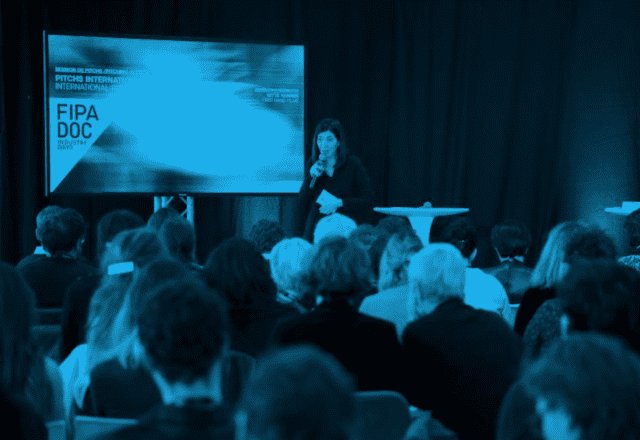
FIPADOC Industry kicks off today, January 18, once again with a stated aim to join the international and French doc industries in a frenzy of co-pro collaboration. And right now in Biarritz that means face to face activity, which is very much to the satisfaction of festival director Christine Camdessus.
IFFR might be presenting online in January 2022, both in festival and market terms, and February’s EFM is strictly virtual, but a door of opportunity was opened for FIPADOC to make this year’s an in-person event – and festival organisers grasped the opportunity with both hands.
Camdessus is reminded of the on-site IDFA back in November when the industry really began to experience again the benefits of more recognisable business interaction. “A lot of producers told me that they did more business in a week in Amsterdam than in a year on Zoom. That was one of the reasons I really wanted to do it,” she says of her live event. She also cites the element of “serendipity” in forging alliances that were not previously on the cards. “New inspiration awakens from spontaneous encounters,” writes Camdessus on the festival website.
As reported earlier on the festival component, 150 films will be presented to an audience of approximately 30,000 attendees in 2022. Fourteen awards will be handed out, including 4 Grands Prix within the main competition sections, deliberated over by 38 jury members. FIPADOC’s nine competition sections include International, Music, French and Impact.
The festival chief reckons on over 1800 professional visitors participating in FIPADOC Industry in 2022. All the international and local filmmakers presenting new projects will pitch in person and live on FIPADOC website. These include 23 International project pitches across four categories; Arts & Culture, History & Current Affairs, Social Issues and Climate & Science.
There is more of a French emphasis within three other pitch sessions. DOC A LA PAGE! invites publishers to pitch ten non-fiction books, with high potential for adaptation to television, to a panel of audiovisual producers. The Pitches Story Lab sessions is the final part of a four-month scriptwriting workshop intended to support audiovisual journalists in their ambition to write a documentary based on their groundwork investigation. The Regional First Film Pitch programme allow new creators from Nouvelle-Aquitaine to pitch their first documentary project to a panel of local television channels and producers looking for new talent.
What Camdessus is particularly keen to underline is how international doc-makers will be granted every opportunity to rub shoulders with key French broadcasters and funders. “ARTE will come, France Television will come, the CNC will come, meaning the people you really want to meet. And most of the time they’re the people you’ve not met for almost two years.”
Industry talks and presentations include a January 18 overview of what CNC can offer the French and international documentary sector, from grants for audiovisual and innovation support to visual and audio creation, from advance funding for anticipated-revenue to financial aid for world cinema, tax credits and more. On January 19, a ‘How to Co-produce with France’ session will draw a comprehensive map of the French landscape and its opportunities, the several national and regional support possibilities for authors, producers and distributors, and France Télévisions will offer presentation of their new line-up.
The January 20 ARTE conference intends to offer an overview of the European cultural public broadcaster’s editorial ambitions. Elsewhere, round table meetings and Q&As with representatives of the French channels will “dive deeper” into the French broadcasting system and enable representatives talk about the different slots and co-production possibilities. The sessions will also offer international guests the opportunity to meet the people who are buying content and collaborating with the film teams across the respective different doc genres: Society & Politics, History, Science & Discovery, and Arts & Culture.
From a purely French perspective, a gathering of the great and the good of the doc sector just before a presidential election allows for industrial scale lobbying on such matters as regulation (“we are the masters of regulation,” says Camdessus) and quotas. “The fact that now the streamers like Netflix and Amazon are going to contribute to the French system of support to the industry – how is this money going to be allocated to fiction, animation, documentary? Those are pretty technical questions. But they are really at the heart of the business.”
Another core element of Fipadoc Industry is Focus Benelux which complements the selection of seven outstanding documentaries from the Benelux as part of the territory selection, 5 films from 2022 Guest of Honour Heddy Honigmann and 21 films across the festival competitions (International, Impact, Music, Shorts & New Talent) as well as selections from the Benelux region in the ‘European Stories’ and culinary themed ‘Taste of Doc’ sections.
The professional Industry Days component will present seven projects from the Benelux region in the International Co-Production Forum, a Producers meet Producers session for Benelux & French producers and a session on co-producing with The Netherlands, Luxembourg, Flanders and the French-speaking Belgian Community, that will include leading players from the respective industries, and an introduction to this market: “How to co-produce with Benelux”.
“Our aim is to ignite collaborations and create long-lasting ties within the European documentary industry,” Camdessus says of the festival’s annual territorial focus.
But she further reminds that all of this business activity is presented within an intensely more meaningful face to face context, and running alongside a festival for which most restrictions have been lifted for the public.
Back in June 2021, Camdessus explained to Business Doc Europe exactly what the festival meant to her in pure conceptual terms, and what she is looking forward to now experiencing. “It is an encounter between film and the public, and between directors and the public. This is what we value, this is what we want to be part of, and this is what we defend.”