It was an incident of playground bullying that took place in a New York school more than half a century ago. There isn’t any archive footage of it, the victim doesn’t want to talk and filmmaker Jay Rosenblatt was one of the fifth graders who joined in the tormenting of the boy at the elementary school in Brooklyn.
By a strange coincidence, when working on one of his documentaries in the 1990s, he met a former classmate who had even more vivid memories of the bullying incident than he did.
Rosenblatt’s short documentary When We Were Bullies, which explores the incident, was originally due to premiere at the Telluride Festival in the autumn of 2020. Due to Covid, that festival didn’t happen. It screened instead at Sundance in January 2021. Now, a little over a year later, the film (sold by Submarine), is one of the nominees for this year’s Best Short Documentary at the Academy Awards.
What makes this achievement remarkable is that Rosenblatt hasn’t had a big Hollywood studio or streamer behind him. He has overseen the Oscar campaign on his own, while continuing his filmmaking and also holding down a full-time job as Programme Director at the San Francisco Jewish Film Festival. (The doc, though, did have some European support from Arte and ZDF in Europe).
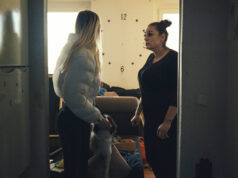
There’s a strange moment late in the film when Rosenblatt visits his old high school teacher, who is in her early 90s. (She has since died). He asks her about the bullying incident and tells her about the film. She is a kindly, sagacious women but still warns him that no-one will want to see his documentary. The subject matter is too painful…and too tedious, she tells him.
The teacher’s son attended one of the screenings of When We Were Bullies. “He came up to me and told me she would have loved it. That made me feel very good,” Rosenblatt recalls.
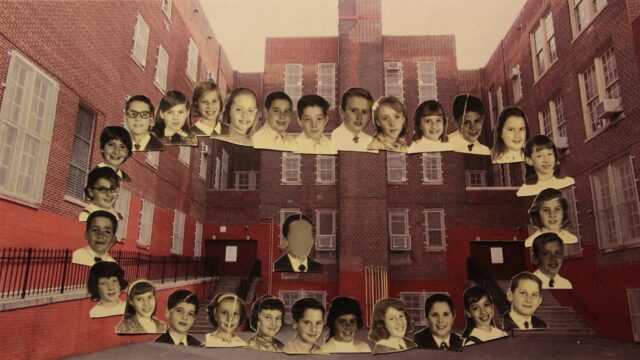
Formally, the documentary is highly inventive. The director uses found footage and archival material from the mid 1960s to bring the era to life. He also uses cut-out animation (overseen by veteran animator Jeremy Rourke).
Ask if the director feels any ambivalence about the Oscar nomination given that the film rakes over such uncomfortable moments in his own past and he parries the question.
“This film is very transparent. Everything about the filmmaking process is pretty much in the film,” Rosenblatt says. Early on, he acknowledges, he felt uncertain about whether or not he should show the bullying victim’s face or hide his identity. When he screened a rough assembly of the documentary, viewers responded warily. “At that point, I realised I really don’t want to involve him in this film,” the director reflects. “It’s not really fair to pull him into his film whether he wanted to be in it or not.”
Once that decision was made, the process became much more straightforward. In the film, Rosenblatt refers in passing to another seismic and hugely upsetting moment in his childhood – the death of his younger brother. As a kid, he never talked about this but when he approached former classmates for their memories of the bullying incident, they all referred to it.
“I realised that kind of connection of vulnerability was important to put in the film.” (His 2005 short Phantom Limbexplores the “indescribable pain” he and his family endured in the wake of his brother’s death.)
On one level, When We Were Bullies is deeply pessimistic about human nature. “What my teacher says is true. Kids do pick on the other kids that are vulnerable. Depending on their own history, they either pick at that person or sometimes they rise above that,” the director muses. “Yes, it’s in the film but my hope is that I am offering a way out of that, a healing. I think my apology is part of that. I wouldn’t say it [the film] is totally pessimistic. I think we have the ability to transcend that…but it is difficult when you are 10 years old, you’re part of a mob mentality.”
Some of the classmates insist they weren’t involved in the bullying and see themselves more as a defender of the boy who was being victimised. (They had turned against him because the entire class had been punished on account of his actions).
Rosenblatt himself was bullied at school. “I don’t see myself as a bully my whole life. Even in this situation, I was complicit, I wasn’t the lead bully. I am not excusing myself. I think complicity is just as bad. Without complicity, bullies would be a lot weaker…all I can say is that I was bullied a lot as a kid too. It is not black and white.”
The director has gone to great lengths to make sure that curious viewers of the film can’t identify the victim of the bullying. “I would rather not stir up anything difficult for him…I don’t want him to be in any pain,” Rosenblatt says. “When I decided to approach the film in the way I did, I decided to go back to that website [which had details of the class]. It no longer existed but I found out who the webmaster was and I wrote a pleading letter to him to please remove the photo.” The image was indeed taken down. It should therefore be very difficult to expose the victim’s identity.
Now, it’s a few weeks from the Oscars. Rosenblatt’s documentary has just been picked up by a major US TV network – so the director can at last receive some assistance in what has, thus far, been largely a one-man awards operation – “a do it yourself email campaign,” as he describes it. “I just wrote to everyone I knew in the Academy and invited them to watch it,” he explains the strategy which, against the odds, got him a nomination.