Still: courtesy of Dogwoof
Covid 19 may have been bumped off the global headlines of late, nevertheless the pandemic remains of dire concern to the world’s population. As a corollary of sorts, David France’s engrossing and informed documentary offers a striking look at the research, development, regulation and distribution of the vaccines that have saved millions of lives – depending on where in the world you lived.
Yes, it is at times a celebratory story as scientists around the world worked towards one shared goal, but France’s film also charts the frustrations, stumbling blocks, political interference and hinderances as science clashes with the realities of public scepticism, corporate greed and rampant nationalism. The title of the doc may seem as if plucked from the mainstream press, and is as much suited to a fiction film, but then Covid-19 is a horror story that must not be forgotten.
The globetrotting filmmakers sit down and talk with key scientists and administrators from around the world, but the spine of the film is Science magazine senior correspondent Jon Cohen who sets out to produce a ‘time capsule’ story that follows the various pharmaceutical narratives from the start of the pandemic through to late 2021.
The film opens in the basement of a Washington DC house on December 11, 2020. It is here that the US Food and Drug Administration Vaccine Division, Temporary Headquarters is based, and where its head Dr Peter Marks – sitting amidst family detritus and watched over by a large teddy bear – rubber stamps a press release announcing that the FDA is issuing an Emergency Use Authorisation for the COVID-19 vaccination, the first in the United States.
With a plaintive smile he then calls General Gustave Perna, who is overseeing logistics for distribution, to express his excitement over the first authorised vaccine. “Sorry you had to go through all of that political crap….the vaccines will be moving tomorrow,” Perna blithely replies.
The story then zooms back 11 months to footage of empty US streets, masked staff wiping down surfaces and ambulances carrying the ill to hospital. As a voiceover comments: “It is the biggest crisis in the world and it needs a science solution.”
China’s release of the genetic sequence of Covid-19 is the starting point for scientists around the world to set to work. Dr Kizzmekia Corbett, Co-developer of the Moderna Vaccine at the US National Institutes of Health, comments on first hearing of the sequencing: “From that point on in January 2020 it became a non-stop race. I was relieved to see other vaccine platforms coming out – it needs to be worldwide.”
Also interviewed are Dr Dan Barouch, co-developer of the Johnson & Johnson vaccine at Harvard Medical School, who admits to be being “cautiously optimistic” as he talked to scientists during trials, as well as Dr Adrian Hill, Co-Developer of AstraZeneca Vaccine at Oxford University, who observes: “We want there to be many winners…we don’t want to be out there on our own, not least because no one company is going to be able to vaccinate 5 billion people.”
The film sees Cohen interview the likes Dr Anthony Fauci of US National Institute of Health, as he faced death threats in the US; Pfizer CEO Dr Albert Bourla, and Dr Larry Corey, Clinical Trials Co-Director at the US government’s Operation Warp Speed, which was tasked to get the vaccine out as quickly as possible. The film also spends time on the ground in more marginalised US cities, where an impoverished black community is hit badly and where local community groups take to the streets to try and help.
At the hour mark the film cuts back to Dr Peter Marks and his call to General Perna. There is delight and exhilaration as the vaccine roll-out begins, but also subsequent frustration over federal deliveries and vaccine hesitancy. New President Joe Biden is shown on television pleading with people to take the vaccine, but there is also an admission that Donald Trump’s reluctance to concede the presidency impaired transition to the new incoming team, which had an impact on vaccine roll-out.
France’s documentary makes for an absorbing, thoughtful and challenging analysis that benefits hugely from unparalleled access to the most prominent figures in the fight for a vaccine, from bench scientists to large pharmaceutical companies, from government agencies to front-line workers.
With Jon Cohen on hand whether to praise, provoke or sometimes even hector scientists, there is a strong voice both to balance the political machinations and to test the science. He also gets to spend time surfing, and engagingly gets into an argument with an anti-vaccine, flag-waving, pro-Trump supporter sporting a ‘Fuck Fauci’ baseball cap.
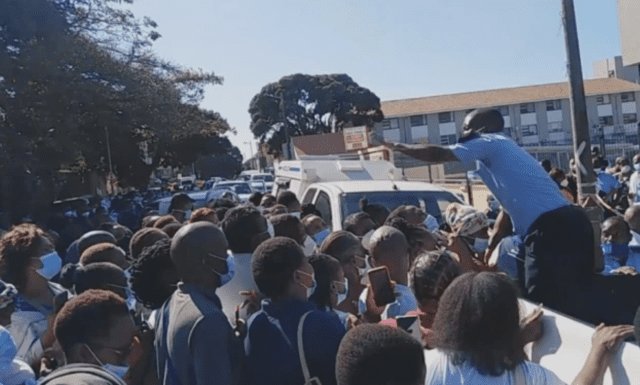
The arrival of the Omicron variation sees South Africa badly hit and highlights the acute frustration of countries unable to access enough quantities of the vaccine. In a final interview Cohen sits down with the World Health Organisation’s Director General Dr Tedros Adhanom Ghebreyesus who says – simply and bluntly – that there has been a “deficit of solidarity and sharing.”
His point is amplified by a stark final on-screen message which reads: “While rich nations finished 2021 with surplus vaccines, doses reached only 8% of people in low-income countries…if global distribution had been truly equitable in the first full year of vaccine availability, experts estimate an additional 1 million lives might have been saved.”
US, 2022, 109mins
Dir David France
Production HBO Documentary, Public Square Films
International sales Dogwoof
Producer Mira Chang
Cinematography Tom Bergmann, Wolfgang Held, John Pope
Screenplay David France, Tyler H. Walk
Editor Adam Evans, Tyler H. Walk
Music Osei Essed