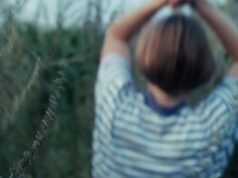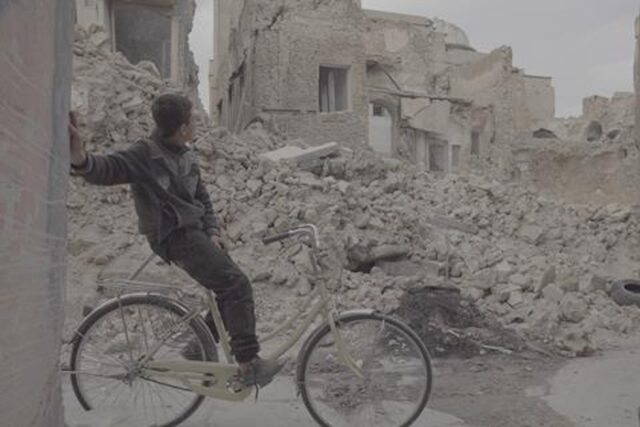
“Kabul, Year Zero is the final film in Aboozar Amini’s Kabul trilogy, following Kabul, City in the Windand Kabul, Between Prayers. But this time, the perspective shifts radically. The story of Kabul and its wars is told through children,” Chinese-Dutch film producer Jia Zhao (Silk Road Films) tells BDE in Utrecht during the second edition of NLWave.
A further shift of emphasis in at the final instalment is the widening of focus to include children from other war zones. Alongside Afshin, born in Afghanistan, we meet Varja from Ukraine and Fahad from Iraq. They are innocents caught up in unjust wars, but the heavy burden they bear is counterbalanced by an “unyielding zest for life [that] weaves a captivating tapestry, beckoning us to witness their existence in a world forged by adult-made conflicts,” Zhao underlines.
“What makes the film distinctive is that it is a genuinely participatory documentary,” she answers BDE. “The children are not simply subjects whose stories the director uses to construct his own argument. They participate in creating the film and in deciding how their lives, memories and imagination are represented. Their voices form a kind of collective chant – not a political shout – about growing up amid repeated cycles of war.”
“Aboozar has been filming Kabul and its people for many years. His relationship with the city is both personal and cinematic, and the first two films of the trilogy demonstrate his ability to create visually powerful films from extremely complex realities,” she adds of director Amini. Kabul, City in the Wind opened IDFA in 2018, while Kabul, Between Prayers premiered at Venice in 2025.
Zhao also describes to BDE the film’s three, interconnected layers. “The first is reality: immediate, spontaneous footage captured with a handycam by Aboozar and by the children themselves. It gives the film an intimacy and unpredictability that could not be achieved through conventional observational filmmaking,” she says.
“The second is reflection: more composed and staged cinematic images created by Aboozar. These sequences allow the film to move beyond observation into memory, imagination and contemplation,” she continues. “The third is archive. It is used sparingly, but is essential: fragments of Afghanistan’s successive wars and images of children within those wars create a dialogue between the present generation and those who came before them.”
“The cinematic language comes from the tension between these three layers – raw reality, poetic reflection and historical memory,” she underlines. “We want the film to feel intimate and immediate while still having the visual scale and cinematic authorship of a feature film.”
With a running time of 90 minutes, Kabul Year Zero is scheduled for delivery in September 2027. Co-production partners are Hanne Phlypo of Clin d’oeil (Belgium) and Heejung Oh of Seesaw Pictures (South Korea). Finances have been sourced from the Netherlands Film Fund, AFK Amsterdam Fund for the Arts (NL), CoBO Prince Bernhard Cultural Fund (NL), VAF (Flanders Audiovisual Fund) + Belgian Tax Credit (BE) and the EIDF K-Fresh Pitch Award (KR). The Dutch distributor is Mokum Film Distribution. Broadcasters so far signed up are HUMAN (NL), ARTE (FR/DE), La Lucarne (FR/DE) and Al Jazeera (QA).
“The strength of Kabul, Year Zero lies in its perspective,” the producer stresses. “Rather than explaining Afghanistan from the outside, the film allows children to reflect on the world they have inherited and to participate in telling their own stories. This creates something at once very specific to Kabul and universal: children trying to understand violence, family, memory, friendship and the possibility of a future.”
“From a production perspective, the film already has a strong international foundation, with support from the Netherlands Film Fund, ARTE, Al Jazeera and VAF,” she adds. “The project is therefore not starting from zero at NLWave: we are looking for partners who can help us complete the financing and, equally importantly, position the film internationally through sales, festivals and distribution.”
For audiences, the film offers an “intimate and unexpected way into Afghanistan, away from the conventional imagery of geopolitics and conflict,” Zhao further underlines.
Amini’s Afghan childhood was one also spent in conflict, which very much determined the focus of this third film. “As a war child myself, I aim to tell an anti-war story from a child’s perspective, depicting their resilience amidst adult-inflicted conflicts. This film delves deeper into Afshin’s journey, capturing his joys, dreams, fears and frustrations amidst displacement from childhood to adolescence. His experiences intertwine with other children from war-torn regions, reflecting the shared bond of fate.”
“Through intimate conversations, I explore existential topics and philosophical ideas with the children, allowing them to enlighten adults with their nuanced and detailed experiences. The film is by no means a refugee film, it is a coming-of-age celebration amid adult-created war zones, dedicated to the sheer willpower for life against the gravities of adults’ wars, challenging its audience’s inner peace,” Amini ends.