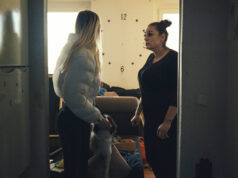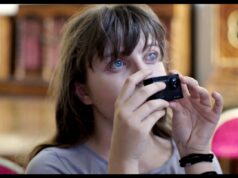
When she was a teenage punk listening to Joy Division and living in squats, Dutch filmmaker Marieke van der Winden had an anti-Nazi slogan on her leather jacket. She had had a difficult relationship with her mother whom she described as “a distant woman to me.” Her childhood hadn’t been especially happy but it was hard to pinpoint why not.
The picture became clearer at her mother’s funeral when a relative mentioned that her grandparents had been collaborators with the Nazis during the Second World War. The story of all the skeletons in the family cupboard is told in van der Winden’s documentary Keep Silent, which has been screening this week in Movies That Matter and will be released in Dutch cinemas by Amstel later in the year.
Was it uncomfortable to make the film? “Absolutely,” the director replies. When she started the project, she was “a bit naive” in thinking that her family would be “very happy to talk about it because we had kept silent so long.” That, though, didn’t prove to be the case.
The documentary started in unlikely circumstances. “Yes, Marieke, you’re going to make a film about it and the first shooting day I am going with you to the archive,” a close friend, also a documentary maker, who knew about the family background, told her. “They talked me into it,” van der Winden says of how she was persuaded to take on the project.
There were to be many uncomfortable moments during the production. She discovered that, in 1942, her grandfather had marched through the streets of Amsterdam in his black uniform. Her husband’s grandmother had been in the city in the same period but with a yellow Jewish badge pinned to her coat. Historian Marie-Cécile Van Hintum, an expert on the period, and archivist Anne-Marieke Samson had some startling insights about how her relatives had behaved during the war years.
“What really was helping me during the process, and was also a motivation to make the film, was getting to know my mother better,” the director suggests.
Not that her family was unique. The Dutch like to think that their grandparents were in the resistance. In fact, as the documentary points out, many more were collaborators. Out of 9 million Dutch citizens, 45,000 were in the resistance…but 75,000 were in the Waffen-SS. The archives have files of 300,000 suspected collaborators.
Very few of the director’s family members turned up at the film’s premiere in the Hague last weekend. That shows the extent of the shame and stigma that still remains with the descendants of the collaborators.
In the film, van der Winden describes going on holidays with her grandfather. These were among the happiest moments of her childhood. When they arrived at their destination, they would eat cake together in celebration. She admits today to being “completely confused” about the grandfather and why he collaborated. “I didn’t find enough answers to understand…that is really the problem,” she says. “I am not able to talk about it. Of course, I have thoughts about how it happened that he was into that. But I am not sure. It is really uncomfortable.”
Keep Silent isn’t the only recent film addressing Dutch wartime experience. For example, Oscar winner Steve McQueen has recently made the documentary Occupied City, about Amsterdam under Nazi occupation and based on the book ‘Atlas of an Occupied City, Amsterdam 1940-1945’ by Bianca Stigter (the filmmaker’s partner).
As van der Winden points out, there are different reasons for the renewal of interest in the period. The archives are “more open” now. “We have more distance…for our parents, it was not possible,” she says of how a younger generation can confront such uncomfortable truths.
“I also think that the traces of war are going over generations and we realise that. We are the third generation that is being confronted with it…it is not over.”
And, no, the director isn’t surprised it took her so long to discover the family secrets. “This family was also completely broken…after the war, people moved out of Amsterdam, lived in different places.”
When Marieke was growing up, her mother would tell her that they didn’t have many surviving relatives. “That’s why you only know grandma and grandfather,” she was informed.
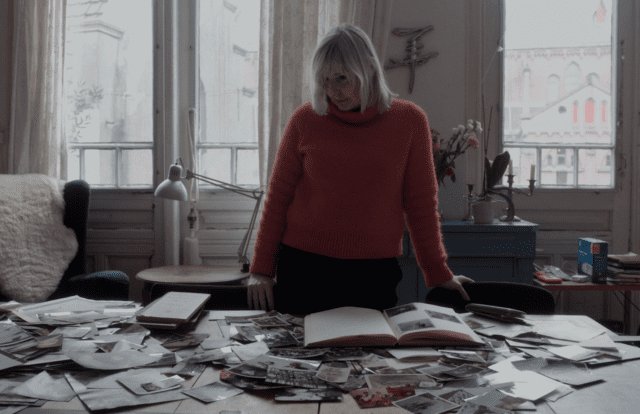
One of the paradoxes, though, was that her relatives kept records of their own nefarious activities. During the occupation, they wrote openly in letters, diaries and ledgers. This, the director reflects, was both “naive and dangerous.”
At times, van der Winden contemplated abandoning the documentary. “During the whole process, I was also dreaming badly of quitting this project,” she admits. The thought of the premiere filled her with alarm. “It took quite a long time to make this movie. I went through a lot of emotional stages…”
Her producers Witfilm were supportive and encouraging, one reason why she managed to complete the project. “They had a good tone of voice to keep me going. I am really happy with them.”
The process of making the documentary ultimately proved cathartic. “Now I am OK with it. I am not afraid for that,” she concludes.