“Time,” director Barney Douglas tells Business Doc Europe when asked just how he managed to prise tennis star John McEnroe so far out of his shell in his revealing and intimate new feature documentary, McEnroe, receiving its international premiere at Sheffield Doc Fest in advance of its UK release next month.
“I just tried to build a relationship and be very honest – to raise a bar of honesty between us so that he knew I wasn’t trying to exploit anything,” Douglas (whose previous credits include the cricket documentaries Warriors and The Edge) recalls. “I also think it was his time in life where he felt there were unresolved things and he did have time to look back.”
John McEnroe is known as one of the most gifted players in the history of his sport but the New Yorker also had a reputation as a super brat. A ferocious competitor who hated to lose, he was notorious for giving tongue lashings to umpires when they failed to call his shots accurately.
The documentary explores in depth McEnroe’s relationship with his father, John Patrick McEnroe, who died in 2017. McEnroe loved his father deeply. The father, though, was a stubborn, sometimes aloof figure who didn’t always make his affection for his son obvious.
Douglas was given the chance to make the documentary by producer Victoria Barrell, with whom he worked on his England cricket team doc, The Edge. “I knew tennis but I wasn’t a massive aficionado. I wasn’t a McEnroe or Borg acolyte or anything like that…but actually that helped me. I was looking for the human, the person. I didn’t come with baggage or pre-defined opinions on him.”
McEnroe is revealed in the documentary as a charismatic, spiky and brilliant figure. A perfectionist, he would be disappointed as a kid if he got an A minus in a maths exam. McEnroe always strived for the top grades. He sometimes found it tough, though, to make personal connections with people. At one stage, he even says on camera that he lacks empathy.
“I think that line is pretty extraordinary in a sports doc,” Douglas says. “To have the main character talking that openly about himself and about his flaws is quite unique and a real insight into what he struggled with throughout his life.”
The director speaks of his subject’s “relentless, analytical brain which sees the world differently to other people.”
Douglas spoke extensively to McEnroe’s family and friends – those who knew him best. He also met the tennis legend’s greatest rival and close friend, Björn Borg. On camera being interviewed, Borg is the same impassive, unflappable presence that he once was on the tennis court.
How did Douglas persuade Borg to speak? “He’s like this many of mystery,” the director acknowledges, but adds that “his deep, deep bond with John, that connection” was behind the Swede’s decision to open up. “He knew that for John it was important. It was going to be a documentary on a cinematic level and we were really trying to make it different from what had gone before – make it more personal, more about the connection than the rivalry, in a way. It’s kind of about two men in love! He was awesome, so lovely to meet and so relaxed.”
It helped the film visually too that Borg was shown in meditative mood by a lake, a long way from the “dark intensity” of New York, where much of the rest of the story plays out. Douglas suggests that their tennis rivalry was ultimately about more than winning and losing. “It was about this connection across the court.” When Borg retired when only in his mid-20s, McEnroe was diminished. He had “taken down” his idol but paid a heavy price for doing so. With Borg gone, he became ever more isolated.
“For me, that’s the fascinating thing with sport. With a lot of modern tennis players, you’re seeing them struggling with their mental health because it is so lonely out there. It’s hard to have friends in that environment because you’re trying to beat the person the other side of the net,” Douglas reflects. “That is one of the really fascinating aspects of trying to be a great sports person. It’s what you sacrifice, what you give up and how long you can do that for before it actually starts to break you essentially. You’re giving up friends, relationships…is it worth it?”
McEnroe’s wife [singer-songwriter] Patty Smyth comes up with the defining remark about her husband, observing that he may have been a “bad boy” but he has become a very “good man.”
“He’s with somebody who accepts him for who he is which naturally makes someone more conformable in their own skin,” Douglas says of how Smyth has helped McEnroe conquer his demons. “I think he’s at a stage of life where he has definitely mellowed a bit. That intensity is [now] mellow but he has still got that in him. He is just very, very authentic. Because he is more comfortable in himself, he [is] definitely better able to communicate than when he was younger. He understands himself better.”
McEnroe’s frustrations, the director continues, come often when “he feels he is not being listened to or understood. I was always at pains to make sure that I did listen.”
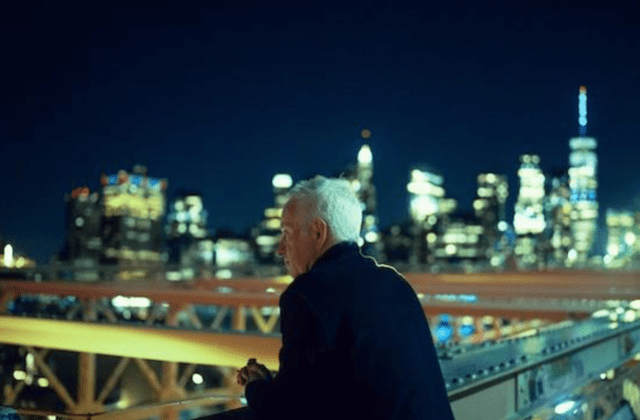
In the film, McEnroe is shown walking through night-time New York. This is an homage to an ad in which the tennis star had appeared in the 80s.
“We had to make it visually arresting as well and also try and give this film a journey. Career wise, it [the film] is very front loaded…it doesn’t have a natural end point,” the director reflects. The idea was to show McEnroe going through this “dark night of the soul” but emerging the other side. Douglas also wanted to foreground the New York settings. After all, McEnroe is one of the city’s most famous sons.
Fellow tennis legend Billie Jean King gives a revealing interview (this was done during Wimbledon last year). Over the end credits, other tennis legends, Roger Federer, Rafa Nadal and Chris Evert, also pop up to pay tribute to McEnroe.
Does McEnroe’s guitar playing stand up to scrutiny? “He’s absolutely dedicated…Yeah, he can absolutely play!” Douglas says of the tennis star’s other defining passion, rock music. “Patty says he needs to work on his timing. But I think, for John, music is a way to express himself that he doesn’t find in any other walk of life. It brings him joy. He loves doing it. He doesn’t need to be the best guitarist on the planet to get joy from it. I think that is important because in tennis, that was not how he felt. It gives him an outlet!”
Sales on McEnroe are handled by Dogwoof. The documentary was produced by Victoria Barrell, Paddy Kelly and Anna Godas. The UK release is on 15 July.