

How did an upper middle-class English filmmaker like John Schlesinger, whose previous feature was a Thomas Hardy adaptation, come to make the definitive movie about underground New York in the late 1960s? And how did he get a Hollywood studio to pay for it? These are among the questions that Nancy Buirski asks in her new feature Desperate Souls, Dark City and the Legend of Midnight Cowboy, premiering in Venice Classics.
This isn’t the conventional “making of” documentary. Buirski is every bit as interested in the sexual, social and political context in which Midnight Cowboy (1969) was made as she is in the film itself.
“I was interested in the idea that great art lasts for a reason. It is usually not made in a vacuum. I was curious about what makes great art last and what makes it seem almost inevitable,” she reflects.
One of Buirski’s starting points was Glenn Frankel’s recent book, ‘Shooting Midnight Cowboy.’ She already knew Frankel’s earlier work, including his studies of John Ford’s The Searchers and Fred Zinnemann’s High Noon and had arranged to meet him. “As we were speaking, I had just read the review in The New Yorker of the new book [on Midnight Cowboy]. I said to him, ‘well, I assume someone has already come to you about making a film on that because it seems like almost too obvious…he said no, no-one has.’”
Buirski didn’t see Midnight Cowboy when it first came out. She was too young. However, she was still “pretty young” when she did watch it and was struck immediately by its raw power. She felt it was both “groundbreaking” and “different from anything I had seen before – not just the content of the film but what it looked like on the screen. It was extremely, just, radical!”
The fact that Schlesinger (1926-2003) was making a film about two such unlikely characters as the cowboy gigolo from out of town (Jon Voight) and the street hustler (Dustin Hoffman) was itself a departure. These weren’t the types you saw in other Hollywood films of the time.
One of Buirski’s interviewees is the distinguished Dutch author and editor, Ian Buruma, who was Schlesinger’s nephew. “I knew Ian Buruma years and years ago. Ian and I were friends when I was working at Magnum Photos,” Buirski recalls. At that time, Buruma hoped to become a photographer himself. She was then a photo editor.
The years passed. Buruma moved to Japan and began to write. Buirski started to work for The New York Times. “Occasionally, our paths would cross but not very often.”
Buirski was delighted to discover that Frankel had spoken to Buruma for his book. That gave her the excuse to do the same for her documentary – and to rekindle the friendship from long ago.
One issue her film deals with frankly is Schlesinger’s sexuality. The British director was gay in a period when UK society was still strongly homophobic.
“It was extremely interesting for me to understand that John Schlesinger comes from upper middle-class British society, but that he seemed to be able to connect to these desperate souls in Midnight Cowboy. I think he saw them in a unique way, not being from their world but being from a different world. His homosexuality was also a very important theme in this. First of all, it represented in some way his effort to express the subtext of gay life in this film. This is not a gay film…[but] to start to touch on that life was part of the rebellion that was going on in the 60s.”
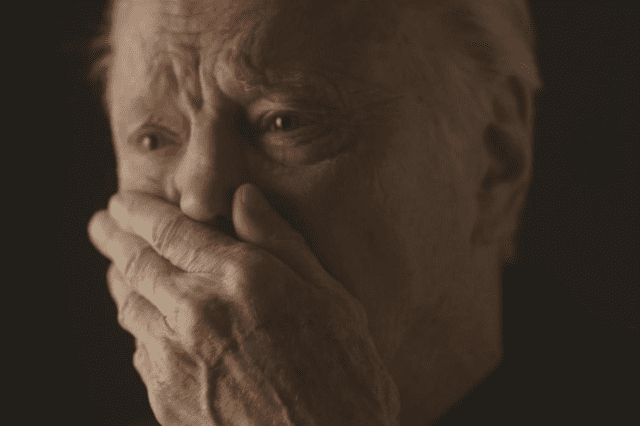
Another key interviewee is the film’s star Jon Voight who reminiscences in very emotional fashion about working with Schlesinger.
“I do think Jon Voight’s performance in Midnight Cowboy is magic,” says Buirski. “He lives in that character so beautifully. You must keep in mind that he is not from Texas. His accent is totally authentic. I never felt in the film that he was performing…I really felt that he was living that experience.”
Dustin Hoffman wasn’t available to speak to the documentary makers, but Buirski reached many other key figures behind the making of the film.
Coming from a photography background, Buirski couldn’t help but admire the verité-style in which Schlesinger shot his street scenes, including the famous image of a man lying dead on the sidewalk as pedestrians pass him by, hardly seeming to notice his corpse.
“I think that is probably why I connected to the film in the first place, that I come from the documentary photography world. And Schlesinger, remember, comes from the documentary world. He made hundreds of documentaries…I think that is what gives Midnight Cowboy the unique visual look that it has. He is trying for the truth…and I think it comes across on the screen.”
Schlesinger had also just gone through the ”emotional experience” of seeing his previous film flop, the lavish Thomas Hardy adaptation Far From The Madding Crowd. That, Buirski believes, may have pushed him to take on a project as left field as Midnight Cowboy – and to identify with its marginalised protagonists.
Buirski points out that other films from the period that “question society,” for example The Graduate, were still being made in the same glossy, sleek Hollywood way. Schlesinger, though, took a completely different aesthetic approach, stripping away any hint of glamour.
Midnight Cowboy quickly became a cult film in the US. It also became the first X-rated picture to win a Best Picture Oscar. It was, then, both a mainstream and an underground hit.
Buirski’s documentary offers a mosaic of the period. It includes footage of everything from the Vietnam war to Malcolm X. “I knew how I wanted to begin the film and I knew how I wanted to end it. I wasn’t sure how I was going to get there but conversation took place in a free associative way…and before you know it, you are there!” Buirski says of how she structured the film.
Desperate Souls, Dark City and the Legend of Midnight Cowboy is world-premiering in Venice. It’s expected to screen at several other festivals before being released theatrically in the US in 2023.





