Ukrainian director Yelizaveta Smith was already at work on her new feature documentary before the Russian invasion of Ukraine in late February. The project has been presented this week to industry delegates in Malmö at the Nordisk Panorama Forum. On the day she speaks to BDE, Smith has only just arrived in Sweden. And, yes, it was a difficult journey.
“It is always complicated. From the 24th of February, it is complicated,” the director sighs, referencing the day that Russia invaded her country. “We take train, plane, train.” The journey westward requires two days. With the airspace over Ukraine closed because of the war, she travelled first to Warsaw by train, spent a night in Poland and then caught a flight.
Listening To The World is produced by Tabor, the Kyiv-based production company Smith co-founded with Alina Gorlova and Maksym Nakonechnyi (whose debut dramatic feature Butterfly Vision premiered in Un Certain Regard in Cannes in May).
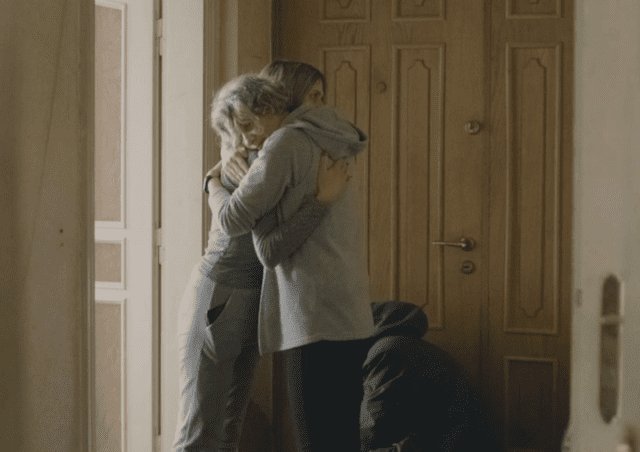
The documentary follows Iva, an artist and human rights activist who has been gradually losing her hearing since she was a child. Smith met her subject when she was working on an earlier project, a UN-backed documentary about domestic violence. “We realised that she [Iva] is such a character, such a personality, that there has to be a separate story about her.”
Iva could still speak but her hearing had gone completely. Before the war started, Smith’s plan was to follow her as she got the cochlear implants which – it was hoped – would restore her sound perception. “When the war started of course, all plans broke off.”
Iva and her teenage son were living in Kharkiv, 30 miles from the Russian border. The city came under intense bombardment in the early days of the war. Iva and her son fled, heading to the west of the country.
“We were developing a project with her about doing this implantation and listening to the world again but then war started. We understood we had to follow what is happening right now. It led us to very interesting things. After they [Iva and her son] were in the west of Ukraine, it still was bombed and so they decided to leave the country.”
Smith and her crew followed their subjects to Germany where Iva eventually managed to have the implants inserted which restored her hearing. “We filmed the operation and we are filming right now this three-month process of learning how to listen,” Smith explains.
Iva is able to hear sounds again but has to learn how to process the information.
This isn’t just a documentary about a woman recovering her hearing. It is also a love story, exploring Iva’s relationship with her fiancé who works for a tank factory in Kharkiv. (All being well, they will marry in Ukraine later this winter).
The filmmakers are planning to follow her rehabilitation and to follow Iva as she returns to Ukraine. They have received initial support for the documentary from IMS (International Media Support) and the Documenting Ukraine platform. Early in the war, they had to spend their own money to keep on filming. However, German industry veteran Heino Deckert has now joined the project as co-producer. In Malmö, Smith and her team have been looking for a sales agent and broadcaster support. (For obvious reasons, public financing in Ukraine has now dried up.)
Smith is also one of the four directors on Tabor’s ambitious new documentary about the war, The Days I Would Like To Forget. The other filmmakers involved are Maksym Nakonechnyi, Alina Gorlova and Simon Mozgovyi. The producer is Eugene Rachkovsky.
“It’s a collective work. Tabor was, from the first day, documenting the war, this full-scale invasion,” Rachkovsky explains.
The film goes far beyond reportage. Smith describes it as “a kind of anthropological research into how the war changes humans.” It will be shot all over Ukraine. Nakonechnyi has recently been shooting in Izyum where mass graves and torture chambers were discovered. He has also been investigating the plight of animals in Ukraine’s zoos since the war began. Gorlova has been shooting court cases involving Russians accused of war crimes. Smith herself has been concentrating on “how people deal with the new reality” – everything how emergency services help people retrieve possessions from their bombed out apartments to how you travel across a country where so many bridges have been destroyed.
In spite of the conflict, the Ukrainian film industry is clinging on.
At the start of the war, film rental companies were giving out equipment to cinematographers for free so they could continue filming. A documentary boom which began with the Maidan revolution in 2014 is continuing. “These people didn’t have real financing. They did it because of this energy which was coming put,” the director said. “We have a huge amount of really powerful documentaries because of what is happening.”
Smith pays tribute to the European film community for the support it has given Ukrainian documentary makers through initiatives like Docu/Help.
Tabor itself has five documentaries currently in production among them Mariia Ponomarova’s Nice Ladies, about “senior” cheerleaders from eastern Ukraine about to compete in the European championships, and Maria Stoianova’s Fragments Of Ice, about the director’s father, a former Soviet skating star who chronicled his foreign tours to “free” western countries on video in a period when Ukrainian society itself was undergoing profound change.