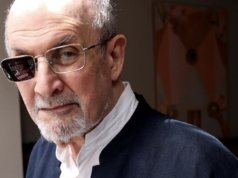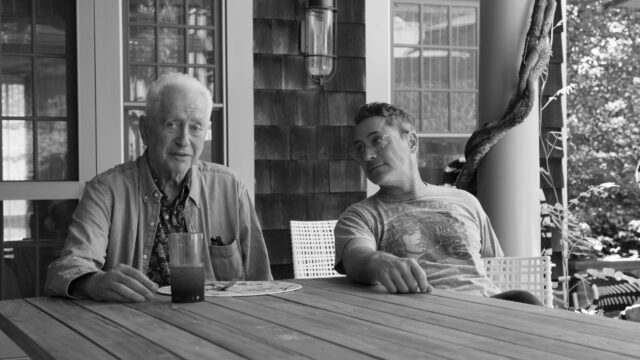
They seem to come from different sides of the filmmaking universe. Robert Downey Sr (1936-2021) was one of the high priests of US underground movies, famous for his anarchic and satirical humour. His son, Robert Downey Jr, 57, is one of the highest paid mainstream movie stars in history. He’s Iron Man/Tony Stark in those Marvel superhero films which, in the pre-Covid era, would regularly garner more than $1bn at the global box office.
The relationship between father and son is the subject of Chris Smith’s documentary “Sr” which premiered at the Telluride Festival in the autumn and launched on Netflix on December 2.
Smith, whose precious credits include American Movie (one of the most celebrated US indie documentaries of the 1990s), was in London in early December for awards screenings of his film (which is produced by Robert Downey Jr, Susan Downey, Kevin Ford and Emily Barclay Ford).
As the director tells Business Doc Europe, his original intention had been to make a documentary about the son, not the father.
“The word came back he [Downey Jr] had absolutely no interest in a documentary but he felt somebody should film his dad,” Smith remembers the response when he first approached the star’s production company. “What it [the documentary] eventually evolved into was a look at the relationship between a father and a son but it really started as a portrait of an artist.”
So why had Smith wanted to make a film about the son? The director cites a remark made to him by a top-level cinematographer he worked with. “I asked him who was the best actor you ever filmed. He came back immediately with Robert Downey Jr. He said that Robert will give you five takes that are all brilliant and they’re all different. He said he had never worked with somebody who had that level of talent.”
These words stuck in Smith’s mind.
Downey Jr, though, wasn’t the type to look back on his own achievements in a documentary. “The more you get to know Robert Downey Jr, the more you understand why that idea was not going to appeal to him. Robert is very in the moment and moving forward…it’s not in a negative way. I just feel he has better things to do with his time.”
The focus therefore shifted to the dad. Smith’s knowledge of Downey Sr’s movies was sketchy. He knew Putney Swope, Downey Sr’s coruscating 1969 satire about advertising and racism. “A lot of people had seen that who had been to film school, or had a repertoire cinema where they lived.”
It wasn’t until Smith began making the documentary that he really became steeped in Downey Sr’s work. “It was incredible to me that someone was doing movies like that at that time,” Smith says of the period when Downey Sr was in his counter-culture pomp and making films like his mockumentary Is There Sex After Death? (1971) or his outrageous western, Greaser’s Palace (1972).
“They were so completely unique. It was inspiring to see somebody who was creating something that hadn’t been done before.”
There was a sense of Chinese boxes about the documentary. Downey Sr was working on his own version of a movie “within our movie” as Smith puts it. He was also suffering from Parkinson’s disease.
As work began on the film in 2019, Senior was in a relatively robust condition.
“When we started, we never went into it with the idea we would be documenting the final years of somebody. When we [first] met Senior, we would go out to lunch; we walked around. We were going on excursions to places where he had filmed before.”
Smith was given an early insight into Senior’s subversive approach to storytelling when the older man told him: “Chris, we won’t be successful unless half the audience walks out during the movie.”
The firebrand still had his old irreverent humour. He was very observant and always ready to take pleasure in everyday moments. He was also as combative as ever. It was a point of principle for him that he would never repeat a shot or an idea.
“He was definitely concerned with challenging the audience and he wasn’t necessarily concerned with the narrative arc,” Smith notes.
Coming into the movie, Smith assumed that Senior would be a “very judgmental, cantankerous person…looking at his body of work, I assumed this would be some cynical, biting personality.”
As it turned out, Senior was the “exact opposite, so excited and enthusiastic about the world around him. It was intoxicating to be around [him].” Figures who appear in the movie, ranging from director Paul Thomas Anderson, who regards him as a surrogate father, to actor Alan Arkin, have huge respect and affection for him.
The documentary is intended to “have the spirit of Senior” but Smith also hopes that it will appeal to an audience as well – and not push spectators scurrying toward the exit.
Over the months, it became apparent that Senior’s health was deteriorating. Smith had a close relative who had had Parkinson’s so he knew that this was a brutal disease.
As filming went on, the storytelling style changed. What started as a portrait of the artist as old man turned into a film about a father and son spending time together, knowing that they would soon be separated.
Smith insists that he had full creative freedom on the film. “The whole process was so organic and so similar to the way I have made every other film or series,” the director suggests. “We shoot a bunch of material. Me and the editors try to create something we feel honours the subject matter. At that point, if you do your job well, there is usually not a lot of friction.”
Smith acknowledges, though, that, early on, he had “no idea” how the film should be structured. “It took us over a year to even come close to figuring out how to tell the story.” He credits editor Dan Koehler with “helping us find our feet.”
The pandemic presented obvious logistical challenges given that father (in New York) and son (on the West Coast) were on different sides of the country. “It was a nightmare! Part of the movie is that Robert Downey Jr wanted to have this dialogue with his father – and then Covid hit. We weren’t able to do that. What we did in lieu of that was we set up cameras in each of their homes and they ended up having series of conversations that ended up being the spine of the movie.”
There are references in the documentary both to Downey Jr’s status as Hollywood’s best paid star and to his troubles with addiction. These, though, were never a major focus.
“Robert Downey Jr said that his dad never had any trouble telling him that the movies he was doing were bad but my feeling from talking to him about Iron Man and some of the later works was that Senior was really proud!”
As for the period when Downey Jr went off the rails, that, Smith suggests, has been “covered ad nauseam” already. “If it came up, it came up. If it didn’t, it didn’t. It was more about how they dealt with their past. That was more interesting to me than trying to cover it in a way everyone already knows.”
“Sr” is an awards contender. “The movie plays really well in the theatre,” Smith reflects. “It has been incredibly rewarding, travelling around watching it with groups of people. There is something about the communal experience.” However, the documentary is already available on the Netflix platform. It hasn’t received a major cinema release. This, the director says, doesn’t bother him in the slightest. Smith has made several films and series for Netflix in recent years, among them Fyre: The Greatest Party That Never Happened and The Disappearance of Madeleine McCann. He also produced Tiger King.
“I had five different films go to Sundance. [With] the last two, I used all the energy I had to get them into theatres and people didn’t come,” the director says. He took a lengthy break from filmmaking, making a comeback when Spike Jonze invited him to make the Jim Carrey documentary, Jim & Andy: The Great Beyond (2017). “That one movie was seen by more people on Netflix than all my other films combined,” he remembers. “I realised that this idea of holding on to the fantasy of theatrical distribution for the movies I was making maybe wasn’t a good use of energy.”
Now, thanks to working with the streamers, his films (which he insists he still makes in exactly the same freewheeling way as he did 30 years ago) “have been seen by more people than I ever dreamed.”