Lonely Oaks by Fabiana Fragale, Kilian Kuhlendahl and Jens Mühlhofffilm
“This year’s Perspektive Deutsches Kino programme is cutting-edge, controversial and emotional,” write festival organisers of a section that presents four feature documentaries in 2023.
The opening film Sieben Winter in Teheran (Seven Winters in Tehran) by Steffi Niederzoll documents a scandal within the Iranian justice system, that of a young student who was hanged after seven years in prison. She was convicted for murder – but she had stabbed a man who was trying to rape her. Despite international protests and efforts, the Iranian justice system applied the principle of “blood vengeance.” If Reyhaneh Jabbari had publicly declared that there was no attempt to rape her, the verdict would not have been carried out. Reyhaneh stuck to the truth. And paid for it with her life.
“The story of this case, told with the help of source material, bolsters the increasingly louder protests against the mullah regime, which makes life difficult or even impossible for women in particular,” writes the festival.
Two more docs further illustrate a “concern for the future [that] comes naturally to up-and-coming German filmmakers,” the festival writes. The dystopian documentary film Nomades du nucléaire (Nuclear Nomads) by Kilian Armando Friedrich and Tizian Stromp Zargari looks at precarious employment systems and questions the notion of clean energy in the dirtiest environment imaginable – nuclear power plants, where the film’s protagonists do maintenance work.
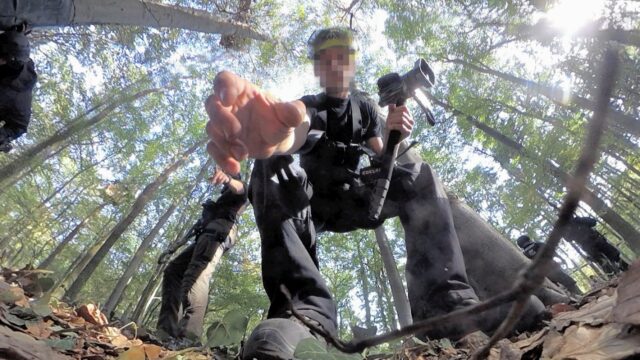
In 2018, Steffen Meyn died from a fall during the protests in Hambach Forest. The documentary Vergiss Meyn Nicht (Lonely Oaks) by Fabiana Fragale, Kilian Kuhlendahl and Jens Mühlhofffilm combines the footage he shot on a 360-degree helmet camera with interviews with environmentalists and asks how far activism should go.
In the documentary Kash Kash by Lea Najjar, the pigeons flying over Beirut can be seen as a beacon of hope in an age-old game of chance, “kash hamam”, that is all about increasing the size of one’s own flock. This film portrays three pigeon fanciers and a girl hoping to fly her own birds one day.
Besides the Heiner Carow Prize, all the selected documentary and fiction films will compete for the Compass-Perspektive-Award, endowed with 5,000 Euros. This year’s jurors are actor Dela Dabulamanzi, editor Anne Fabini, and director Jöns Jönsson.