When D Smith (whose film Kokomo City won two awards at Sundance last month) made her transition from male to female, she was startled by the hostility she encountered from her colleagues in the music industry. She was an award-winning producer and songwriter who had worked with some very big names, including Katy Perry and Lil Wayne – but all of a sudden, it was as if no-one wanted to know her.
“To be fair, I caught people off guard. One day, I was dressed one way and another day I was dressed a different way,” Smith remembers. “However, I took it for granted that with me having a good reputation in the music industry – I’ve never been in any drama or trouble and I’ve made labels a lot of money – that surely me coming forward and saying I am transgender publicly is not going to affect the trajectory of my music career.”
To her surprise, Smith was shunned. She ended up homeless and broke.
“Culturally, with black people in general in the music industry, it’s hard for them to deal with that maybe because of what they are dealing with,” she suggests.
All of a sudden, Smith was an outsider. Her income dried up. She lost her car, her recording studio and her home. She spiralled into a very dark depression.
Smith believes that many within the music industry “have personal issues with who they are; even with transgenderism or homosexuality.” Their own insecurities may have led them to turn against her.
“I think the biggest hurdle was me getting over my ego. I was humbled by the experience but also I felt degraded; I felt discriminated [against] and lonely. It was something for years that I have had to deal with.”
Now, thanks to the success of her film (sold by Magnolia), that has all changed. Smith is back in demand. CAA recently signed her up.
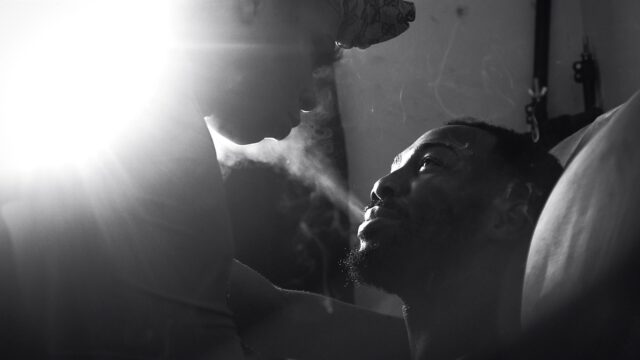
Very strikingly shot in black and white, the documentary offers an intimate insight into the lives of four Black trans sex workers in New York and Georgia.
When she began work on the project, Smith was still homeless, “sleeping on someone’s kitchen floor on a mattress which they took off their bed.” Her host bought her a camera and lens with which to start the documentary.
Producer Bill Butler provided the laptop on which she edited the film. “It was a very creative process because I didn’t have a lot of financial support. I was forced to really dig into my creativity and my intuition,” the director says of a film made on a very small budget.
Smith had been staying with Butler and his husband while filming two of the girls in New York. Then, when the pandemic hit, she left for Miami, the city where she was born. She had to face her family, coming home with nothing to show for all the years she had been “missing birthday parties and funerals” because she had been too busy with her music career to attend them. “They [the family] saw me at my lowest, my most vulnerable…I went back with nothing, [just a] suitcase.”
Sleeping on her sister’s couch and staying with a friend, Smith finished the film.
In the documentary, Smith set out to “place Black trans women in a different place where we have not been [before].” She wanted to be “provocative but dignified.” Her subjects were told that they shouldn’t wear wigs or make-up and Smith added, “by the way, you might be naked.” They were “super-curious.” They also found Smith’s instructions liberating. She was allowing them to be themselves, in the raw.
As for shooting in black and white, Smith felt this gave the documentary a ‘filmic” and “elevated” quality.
The girls had very “gritty” stories to tell but Smith was showing them in a “timeless” fashion but also in ”their true element,” in their own homes. She wanted them to be as comfortable as possible with the camera.
Kokomo City deals very frankly with the women’s sexual experiences. “When you capture a trans woman in a sexual or vulnerable or intimate position with a man, it doesn’t mean it is pornographic,” Smith adds. She wanted to “humanise the transgender women,” she underlines, and to show that they “do the same things heterosexual couples do.”
The film also addresses the violence that trans women face. As one interviewee points out, men will sometimes sleep with her and then claim they were “tricked” into having sex. Often, they will then become physically abusive.
“Oh please, I don’t buy for one second that a man doesn’t know when a woman is transgender. I don’t care how beautiful the trans woman is…a man knows! After a while, you know…what man on earth will fuck a woman and not at least touch her private parts. That’s their nature. Most women, when they’re intimate, they want you to do that. So how do you not touch her at all and you just give her anal sex?” she asks incredulously.
The film makes very eclectic use of music, everything from pop ballads to snatches of Ennio Morricone movie soundtracks. “I was inspired by the range of experience and knowledge in the film,” Smith says of the different songs included.
Kokomo City (screening in Berlin’s Panorama Documentary section) is already a hit movie. It’s had rave reviews where it has screened. Distributors have acquired it. Some of those who ignored D Smith after her transition are now acknowledging her again.
“I don’t have anger toward anyone,” she says of those who, not so long ago, wanted nothing to do with her. “I don’t want to sound a victim but I really was. I was discriminated against and left in the cold by the industry. No-one supported me. I have moved on from that. It’s part of my journey…I am open to working with any of those people as long as it makes sense for me,” the filmmaker states defiantly. “The point of this film is to be honest, to forgive, to understand.”