On 13 March, Geneva’s FIFDH Impact Days showcased a successful case study revolving around STEPS, a groundbreaking, 360-degree documentary project that aims to promote social change throughout Africa.
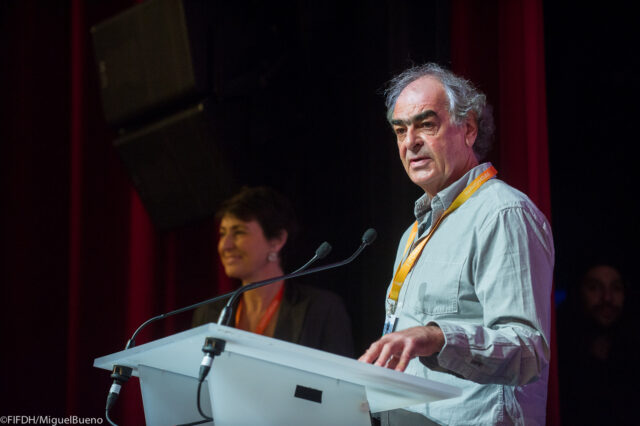
After her opening address, FIFDH’s Head of Impact and Industry Laura Longobardi, invited on stage Don Edkins, Executive Director of STEPS South Africa.
“There’s a sense of urgency about the world around us today. The world is at a bad place at so many levels. War, conflicts, deep inequality, forced displacement, the climate crisis… Never before have we such a responsibility as media creators and human rights activists,” said Edkins, underscoring how “through partnerships, we can have impact and meaning,” with positive effects, locally and globally.
“It’s no time to sit back, together we’re stronger. […] Documentary film is one of the most powerful tools we have [to] share our experiences and learnings,” he continued.
Edkins then explained how in the early 1990s he met Gaston Kaboré at a film conference. The Burkinabe filmmaker was already working on social impact by “taking the films he made back to the villages where they were shot, using the new screening technology of the very first video projector, which made it so much easier.”
He then touched upon his first two films, which were “stories about migrant labourers from Lesotho” working in South Africa’s gold mines. The women told their stories of struggling to make ends meet, while their men were coming home infrequently, enduring the digging of rock 3 km under the ground and living in overcrowded hostels. The films were brought to schools and villages in Lesotho, where Edkins witnessed post-screening discussions taking place between men and women. For the first time, women realised the living conditions of their men, while men started hearing stories of the women they had left behind. The two docs became “awareness-raising tools” for local organisations and trade unions which were fighting for better working conditions and accommodation. This cinema project continues today reaching communities through Lesotho, Edkins pointed out.
He then switched topic and spoke about how in the past no local films about HIV were made in Southern Africa, and only filmmakers from outside of Africa were tackling the issue. These tales, however, were only focusing on “death, diseases, hopelessness and tragedy,” thus favouring the circulation of “negative messages.”
“But there was another narrative to be told, which was about love, strength, beauty and resilience. Together with international documentary partners we made a collection of films by African filmmakers, 38 films from seven different Southern African countries. Instead of focusing on AIDS, we focused on people living with HIV. That project was called STEPS for the Future.”
Edkins said that the team partnered with local HIV/AIDS support groups across Southern Africa, and delivered the film on VHS tapes in 18 local languages to reach a wide local audience. However, after some time they found out they were unused, as “organisations didn’t have the expertise of using films with personal stories as educational tools.”
As a response to this, the STEPS team developed a training programme to “use the films” and “facilitate the discussion about the issues raised,” so that audiences could ask questions and open up about their doubts and anxieties.
The films toured in Zimbabwe, Mozambique and South Africa and had a huge impact on the understanding of the pandemic as well as on reducing discrimination in gaining access to medical treatments.
“From the beginning we had audiences in mind – personal stories about real people in real situations that the audience could relate to, with their hearts and their minds.”
A peculiar “learning cycle” became the core engine of the whole training programme. The cycle starts by watching the film together and continues with stimulating reflections on the film, linking the issues addressed in the film to the audience’s own lives, and finally discussing actions that could be taken to address those issues. The STEPS team efforts resulted in the creation of a mobile cinema network active in seven countries across South and East Africa.
“To be fully inclusive in the process, we began [adopting a] participatory film approach with the organisations determining what stories needed to be told to affect social change. With the help of a professional documentary filmmaker, the film was then made collaboratively.”
Edkins then mentioned an example of this “participatory approach,” and zoomed in on I Am Sheriff, a short born out of a Lesotho-based LGBT organisation which wanted to see a film about their experience as a discriminated community. He then showed two clips from the film, through which we find out that Sheriff feels like a boy born in a female body and tries to speak openly about her identity – at first to some villagers and, later, to a group of pupils.
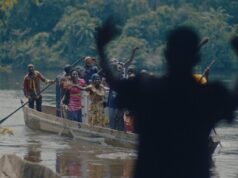
Next, Edkins spoke about the Generation Africa project, which focused on the themes of migration and youth opportunities and was kicked off owing to compensate the lack of African voices on such issues. After a call seeking for story ideas, 45 of these were selected for a development workshop and, following further research, 25 projects from 17 countries were produced. To ensure success, it was essential to “cross the colonial divide of Francophone and Anglophone regions,” and to work with local filmmakers who possess a deep knowledge of their communities. Many of these titles were screened at international festivals, and aired by broadcasters such as the BBC, Deutsche Welle, Al Jazeera and ARTE. Each film was accompanied by a facilitation guide, used as learning resource to guide post-screening debates.
The Generation Africa project contributed to the increase of the number of African impact producers, as well as to develop the STEPS impact toolkit, “appropriate for African impact producers” and shared with all the filmmakers involved in the initiative. These guidelines covered a variety of topics such as intercepting stakeholders, developing campaigns, budgeting, creating diverse audiences and forging partnerships with civil society groups, funders, organisations, distributors, subject matter experts, activists, media and logistical and technical partners.