Nobody wants to dwell on the recent past, but it’s worth reminding the doc industry how, back in Spring 2020 when it seemed as if the world was standing on the edge of a precipice, the likes of CPH:DOX, Visions du Réel and Thessaloniki Doc Fest were like a sanctuary to doccers. They were both a hub and a beacon, and were determined that the business of doc must be maintained, even if it was to be online, and that a platform for cineastes would continue to show the best of local and international non-fiction.
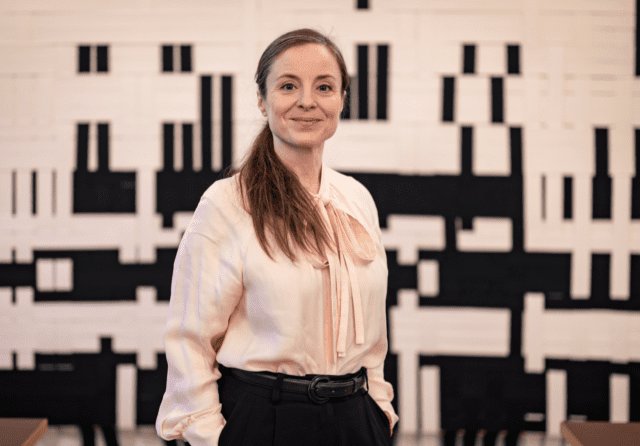
Three years on and things are back to normal, more or less. Folk are desperate to meet again and do business face to face, and fests are “less hybrid, more physical,” as CPH:DOX Managing Director Katrine Kiilgaard puts it. “People really do want to be together physically. Maybe some things are only possible in the physical world.”
One group that suffered disproportionately during the pandemic, at least in business terms, was young professionals looking to enter the doc industry. They felt rudderless, Kiilgaard argues, unable to conduct business in a meaningful fashion without real and necessary human contact. While their more established colleagues and counterparts had their networks intact, for new professionals Zoom was never going to be the panacea that would transform their fortunes.
Which is why the core focus of this year’s CPH:DOX, which celebrates its 20th anniversary, is on emerging filmmakers. The fest’s new INTRO:DOX programme seeks “to bring together a new, confident generation of storytellers to join and thrive in the established industry ecosystem, but also to help reform it, so it reflects the needs of the new generation of young audiences,” the festival website reads.
Furthermore CPH:DOX promises to “share know-how with newcomers on how they can best utilize the extensive industry programme of the festival, and provide them with essential tools for new professional talent to join and thrive in the documentary industry.”
Kiilgaard believes that there is something fundamental going on with the INTRO:DOX programme, and argues that established filmmakers can learn just as much from newcomers as vice versa. “I really think that the younger generation, in so many ways, from climate issues to gender diversity inclusion to how we are organizing our work life to – you name it – is bringing new ideas that we as an older generation need to learn from,” she says. “They are opening up a space for possibilities of transformation and power redistribution.”
The festival is expecting high professional attendance levels in 2023, but there will be a constituency for whom jumping on flights at the drop of a hat has become anathema, primarily for environmental reasons. In 2022 CPH:DOX attempted to equally satisfy both physical and online attendees (which they did with aplomb) but the practice was both very tricky to co-ordinate and exhausting – and very expensive. And the live online attendance figures weren’t always so high, with folk not so interested in engaging in real time but very much prepared to watch later on catch-up (like how most people watch television these days).
“It’s really hard to, in a really meaningful way, include the far away online participants in what’s happening in the room here and now,” says Kiilgaard of the fest’s live professional sessions. “It works when you are all on a digital level together, or all on a physical level together, but the mix is really hard.” In 2023, professional events will be accessible for online attendees, but there will be a delay, she adds.
For audiences, “we’ve chosen a digital long-tail model, where all of the films are shown first in the cinemas and then we have a selection screened afterwards on our online platform for audiences as well,” Kiilgaard points out.
Putting on a doc fest post-pandemic is a lot more preferable, the CPH:DOX MD is happy to concede. “It’s never super easy to put on a huge festival like this. It’s a lot of work and there is a lot of stress around it. If it’s not easier, then it’s been organized in a more controlled environment in 2023. I’ve had the feeling that the organization has been in time with things and on time with things, and coping with the process in a better way than over the past few years. So that has been quite a relief.”
A milestone such as a 20th anniversary is always a good moment to take stock, and to look both back and forward. Kiilgaard cites the earliest days of CPH:DOX when the current Artistic Director Niklas Engstrøm was a volunteer and part of a vanguard “trying to search for the boundaries of what a documentary could be and how it is affecting the way we see the world.”
“And from that sometimes provocative grassroots project, we’ve grown to become one of the most important platforms for documentary in the world,” she adds.
2023 therefore sees associated themed programs named Predicting the Past and Rewriting the Future which assess, firstly, how history increasingly plays a crucial role in the major debates of our time and, secondly, how images of the future – utopian and dystopian – dominate our times, and their impact on the way we design and redesign our societies.
“These programmes take our reflective mode as a starting point to see what’s happening not just in the festival world and how everything has changed, but what has happened in the wider world, such as how history is a weapon or a battlefield for many issues today, such as colonization,” says Kiilgaard. “But also how some of the things that we can see looking into the future can help us maybe even change the present that we are in. And I think we would like to look at the festival in the same way.”
“I just hope that we at the festival can keep that spirit of curiosity and try to nurture it through bringing in younger generations who can help us look at things in new and innovative ways, also how to reimagine the future of our industry and what needs to change, and what needs to stay,” Kiilgaard ends.