Four projects are selected for the Chile Showcase (Riviera 2 Screening Room, May 21). In the main, projects are looking for post-production funding or general gap financing, and are sometimes still open to co-production opportunities. Some of the lead producers on the projects answered questions posed by Business Doc Europe.
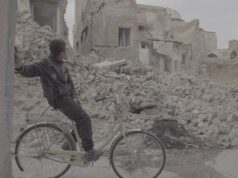
In The Shadow of Light, directed by Isabel Reyes and Ignacia Merino, is set for a July 2023 release with 95% of its €200,000 budget in place. The synopsis read how, in a small town in Chile, rural folk must deal with an electricity grid providing power to the rest of the country. A child ventures out among hundreds of transmission towers, transformers, and thermal power stations, giving himself over to chasing rabbits. In the darkness, the threatening presence of the large-scale industrial complex reveals the workings of an unequal system.
“The film takes an interesting and novel look at energy, focusing on a small unknown town, where one of the largest electrical substations in the system that feeds almost the entire country is located. Paradoxically, the town and its inhabitants have little street lighting, pay expensive electric bills and have a totally unstable and precarious lighting system,” explains producer María José Diaz of Chilean production company Galgo Storytelling. “The documentary explores the inequality of a country that has based its economic development on a system that has historically privileged business growth over people’s welfare rights.”
The other producer credit on the film is taken by fellow Chilean Francisca Barraza of Funky Films. Together they are looking for festival interest, buyers, gap financing and communications, marketing and strategic guidance during Cannes Docs.
Diaz reserves much praise for the filmmaker pair of Isabel Reyes and Ignacia Merino. “Having grown up together as cousins, they are a creative duo with a very powerful, fluid and determined connection,” she says. “The care for the visuality and details of their stories, added to their interest in environmental, social and contingent issues, make them create works with a high artistic and political value. Between the two of them, they work on regional issues in a country highly centralized in the capital Santiago, in order to [stamp] their provincial origin. Through this debut film, directors Isabel Reyes and Ignacia Merino lay the foundations of an innovative style that is worth following.”
Diaz adds: ”This innovative proposal, which develops between the observational, sensory experimental, and the elegant subtleties that make visible the unfair and something as intangible as energy, speaks of a solid proposal of directors Reyes and Merino…[It is] a film that deals with a very relevant and contingent topic, and at the same time [presents] a sensorial cinematographic experience that can be highly stimulating for the spectator.”
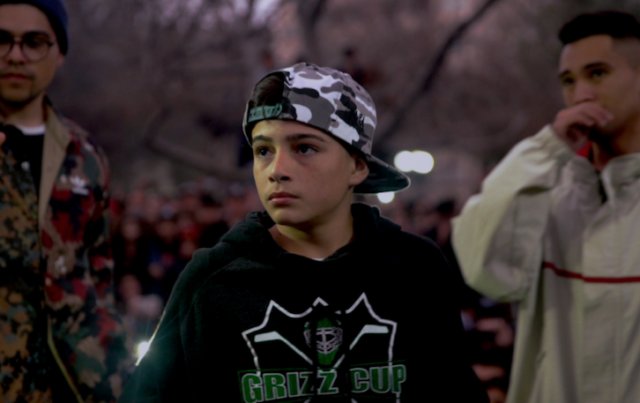
All of the €205,000 budget is secured on debutant Mijael Bustos’ El Menor, points out Chilean producer Diego Saldivia of Los Reyes del Parque. The 80/52-minute film comprises an intimate portrait of Efraín (15), a marginal teenager without family who, within a few months, becomes a worldwide phenomenon in freestyle music battles. But the boy encounters sudden fame without anyone close to guide him emotionally. In that loneliness, but surrounded by hundreds of thousands of fans, Efrain begins to gradually disappear behind “El Menor”, his artistic persona.
The project is at edit stage and Saldivia is looking for festival interest, sales representation and buyers.
“The problem is that these successes are ephemeral, gone as quickly as they came. By portraying the career of El Menor, with its successes and failures, we seek to reflect on growing up in this world obsessed with success. Because I believe that in order to stop being a child, you have to build effective relationships based on your virtues and also on your defects or vulnerabilities,” the producer tells BDE.
The film is the result of six years following the career of Efrain. “In this long process the director has managed to generate a very intimate record of the character, gaining access to situations that range from the greatest success to the darkest areas of the protagonist,” says Saldivia. “We believe that these are scenes rarely seen in documentaries on this subject and that they allow us to build a film full of emotions, dramatic twists and situations on the edge that will awaken the viewer’s interest. We believe that this makes it a film of cross-cutting interest.”
“In his previous short films, which have won important awards in several countries, Mijael has been characterized by achieving a very intimate access to his characters, which allowed him to subtly portray the brightest, darkest and most contradictory spaces of the protagonist through observation,” Saldivia adds of director Bustos. “I believe that,
over the years, Mijael has managed to continue training that sensitive and critical look, and I am excited that more people can get to know and enjoy it with this film.”
In Life by Antonio Caro, Fresia, a young Pewenche girl who has lived all her life in a community that mistrusts Chilean institutions, must gradually move away from her home and territory because she is pregnant. She visits clinics for her maternity check-ups, travels to cities she does not know and finally enters a public hospital, where after a long wait she gives birth to her baby, Dalila, who is born with a cleft palate.
“The Chilean-Mapuche conflict is historical and in recent years the differences between the two territories have increased. The main problem is that the differences between the two are so great that the possibility of dialogue is almost nil. This story seeks to be a bridge between both worlds, through a deeply human story that allows us to connect not with what separates these two worlds, but rather with what unites them,” says producer Michel Toledo of Tótem Producciones, who expects the film, currently at edit stage, to be ready by May 2024. The budget is set at €135,000 with 83% currently in place. At Cannes Docs, Toledo is looking to drive interest from festivals, sales agents, distributors and co-producers, as well as secure gap financing.
“In Life is a documentary with an observational style, filmed in the depths of the mountain, in Alto Bío Bío, in southern Chile, where nature and landscapes play a fundamental role in the story,” Toledo continues. The film portrays a journey that seeks to reflect the birth of a new life and the transit between two worlds that do not dialogue with each other. The strength of this film resides precisely in the most human and emotional aspects that emerge from the story of its protagonist.”
Toledo outlines the specific qualities of director Antonio Caro. “Before becoming a filmmaker, Antonio was a maternity doctor in Mapuche territory, in the space where we are filming today. This experience led us to the possibility of telling this story, through knowledge of the customs and way of life of the Mapuche. Antonio is characterized by being an analytical, patient, respectful and very empathetic person with his characters, characteristics that allowed him to achieve the access that this film needed.”
Relentless Memory by Paula Rodriguez Sickert is in post-production with a mooted release date of October 2023. Eighty-five per cent of the project’s €265,200 is in place, and producer Paola Castillo Villagrán of Errante Producciones is at Cannes Docs to drum up festival interest, and secure sales representation and attract international buyers.
In the film, Margarita, a young Mapuche academic, discovers in an unknown archive in Berlin the testimonies of Mapuche prisoners who were expelled from their territories during the military invasions that founded Argentina and Chile. Moved by the discovery, she embarks on a journey to retrace the deportation routes of her ancestors.