

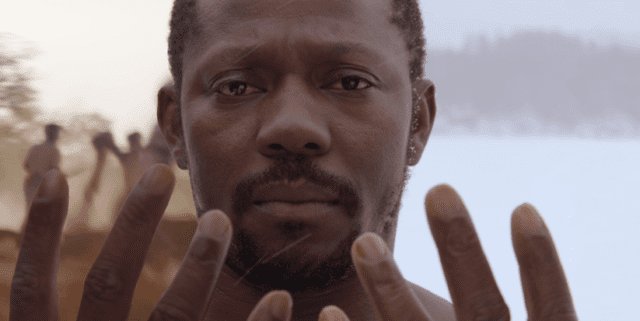
In the Finnish project Grains of Paradise by Jenni Kivistö and Jussi Rastas, pitched at Finnish Film Affair 2023, we encounter Sibiry from a small village in Burkina Faso who moved to Finland 10 years ago to pursue his dream to be a professional choreographer.
But nobody wants to know the truth, that Sibiry’s life consists of numerous mundane struggles and that money is never sufficient. That said, Sibiry decides to give the villagers a ‘mentality shift.’ He buys a cheap minibus to help them take ‘progress’ into their own hands, “lifting the prevailing mindset to wait for a saviour from outside, and most importantly restoring dignity…” the synopsis reads.
Ella Ruohonen of Väki Films describes the appeal of her film to doc professionals and audiences alike. “It’ll be a finely hand-crafted film made with love. When this is the case the financier should always get involved…What makes this project very special is that it combines observational cinema with contemporary dance. The main character is a contemporary dance choreographer. In this sense we aim at creating a film that explores the boundaries of documentary filmmaking, the main character also being a part of the artistic team as a choreographer.”
“This is a returning story where the originally West-African main character has his eyes fixed on his home village in Burkina Faso, after spending years in Europe,” she adds. “We have seen many stories about immigration and fates of refugees, but the lesser depicted subjects are the regular immigrants and their relationship with their original home country. Grains of Paradise discusses the challenging position in which many emigrants may unwillingly end up, where they’re seen as privileged in their countries of origin and are expected to solve many problems there. This film also broadens the idea about who the immigrants in Europe might be.”
The film is budgeted at €412,000 (50% in place) with a mooted delivery date of Winter 2024/25. “It’s always hard to get the financing in place. It takes two thirds of the time you spend making a film,” Ruohonen adds of a major hurdle she looking to overcome. “We thought convincing the financiers about including contemporary dance in the narration would have been hard or questioned. We thought wrong. We’ve got very good a response for this from everywhere. However, as the production of the dance scenes resemble more a fiction production than a documentary, the resources, including financing and time that is possible to be spent for the planning and testing, are slightly hard to reach in terms of the traditional documentary financing.”
Directors Jenni Kivistö and Jussi Rastas have a strong track record of making works focusing on global themes. Their previous collaboration, the feature documentary Colombia in My Arms (2020) received 15 awards, including the Dragon Award – Best Nordic Documentary 2020 (Göteborg Film Festival) and New Nordic Voice – Documentary 2020 (Nordisk Panorama). “They’re crazy enough to take subjects that are related to delicate global issues,” Ruohonen underlines of her fellow filmmakers. “I feel they’re talented in creating films that open up multidimensional interpretations. They have a unique respect for each other, and have been working together for many years. This makes it very stable and enjoyable to work with both of them.
”In their joint statement on the film, Kivistö and Rastas comment: “This is a lesser depicted story yet concerning millions of people. In the film, the immigrant main character wants to solve essential problems in his country of origin. Our aim is to broaden the Westerners’ understanding of who the immigrants really are and, on the other hand, open the eyes of those back in the motherland to see the high pressures many emigrated countrymen may experience. Using contemporary dance in narration makes this film unique while respecting the main character’s identity.”





