On the eve of Sunny Side of the Doc 2024, Business Doc Europe spoke to Clara Vuillermoz, producer at Paris-based outfit Solent Production. At La Rochelle, Vuillermoz pitches François-Xavier Destors’s bold feature-length doc project Edgar Hilsenrath – The Masturbator, which showcases in the Arts & Culture session of the French industry event.
“In his novel ‘Fuck America,’ Edgar Hilsenrath tells the story of a German-Jew who survives as best he can in 1950s New York, obsessed as much by sex as by the need to write a novel about his wartime ghetto experience. The title of this book, which he wants to sell for success, is The Masturbator. It’s a delirious title that, like its author long censored in his own country, upsets the self-righteous,” reads the project’s official synopsis.
“Guided by the writer’s quest for his past, the film seeks to reassemble the fragments of his memory from the Germany of the 1930s, the Yiddish shtetls that disappeared in the horror of the Eastern ghettos, the disillusionment of the Promised Land and the birth of the State of Israel, the margins of the American dream, and finally the return to Berlin, in a Europe fractured by the resurgence of extremes and fears.”
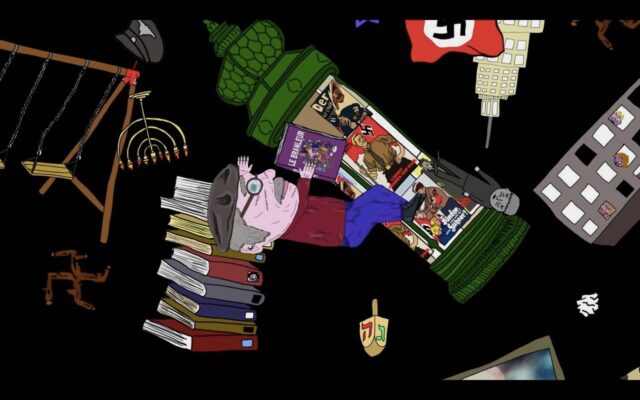
The official press notes reveal some more details about the film’s visual look and style: “Immersed in his own imagination, Edgar Hilsenrath invites us on a journey into the life he has reinvented for himself through the characters in his books. We are guided by his voice, adapted from excerpts from his works, but also by the presence of an animated character who embodies his Doppelgänger.”
“Edgar Hilsenrath’s work has been familiar to me from the earliest time of the research I started fifteen years ago on the artistic forms of the memory of mass crimes and genocides,” explains Destors. “This study first turned into a book questioning the way literature and films of fiction shaped the memory of the Tutsi genocide in Rwanda, and then into several documentaries in which I pursued that quest of new ways of saying the unspeakable, of picturing such traumatic events that defy our imagination. Along my encounters in Rwanda, Cambodia and Siberia, I have always been struck by the way survivors would intersperse their accounts with jokes or sometimes roaring laughter, as if humour was sometimes the only way to touch on the absurd truth.”
“As a mechanism of survival, this laughter is a refuge that enables to convey all the cruelty of reality while making it look like a farce. Under Hilsenrath’s pen, it is a way of rebelling against the ‘artistic silencing’ after Auschwitz and of claiming, to the contrary, that narratives of the genocide can only be passed on through new forms.”
“The project’s provisional budget is €450,000,” says producer Vuillermoz. “So far, we’ve secured development financing. With our projects we took part in labs organized by ANIDOX, the IDFA Academy and EAVE. At La Rochelle, we expect to put the project on the map for securing co-producers, broadcasters and a sales agent.”
Solent’s slate of productions focuses on documentaries tackling “timeless social and political issues.” The firm’s current line-up includes projects in production such as Catherine Bernstein’s Cercas & the Imposter, François-Xavier Drouet’s Plant Trees, Claire Billet’s Algérie, matériel Z and Mike Magidson’s Le vent, le souffle de la terre, alongside established titles such as Victor Kossakovsky’s Berlinale world prem Architecton and Alexis Pazoumian’s CPH:DOX-premiered The Black Garden.
“Making a film on Edgar Hilsenrath seems all the more necessary today that his work resonates as frighteningly contemporary,” Destors says of his subject. “Viewed in the mirror of his dark humour, his novels seem like desperate warning cries in the face of our current reality – of war and violence, exile and displacement, racism and antisemitism, sexism and rejection of the marginal. The force of these words must more than ever be heard as they stand like bulwarks against the rampant calamities of our world.”
Destors’s first doc feature, titled Football Rwanda, Fields of Memories (2014), tells the story of a popular genocide through the social, political and cultural role of sport in Rwanda. His sophomore feature, Melting Souls (2018), was set in the industrial forbidden city of Norilsk, a former gulag close to the North Pole. Among his other works are the historical doc series Voices of Srebrenica; Paris, Capital History and 68 – The Decade.