Just prior to the Tokyo Olympics of 2021, broadcaster Arte France began looking for projects about Japan. This was when French filmmaker Léo Favier first proposed a project about animism and “the spirit of the monster.” Legendary Japanese animator Hayao Miyazaki (director of modern-day classics like Spirited Away and Howl’s Moving Castle) was an intrinsic part of the pitch. The film wasn’t commissioned but the director made it clear that if there was future opportunity to work on a documentary about Miyazaki, he “would love to do it.”
Producer Loïc Bouchet of Les Bons Clients kept on pushing Arte to get behind a Miyazaki doc. Eventually, they agreed. That’s how work began on Miyazaki, Spirit of Nature (the new film sold by Balanga and screening in official selection in Venice).
Studio Ghibli, Miyazaki’s company, doesn’t open its doors to just anybody. Strangers need to win their trust. “It’s not easy. It takes time. It takes also the right person to make [the role of] the go-between,” Favier admits.
It helped that Miyazaki, Spirit of Nature wasn’t the typical, fawning biographical documentary about a well-known filmmaker. It had intellectual heft. Favier was determined to use philosophy and anthropology to make sense of Miyazaki’s universe. He wanted to explore in depth the animator’s relationship with nature.
Miyazaki’s producer Toshio Suzuki was intrigued by this approach. Not only did he eventually help the filmmakers, but he did the calligraphy for the title sequence and made the drawing for the poster.
Favier and his team soon found themselves working in close collaboration with the Studio Ghibli top brass. “We always were showing them everything that we were doing.”
Miyazaki himself doesn’t give an interview but there is extensive archival material of him. He is hugely respected in Japan. Broadcaster NHK has footage of him stretching back to the 1980s.
In some ways, the animator is a paradoxical figure. He seems mild-mannered and kindly, but contemporaries have stories about his relentless and hard-driving perfectionism. They would hear his voice shouting at them. He always demanded 120% from his staff.
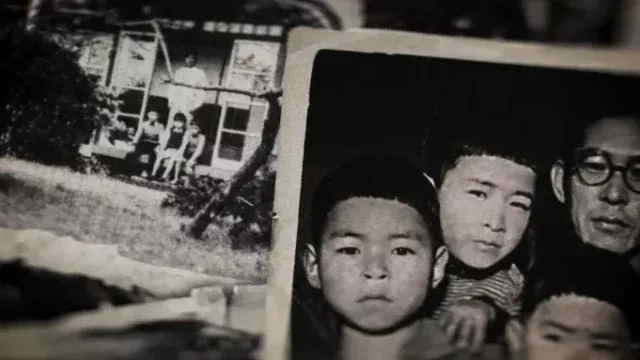
He is an ecologist who loves nature fervently and yet also has a fascination with machinery and warfare that stretches back to his childhood in the 1940s when his family were caught up in the bombing of Japan.
“I think the work of animation is pretty particular. You can control everything and I guess you can really be obsessive with the perfectionism of the movement. Also, it’s the Japanese work culture…they really work a lot,” Favier confides. “I have the feeling that he [Miyazaki] gives everything.”
The French director speculates that one reason Miyazaki has announced his own retirement so many times is simply that he kept on exhausting himself. By the end of each new big, animated feature, he would be running on empty.
“But then he starts again because he can’t do anything else.”
Academic Susan Napier, who has written a biography of Miyazaki, told the documentary makers that the animator was a man “full of contradictions.” That, Favier suggests, is precisely what makes him interesting.
Miyazaki’s son Goro features prominently, as does producer Suzuki. Meanwhile, academics, various experts on Studio Ghibli and philosophers (notably Timothy Morton) also talk on camera.
Goro studied landscape architecture. He wasn’t an animator. At Studio Ghibli, he designed the park and ran the museum. But then he began to direct animation himself. He has now made many films of his own (albeit seemingly under the close supervision of his father).
“It is difficult at Studio Ghibli to do your own movies. Some didn’t manage,” Favier explains how hard it is for newcomers to come out from under the huge shadow cast by Miyazaki and the company’s other principals. Miyazaki’s habit is to check everything on other people’s productions as well as his own.
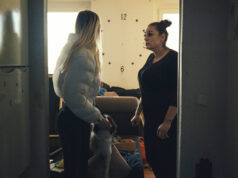
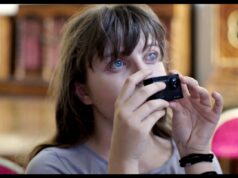
Spirit of Nature was shot in “an efficient and tight way.” Favier and his team were in Japan for just under a fortnight and were shooting two interviews every day.
The French director comes from an art and design background. His recent film credits include Dopamine, 2022and Dopamine, how apps hack our brains, 2023. He acknowledges this his Miyazaki doc is shot in a traditional style but insists that, for him, this is “a really personal” project.
“Miyazaki’s films started in the 80s. They’re really connected to my life,” Favier reflects on his own passion for his subject’s work. “When he [Miyazaki] was doing Porco Rosso in the 1990s, it was about the war in Yugoslavia. I could remember [watching] it as a child on TV. Of course, he is way older than me but still I have precise memories of what was happening at the time he was making these movies. I really wanted to have three storylines: what is happening in the world, what is happening in his life and what we can see in the movies – and how they interconnect.”
Favier is at pains to point out that the documentary is not about the Japanese director…it’s about his films. Nonetheless, some personal insights into Miyazaki were needed for a better understanding of his work. Studio Ghibli weren’t interested in a documentary that would be too hung up on biography and psychology. “Slowly, we explained to them that to understand the films we have to understand the artist – and we have to talk about psychology.”
There has always been a strong connection between Japan and France. “More precisely, it is between Paris and Tokyo,” Favier states. He is already at work on a new movie about the influence on Japanese art and pop culture on the west since the end of the Second World War. “I really realised that the relationship is so particular…maybe Japanese and French culture are closer than we imagine. The Japanese, they love what the French do and the French are crazy about what they do in Japan!”
Both countries have a long animation tradition and draw inspiration from each other.
Favier also makes it clear the importance of Suzuki’s work as a producer in enabling Miyazaki to flourish. The two Japanese contemporaries fed off each other, never allowing complacency to creep into their work.
The director hopes that the new doc will have a theatrical life before it turns up on TV. The film has the approval of Studio Ghibli – although their usual perfectionism meant they wanted to check everything. They asked for changes in the voice-over and were very particular about fact checking.
“I think they’re pretty happy with the film and they are really happy it is in the Mostra,” Favier concludes.