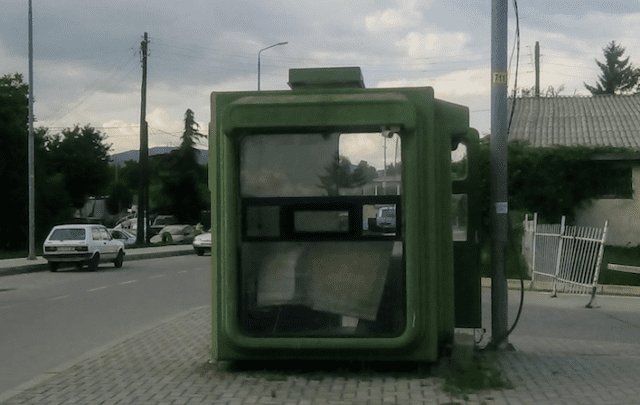
Croatian director Filip Filković Philatz and German producer Tamara Babun (Wolfgang & Dolly) pitched their doc project K67, about the iconic work kiosks that populated much of the former Yugoslavia before the Balkans War.
K67 is also a story about the unusual friendship between designer Saša Mächtig and director Filip Filković, the film notes underline. As they go on the road together their companionship evolves into a journey through the countries of the former Yugoslavia to explore the history and present of these iconic kiosks together.
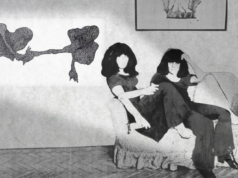
“So I think that we’re going to be a lovely couple in the film, like the professor and his student,” Filković told attendees of Industry Days.
Filković is not alone in his admiration for designer Saša. When they recently visited current kiosk occupants, “everybody was buying him drinks. Everybody liked the guy because he’s kinda cute. He’s like a Yoda,” the director noted.
The synopsis further points out how, thanks to their modular design, the kiosks were ubiquitous in the urban landscapes of the Balkans, serving various purposes, from newsstands to student cafes. Even today, “the once-symbol of Yugoslav modernisation” is recognized and exhibited at MoMA, the prestigious Museum of Modern Art in New York.
“Through the film, viewers learn about the impact of K67 on the Balkan states, its global reach, and the challenges it faces in preservation as part of the artistic heritage. K67 [will be] a retrospective, introspective, and inspiring film that blends art, history, and human connection,” say the team.
During their odyssey, the designer/director pair will visit some 20-30 of the 350 locations they have identified across Slovenia, Croatia, B&H, Serbia and Germany. “You can see some now in forests, in meadows. It’s really quite interesting where they are,” says Filković.
Producer Tamara Babun pointed how the kiosks enabled small-time business folk and entrepreneurs “who need to make a living somehow and don’t have a lot in their pockets” to operate out of their own space, before explaining where the project currently stands.
“About the money in our pockets, we have development and production funding from the Croatian Audiovisual Center. We have a private investor with a little bit of money. We have our own investment. We still have a way to go to closing the budget, but mostly we want to know who of you can take this film with us to the world.” The project has raised almost €100,000 of its €159,852 budget.
Filković and Babun were receptive to ideas from the panel of experts in Sarajevo, such as to tell the individual stories of some of the kiosk owners, as well as those of the people who removed them in order to create a greater sense of “tension.” Also, the kiosks of the past cry out to our 21st Century demands for sustainability, it was noted, and this may be an interesting line to explore. Yes, the pair agreed.
It was further suggested that this film would fit perfectly into a series that could explore forgotten design classics/oddities, such as the red telephone box in the UK or the egg-shaped ski pods that delivered people up the Alps. “There is something very vintage and nostalgic about your project,” they were complicated at the end of the pitch.