

Not long after the Iranian revolution of 1979, it was obvious to all that there was little room for women in it. When thousands of women subsequently protested against the compulsory wearing of the hijab, their defiance was dealt with ruthlessly. Freedom of expression was banned. Even dancing was outlawed.
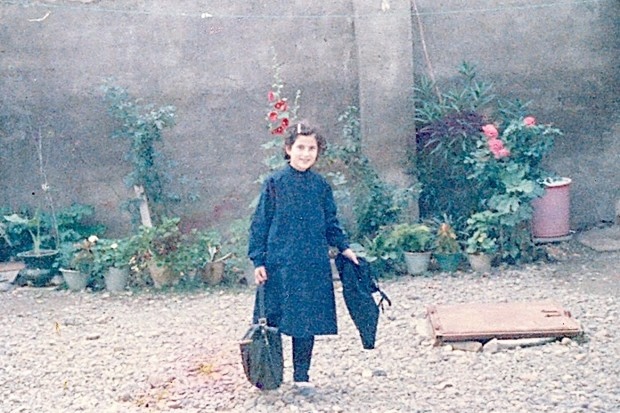
Three weeks after the revolution, on March 8 1979, Farahnaz Sharifi was born into a family which defied such strictures, at least in private. For years, hers was a safe planet where, behind closed doors, women could dance and laugh and sing, and with no forced headwear. Family footage attests to this.
But when Farahnaz went to school at the age of 7, she entered an altogether different world, one in which she had to wear a hijab and where she and her classmates were taught “death to everybody,” especially to America.
Thereafter she led a double life, a life played out on two planets. When she came home from school and entered her back yard, she removed the hijab, which she increasingly realised was more than a mere piece of cloth. It was an object of control. But not in her house. “I realised that my planet is where you can look like yourself,” Farahnaz says in the film.
In later years the cellphone became the perfect instrument for recording the “history that they [the authorities] don’t want recorded.” That history was one of personal defiance, recorded in clandestine fashion within her house to indicate domestic happiness, or from her car to film protest on the streets. “They have their own history, we have ours,” Farahnaz says.
“At a time when power structures strive to narrate history in ways that hide important and popular segments, it becomes all the more crucial to share personal details and micro-narratives,” Farahnaz further says in her notes for the film. Or to share moments of enormous social significance, such as the murder in 2009 of student Neda Agha-Soltan which was recorded by passers-by, and which became a rallying point for protest.
But before she owned her own phone camera she used “other people’s cameras” at film school, where she learned her craft and where the process of recording became, for her, “an addiction.” Later her obsession reached a whole new level when she began to collect the pre-Revolution 8mm archives of other Iranians whose “past became a crime,” as evidenced in their dancing, their drinking, their joy, the women’s voices and heads free of hijabs. Most people had destroyed their home videos in a collective act of forgetting, but Farahnaz was able to source some that had been salvaged. Little by little, she could, at least in small part, plug the gaps of her country’s forgotten past.
“When we share a memory with others, it moves from private to public. This story is woven
tightly with a resistance to forgetting,” she says.
And all the time she continued to create her own archive, her “homemade history,” of life at home in Iran, with all the dancing, the affection, her friendship with exiled academic Leyla, the love. And then the protests, the onset of Covid, the death of Mahsa Amini, the death of her mother, and then Farahnaz’s own eventual exile in Germany, where she made the film.
Farahnaz was editor on Firouzeh Khosrovani’s IDFA 2021 winner Radiograph of a Family, which chronicled Iran’s shift from secularism to radical Islam, as seen through the prism of the director’s family. “First of all, I was a filmmaker and then after a few years I started to edit films,” Farahnaz tells BDE how the process of editing films informs the process of directing them, and vice versa. “I love storytelling and I think a very crucial thing about editors is they should know how to tell a story, whether they are also a filmmaker or not.”
My Stolen Planet is immensely moving in its depiction of home life in Iran. We meet Farahnaz’s kind and gentle mother, a woman whose failing memory inspires the director to save her country’s own forgotten memory. What’s more, a sequence depicting nothing other than feet dancing joyously and free of restraint will bring tears to your eyes. And of course the film is intensely jarring as it depicts the inequities (and the violence) suffered by women in Iran. Its production must therefore have taken an emotional toll, I suggest.
“I had this experience before in a collective film [Profession: Documentarist, 2013] that I made a short episode for…and it was the first time that I used my family footage in the film. But this time it was very different,” Farahnaz says. “It was very difficult to have a distance from the material I had, especially after I lost my mother, especially after the Women, Life, Freedom movement. I was very, very emotional with these videos. And sometimes I remember that I was not able to continue working. I was just watching some videos from my mother or from some people in the street in Iran. I shut down everything and I was crying or I was very emotional, and it takes time…to have a distance from that. After the first cut I sent the film to some very professional editors and filmmakers and mentors that I had before. And from their point of view, I tried to see the film differently and [gain] more distance again. So yes, it was very challenging.”
How does Farahnaz assess from afar the Iran she had to leave? “I don’t feel that I’m living outside of Iran. I’m there, like Leyla said in the film, and I’m not there,” she tells BDE. “Things are changing in Iran very fast. I am in touch with my friends there, my family there, and every day I’m following the news.”
“So I can say that Iran is inside me,” she adds. “And I think I still have some stories to share about Iran within other films, not only with this one.”
Likewise, the situation of women in Iran. “I think all the works I’ve done till today and [the works] I’m going to do in the future are somehow related to women’s situation,” she says. “This is in my cells, this is in my blood, this is in my life.”





