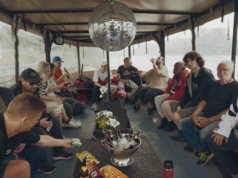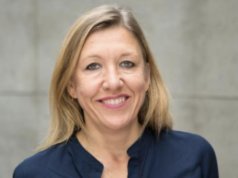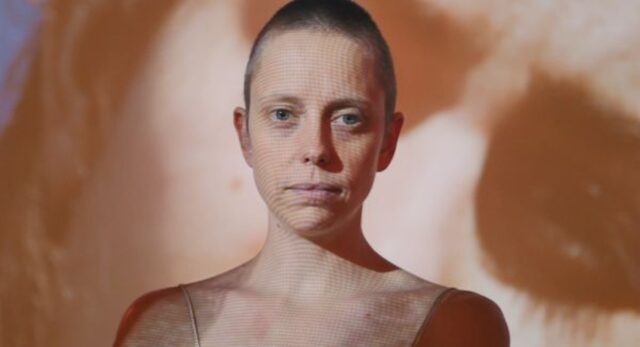
Oscar-winning Czech director Marie Dvořáková felt a natural sense of identification with Marie Tomanová, the subject of her exuberant new documentary World Between Us (a world premiere this week in Ji.hlava’s Czech Joy section). Like Tomanová, she too had left the Czech Republic behind to pursue her artistic career in the bohemian melting pot of New York.
“I think her story mirrors the stories of thousands of people, artists who came to New York to fulfil their dreams – and I am actually one of them!” Dvořáková tells BDE.
Then director has lived in New York for many years (although she still travels frequently to Europe). She won her student Oscar for the short Who’s Who in Mycology in 2017, having studied both at FAMU and NYU’s Tisch School of the Arts. She met Tomanová at the Czech Centre in New York. There was a period when both women were working there.
At that stage, Tomanová was an aspiring photographer working in several jobs at once. “You still try to do your art but obviously you hustle,” Dvořáková states.
Tomanová was already an obvious talent with an irrepressible spirit. She may have had to take employment as a babysitter but she was making strides, getting noticed for her portraits and street photography, and eventually securing her first solo show. Dvořáková decided to make a ‘star is born-style’ film about her transition from being an unknown to becoming an established and respected artist.
“Back then, I thought I could just shoot a short video about how an exhibition is put together,” Dvořáková remembers. “I thought it would just be a short video I would put online…but as I started filming her and the preparation for the solo show, and I was with her after work, in my free time, at the weekends, following her with my camera, I realised there was more – I realised how talented she is, how wonderful as a person she is, with incredible energy.”
Dvořáková ended up being given access to her subject’s home and getting to know Tomanová’s husband, art historian Thomas Beachdel. At first, he wasn’t very keen about having an interloper with a camera in their apartment. Gradually, though, they all became close friends.
“Two years into our relationship, he understood, started trusting me and became another character in the movie – because the movie is about the two of them, not just Marie, but about the special relationship those two have.”
Dvořáková achieved an extraordinary intimacy with her subjects – and with their pet cat. In all the time she spent with the couple, she never saw them quarrel or get cross. There were moments of frustration along the way – for instance when Beachdel becomes depressed after discovering that Tomanová’s first photography book has been very badly printed.
“But he wasn’t upset with her. They have a really nice dynamic. He curates her exhibitions….obviously, things go sideways sometimes but I haven’t witnessed any serious tensions. They function really well…He’s intellectual, well-read. He’s not as dynamic as she is – she has a lot of energy. He’s a calmer person.”
At first, the film had no backing. The director was borrowing Tomanová’s camera and filming her with that, or shooting on an iPhone or whatever other device might be available. At the same time, Tomanová would frequently use Dvořáková as a subject whenever she wanted to try out a new piece of equipment or test the light.
“It [the documentary] was really put together on a string budget,” Dvořáková explains. “One huge aspect why I started filming this documentary was that I could do it immediately. I didn’t have to wait for a producer to accept it or to wait for grants…basically, I borrowed a camera and a microphone and I started filming.”
After two or three years of working in this hand to mouth, freewheeling way, Dvořáková approached HBO Europe.
“They took the project which basically saved me!” the director says. Other potential backers had been far more hesitant. They’d always find an excuse for not giving her money. She was still in her job a creative director for the animation studio The Studio NYC in New York and so had income – but was working on the movie in her free time.
The director wrote an email that eventually reached renowned HBO exec Hanka Kastelicová and her team. They read it and when they learned that Dvořáková had already shot a large amount of footage, they told her they were interested and asked her to edit together some excerpts. The director cut together a 6 or 7 hour cut. She was then given the money for the production.
“I must say that working with Hanka and [her colleague] Tereza Keilová was an absolute pleasure. They were so supportive of me, from the first day of our collaboration until the premiere.”
The film soon turns into an all-American success story. Tomanová became a highly successful artist and photographer. Her work is now feted by influential critics and she has fans and followers. Nonetheless, back home in the Czech Republic, she still feels far less secure. Dvořáková knows that sensation too.
“There are articles about you, some people know about you [but] it definitely doesn’t help you to advance faster,” the director reflects on the lack of enthusiasm Europeans sometimes feel for artists who succeed elsewhere. “I think it works much better in the US. If I knock on someone’s door looking for funds or pitch a project, if you say that you studied at NYU Tisch and that you won this award [the student Oscar], it opens the doors. Definitely, in the US, it helps you…[but] I don’t think at home that the award was such an advantage.”
The director now has US citizenship – but she retains many connections in Europe and expects to continue working on both continents. “I live in New York and I love it there, and I love my home in the Czech Republic. If I can unite these two worlds in the films I am going to make, I would be the happiest person!”
Dvořáková is in development on two new projects. One is a documentary that “involves archaeology” but is at a very early stage. The other is a fictional “biopic” but again she says it’s too early to divulge further details.