This year, DOK Leipzig delivered a bumper harvest of new German docs, led by Thomas Riedelsheimer’s Tracing Light which opened proceedings on October 28. This was joined by an eclectic slate of world premiere presentations in German Competition, ranging from Anna Friedrich’s investigation into nomadic life in modern-day Germany (The Vagabond’s Garden) to Tarantism Revisited (about wild and mysterious responses to religious stimuli in southern Italy) to Daniel Abma’s sensitive observation of youths in the care of social workers (Im Prinzip Familie), and more besides.
Likewise, the festival’s Industry section offered up strong works-in-progress (DOK Germany Preview) that seem likely to be in contention for selection at major fests in early 2025.
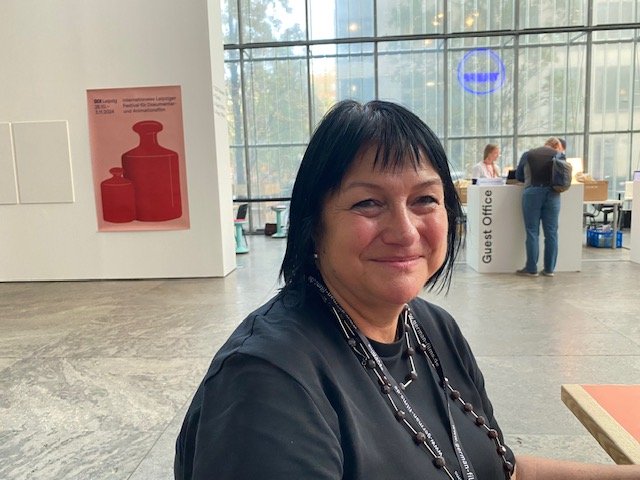
All of which seems to indicate that the German doc industry seems to be in good health. Furthermore, German Films MD Simone Baumann is pretty happy with a yearly set-up that sees a major German docfest in Spring (DOKfest Munich) working in tandem with DOK Leipzig in Autumn, six months later. “This is absolutely complimentary. We have a big production output of German documentary, so we can deliver for two festivals.”
To these fests, of course, can be added Berlinale in February and Hamburg in October, both of which have substantial potential for the programming of German docs, not to mention the Swiss fests of Locarno and Nyon (Visions du Réel). What’s more, Baumann is curious as to how the Berlin-based Dokumentale festival, which launched in October 2024, will develop.
Beyond the German doc fests, Baumann expects to have a busy CPH:DOX in 2025 – but a quiet IDFA next month. “The space for European docs got less [at IDFA] and it means also [the space] for German docs got less,” she says. “It has to do with [IDFA’s] editorial line – which is totally okay…but for us at the moment, CPH:DOX screens more European films, and since German documentaries are part of European cinema we are looking for the places where we can be exposed.”
The German Films boss stresses how her organisation exists to promote German cinema beyond German borders, as well as help facilitate sales of new German films, mainly majority productions. “It [her mission] is a mix of films and talent promotion,” she says. “So we would not actively support minority co-productions even if we mentioned them in our line-ups – it’s not our focus.”
That said, the business of international documentary is rooted in co-pro, and so Baumann and colleague Julia Teichmann (German Films Head of Documentary) are keen to help forge connections where they can. “We provide a lot of information about the international market to the German industry, but also the other way around. If we get requests from international institutions or filmmakers, if they need a contact in Germany or they don’t know how to find a co-producer…we [can] give them the network and the contacts. We guide them through and say okay, you should approach this person or you should go here, go there. So I think we can be really helpful. Also what we are doing is giving information about the German funding system, about also the TV system for people who are looking for money in Germany.”
Additionally, German Films maintains close links with other national promotion agencies, and sometimes arranges strategic territorial programmes such as the German focus in Nyon (Visions du Réel) in April when representatives of the German doc industry could meet their Swiss counterparts, or the parallel German focus last week in Ji.hlava.
Baumann’s life would be made a lot easier, however, if agreement could be reached over funding legislation at a national level. When Baumann spoke to the doc industry in Nyon back in April about what the German funding system could offer local and international doccers, she was confident that there would be a settlement by October. Not a bit of it.
“We still don’t know if we’ll get a tax incentive or when we are going to get it,” she says. “And it’s the same for the investment obligation. These are crucial elements in the whole reform of the funding system and everybody’s waiting for it…Documentaries, especially for theatrical, are depending on how much money you can raise in Germany, and can you compete with other countries because investment of the public TV in Germany into feature length documentary is very limited.”
“We have the national fund (FFA) and then we have nine regional fund funds, of course, that are more or less stable,” she continues. “They’re not increasing budgets, but they’re very, very important also for funding documentaries. But because of the insecure situation at national level, the pressure on the regional funds is much higher now because everybody tries to approach them because it’s more or less clear what you can get. But it’s not the case on the national level. That’s the big problem,” Baumann stresses.
The German Films MD is nevertheless confident the situation will be resolved in 2025, just at a time when a new crop of German docs will be ready to be launched onto the international festival and market circuit. These include the WIPs that were presented this week in DOK Germany Preview, such as Alina Cyranek’s D-Facto Award-winning feature doc Curtains (part-dance, part-animation, part-interview) that tells a story of domestic violence and a woman’s attempts to break free from a damaging relationship, and Lights (WT), the latest feature doc by Mila Teshaieva and Marcus Lenz whose When Spring Came to Bucha won the Audience Award at Hot Docs 2023, among other prizes. In Sihanoukville 2566 Or in Case I Completely Disappear, director Selina Becker is in search of love in Cambodia, but not everyone she chats with is who they pretend to be. Sihanoukville is also the location of huge scam factories, dedicated to scamming their love-seeking clients…
“Of the projects that were pitched I’m expecting for or five to end up at a bigger festival in 2025,” says Baumann, before returning to her pressing concern. “But the main thing is that I’m really hoping is that our government is going to sort out this thing with the film law because the filmmakers, the producers, they have to know what’s going on, what to apply for, and how and where to apply. That’s really crucial.”