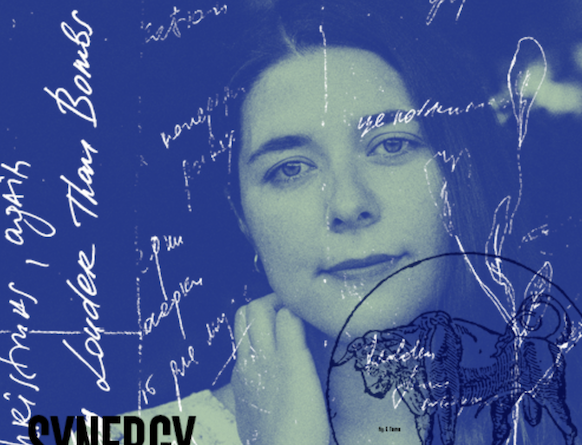
At Ji.hlava 2024, BDE caught up with Mariia Ponomarova, one of this year’s Emerging Producers. Born in 1991 and raised in Kyiv, Ponomarova studied first at the Karpenko-Kary Kyiv National University of Theatre, Film and Television, then completed her education in the Netherlands, obtaining an MA in Film at the Netherlands Film Academy. With a first documentary feature under her belt, Nice Ladies, which premiered at Hot Docs this year, Ponomarova has been an enthusiastic producer since 2018.
“First, I embarked on a [short fiction] project called Family Hour. Then I did a couple of workshops, and I started discovering producing through Ex Oriente, B2B Doc, and DOK.Incubator. I’ve worked on some shorts as well, and I mostly produce as a creative producer. I come on board with someone else’s company, so I’m independent. I really like producing works with people who not only have a strong creative vision but are also attentive to ethics,” Ponomarova tells BDE.
“What is particularly interesting for me is that I learn a lot from collaborating with others, and I also try to bring something to the table to help or elevate the project further. I like connecting with people, developing projects, and doing everything that creates synergies among people. That’s my strongest quality, I think. In Ukraine, I mostly work with other female producers who are strong and resilient.”
“In the Netherlands, I work with brilliant Dutch producers, who are also the main producers of the works I direct. I retain the executive producer credit when that happens, because it strengthens the project, and I can contribute without overstepping [roles].”
She usually collaborates with Amsterdam-based Labyrint Film – the outfit that produced Nice Ladies – and Family Affair Films, which staged her previous fiction short Good Boy and is helping her develop a short hybrid film and fiction feature debut through the EAVE programme.
In Ukraine, she works with Alexandra Bratyshchenko for Eleron Pictures and other producers. In the past, she also worked for CUC (Contemporary Ukrainian Cinema).
When asked how she finds working in both fiction and documentary, she says, “I think I always try to see which form benefits which narrative, story, or topic. For me, it’s always organic. I studied in a film school in Ukraine where they taught us both, and I never had this idea of choosing one over the other. That’s why I’m going to work on my first hybrid film. […] I like switching hats, and it sometimes gives me necessary distance.”
What brings her joy as a producer is working on projects driven by passion and seeing “a spark.” “[When that happens,] I get this tingling feeling in my body, and I know how to help something come to light. I feel ‘activated.’ I feel I can come on board, and we can sail together.”
The most challenging part of producing comes from the industry’s inequalities and facing the brutality of a merciless market, she argues. “Moreover, you realise you live in a Eurocentric, Western-gazing world… We live in times with a very particular context, with many neo-colonial issues, and the way money is distributed within the industry is very unfair… So inequality is brutal. At the same time, it’s also hard not to become bitter and cynical.”
“Sometimes, it’s important to realise that certain processes won’t go fast. It’s delusional, both painful and liberating. Then you’re more realistic,” she adds.
At Ji.hlava, Ponomarova presented two projects. The first was the aforementioned hybrid film, titled Patronymic, and led by Family Affair. Directed and developed by Ponomarova herself, the project was first pitched at DOK Leipzig in 2022.
“It’s a short about name politics,” she explains. “And part of my name is Ukrainian – the name of my father attached to my first name, which is largely erased from documents in the West. We’re now in late development and have applied for production funding.”
The second project is a feature documentary titled Voice Over, now in early development and helmed by Yura Katynskyi. “He’s a talented, young director based in Kyiv, with a strong background in directing fiction, music videos, and commercials. His film will involve many Ukrainian artists, so his background in music video production is particularly relevant. […] The project is based on footage he shot before the invasion. It’s about these people turning back to Ukrainian folk music, which has been erased through decades by the Soviet Union first and Russia later.”
“We started rediscovering our rich cultural legacy and our rich culture of singing. But then the invasion began, and the footage, which was shot as a passion project, turned into a sort of time capsule. We’re now reconnecting with these artists. Some of them are stars, while others are niche folk artists, but they all need to ‘regain’ their voice after the traumatic events they went through. We ask the question: can we even sing in times of such trauma?”
For Ponomarova, picking the right director to work with is not always an easy task. “In the beginning, I was a bit more naïve. I’d see some powerful, cinematic material and think, ‘Wow, this has great potential. Let’s go for it.’ Now I’m more cautious.”
“Apart from good footage and a certain creative vision, there should also be a strong connection between me and the director in terms of ethics and integrity. They must be mature people who know how to value each other’s work, communicate effectively, check in regularly, and establish processes together…They say: ‘If you want to bring your partner to church right away, go to the mountains first.’ I get excited very quickly, so now I need more time [to make decisions]. That’s why it’s a privilege to embark on Yura’s project, because I’ve known him for years, and we graduated from the same film school in Kyiv.”