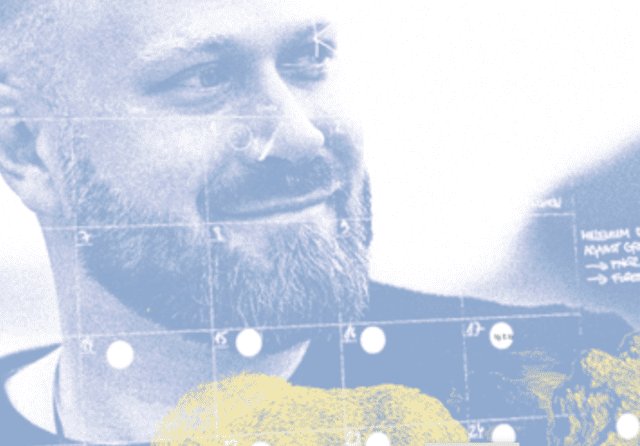
At Ji.hlava 2024, Business Doc Europe chatted with Michal Sikora, one of this year’s Emerging Producers. A Czech producer based in Prague, he established his company, Lonely Production, nine years ago during his studies at FAMU. During our conversation, Sikora discussed his new projects and the joys and pains of the producer’s job.
His passion for filmmaking has been a constant throughout his life, he said. “I’ve been attracted to moving pictures since my teenage years, so since then I’ve been trying to fulfil my dream of becoming a filmmaker. At FAMU, I studied film production and made some successful shorts. One of them is called Kanya, for which we were shortlisted for the Student Oscars, and we went to Busan, Raindance, Shortshorts, and In the Palace, among others. We had a beautiful festival run, with over 40 festivals. After that experience, I started working on both fiction and documentary – in the beginning usually as a production manager, later mostly as a producer.”
Zooming in on his production outfit, he explains, “It’s my own company. Even though I’ve got a partner on board, he’s just an investor. But I’m the one who’s running it as an executive.”
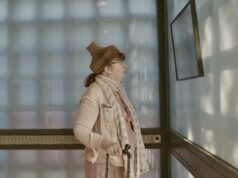
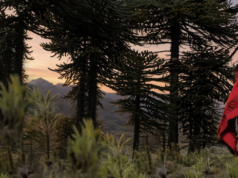
Lonely Production’s rich portfolio consists of both documentary and fiction projects. “This year, we’ve been quite successful, and we’ve got three of our productions released in the circuit, including the documentaries Fakir by Roman Ďuriš and Forest by Lidia Duda, both celebrating their Czech premieres here at Ji.hlava. Fakir began its festival journey at Munich’s DOK.fest, while Forest premiered at Thessaloniki, where it scooped the Silver Alexander. Now we’ve got a fiction feature titled Amerikanka by Viktor Tauš, which will have its international premiere in the Tallinn Black Nights Film Festival’s main competition.”
Another prominent title produced by Sikora’s firm is former FAMU student Ran Li’s Czech-Chinese co-production Till Love Do Us Apart, a fiction feature where he served as a co-producer and executive producer, which premiered at Warsaw in 2022.
Apart from showcasing Fakir and Forest during the Czech Joy Spotlight on 29 October, Sikora also introduced his ambitious new project Child of Dust, a co-production between Poland, the Czech Republic, Vietnam, and Sweden. “It’s about a guy who was born after the Vietnam War. He’s the child of an American soldier and a Vietnamese woman. They’re both ‘children of dust,’ the dust that settles after the war. This project is almost finished – we’re in the editing phase – but we aim to release the film early next year. It’s a powerful film, the emotional journey of a guy who meets his father after 50 years. When he undertakes a DNA test, someone finds his father in the States. Then he goes there to meet him for the first time, at the cost of leaving his family behind.”
Child of Dust is a majority Polish co-production, which received support from the Polish Film Institute, the Czech Republic’s Ministry of Culture, and the Swedish Film Institute, among others. The Vietnamese co-producers covered production costs in Vietnam.
Speaking about his relationship with directors, Sikora highlights how important it is to get along, as a producer will be spending at least two years with this person. “Then, the director tells you the story. If this story tugs at your heart or not – well, that’s one of the keys that helps me choose. I don’t care about the nationality, if it’s hybrid, a mockumentary, or a pure documentary, if it somehow touches me. For example, with Fakir, I can say I’ve always been drawn to the circus – for some time, I worked as a circus producer myself. So that project rang a bell from the beginning.”
Sikora describes himself as a creative producer. “Of course, I do things for money. I need to earn some money, but I’m not choosing projects with the idea of earning money. The story always comes first for me. When it comes to producing documentaries, you don’t earn enough anyway… You need to be sustainable somehow, but documentary is still more like a hobby. With fiction projects, I work as a line producer most of the time and earn money from those…”
Asked about the joys and pains of the producer’s job, Sikora responded, “The biggest pain is not seeing a border between work and free time. All this work-life balance thing…it’s hard to draw the line. Even when you complete a film, it’s not the end; it’s just the beginning! A new working cycle starts: distributing it! Even when you’ve got the DCP in your hands, you still need to get this film to the audience. And at the same time, of course, you’re prepping something else. It’s always very hard to explain to your family why you’re always away – filming, attending festivals, or participating in workshops…”
“But all of this also brings so much joy. Sometimes I can feel I’m working; other times, I feel I’m living my own dream, while crafting stories or sitting in the theatre with other people, enjoying the moment, sharing these experiences together…”
Speaking about the key events he attends during the year, Sikora admitted he chooses a “tailor-made strategy for each film.”
“Sometimes it’s good to attend A-list festivals; sometimes, without being selected, there’s no point going there,” he says, mentioning Berlinale/EFM, Udine’s Far East, dok.incubator, the East Doc Platform, and IDFA among some of the events he has attended.
Lastly, Sikora touched on the role of festivals and platforms in attracting new, younger audience segments. “The younger generation rely very much on word of mouth, and wish to find new ways to experience stories together. The layers between fiction and non-fiction are getting thinner and thinner, so they’re just looking for good stories. If they’re appealing, they don’t care whether it’s fictional or factual. So the audience is broader, but also the quantity of films is soaring, so it’s hard to stand out from the crowd.”
“We work with platforms too. Forest is on Canal+, and we’ve sold some films to HBO and Netflix. Here in the Czech Republic, we can only co-produce with some Czech networks, and HBO, as big streamers don’t make original productions here, but they’re starting in Poland,” he signs off, adding how Poland remains one of the usual suspects, along with Slovakia, when it comes to co-producing.