“Our daddies are mirrors that we reflect back on…”
This is the highly evocative line used by social activist and filmmaker Angela Patton, CEO of non-profit Girls For A Change, at the start of Daughters (the tear-jerking Netflix-acquired documentary she co-directed with Natalie Rae and that is now firmly in the frame for major awards recognition).
“That was a line that I actually wrote because of my relationship with my father,” Patton explains of its use in a TED talk of 2012. “I also talked about being one of the lucky girls that has had my father in my life.”
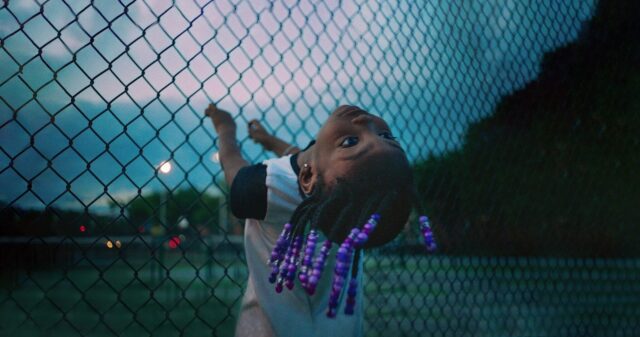
In the documentary, the filmmakers follow four girls whose fathers are in jail in Washington DC. Patton is the organiser of a father-daughter dance programme that allows these girls and their dads to meet – and dance – behind bars.
“With my work with girls in the community, unfortunately I often see a disconnect between Black girls and their fathers. I’ve also seen some who have great relationships…what I have realised is that those girls who dohave a relationship with their father that is positive usually have a really great outcome as they are growing into womanhood…when you do have that father you can lean and you know he’s there, there’s just something different about what it does for you.”
Patton’s own father is now 85. She stays in constant touch with him. He’s still a sounding board and a mentor.
As for Rae, the Canadian filmmaker acknowledges that when she watched Patton’s TED talk all those years ago, the line about fathers as mirrors hit her “like lightning…it made me so moved that I wanted to reach out to her and have a conversation about this. It brought up a lot for me.”
Rae’s father is also a filmmaker. “He taught me how to make a documentary when I was six years old.” His encouragement enabled her to take risks and “be the person I am.” His work, though, often took him away from home for months at a time. When he came back, she and her brother wouldn’t always remember what he looked like. It was “nothing like” the experiences of the girls whose fathers are in prison, but she knows what it is like to miss a parent.
Daughters, made through Object & Animal, Epoch Films production in association with OPC, World of Ha and Simpson Street, has been received with such wild enthusiasm since its premiere in Sundance, where it won the Audience Award for US documentary, that it is easy to forget just how challenging the project was to complete.
“It has truly been the hardest thing in my life to keep this project going and to go through all the hurdles. All the hurdles take years to get through. There was nothing easy or quick about this project at all. At the outset, I had no idea that it would be over eight years on the journey and complete it,” Rae reflects on the film’s difficult gestation.
Getting permission to film inside the prison was a huge challenge in itself. At one stage, Patton and Rae were all set to shoot in Richmond but then the sheriff that had approved the programme was voted out of office and the successor put the programme on hold.
“I was really worried and at a loss. Angela was like, ‘let’s have faith. Something is going to happen,’” Rae remembers. Patton turned out to be right. They were eventually able to do the programme and film in Washington DC instead. The subsequent hitch, though, was that they only had two weeks to pull together the resources to start shooting.
“We got through that – but then it was the pandemic and we lost all of our funding.”
Rae talks about going into the homes of the girls, “hanging out and living on family floors.” The filming was “incredibly intense…and I had to go down to just filming it alone for a lot of those years. I had to learn to be a documentary filmmaker by myself and that was challenging. There were moments when I would call my family crying and saying ‘I don’t know how it is going to keep going…’”
Over this period, Rae was often “kept going” by the girls whose fathers were behind bars. They’d tell her when she seemed stressed and would invite her to play with them in the park. “Literally, they were the ones who gave me the courage and resilience to keep going or I wouldn’t have been able to do it because there were so many ‘No’s.’”
Rae admits she was beginning to feel ‘burnt out’ and worried that the doc would end up being put on the shelf. “There were so many moments over the years when we gave it our all and just had to hope that something in the universe would come to us – and eventually it did!”
“It’s very bizarre to have been in a tiny little cocoon with Angela and our filmmaking team for eight years and then it comes out at Sundance and it is everywhere!”
Patton had an added challenge in that she wasn’t just the co-director. She was also the architect of the Daddy Daughter Dance programme and one of the protagonists of the film.
“What we realised is that we both have a certain skillset….” she says of her collaboration with Rae. “There were things that I was able to bring to the table, especially in the editing with Natalie and editor Adelina [Bichis]; also in understanding how we needed to build trust with the girls and the resources I could [bring] around access to the jail and the community. I learned a lot – but I gave a lot!”
Patton never lost sight of the main goals of the film, namely to ensure the girls would “be seen and heard and celebrated.”
The hope is that the Daddy Daughter Dance programme will expand to prisons in other US states. “We have had about 12 that are on our spreadsheet. We have reached out and are in conversations now.” Patton lists penitentiaries including San Quentin as well as prisons in Boston and New York that seem keen to put on their own events. “A lot of interest is there and there is a process that the warden and sheriff…would have to agree [to] because most of these requests are coming from either the social worker or community advocate.”
The dance itself was an emotional rollercoaster for the girls and their fathers – and for the filmmakers too. For a few hours, the prison is turned into a fairy-tale world. “It almost feels like a dream. We are in with the families and they don’t feel they are in a jail for those six hours,” Rae notes.
But then reality comes crashing back in. The fathers take off their ties and smart clothes, put back on their orange jumpsuits, and are escorted away. “Then they disappear. We intentionally crafted that,” Rare remembers. “Act 1 is all the girls waiting, waiting for their fathers but then we turn the tables. When they come in for the dance, their fathers are waiting. It is so powerful to have those girls walk down and have the autonomy to go to their fathers.”
“That’s not possible!” Patton insists when asked if she was able to detach herself from the heady mix of anticipation, exhilaration and then extreme sadness that the daughters and their fathers experience. “Nothing is staged here,” she adds. “When I agreed to do this with Natalie, and we had this crew come, everyone had to be aware this was going to emotional for you as well.”
During the daughter/dad dance, even the correctional officers were in tears.
As a kid, cinematographer Michael Cambio Fernandez had had a parent incarcerated – and so he knew exactly what was at stake here. He told the directors: “I was crying the whole time. I don’t even know if I got this.”
During the editing process, Patton says that sometimes she would have to “step out” because it was such a wrench to watch the footage. “I am human…I understand that these families have been denied something we all so much need. That is love, connectivity and togetherness…we have not seen Black girls and their fathers on the screen like this before, and so we needed to do this with care and love – and you needed to be connected to your own emotions in order to do this with integrity. And, so, yes, emotions are all over the place, but we got it done!”