For many documentary folk, the business of face-to-face interaction begins every year at Fipadoc Industry (January 27-30), the Biarritz-based event that looks to unite professionals from the French doc industry with their European and global counterparts.
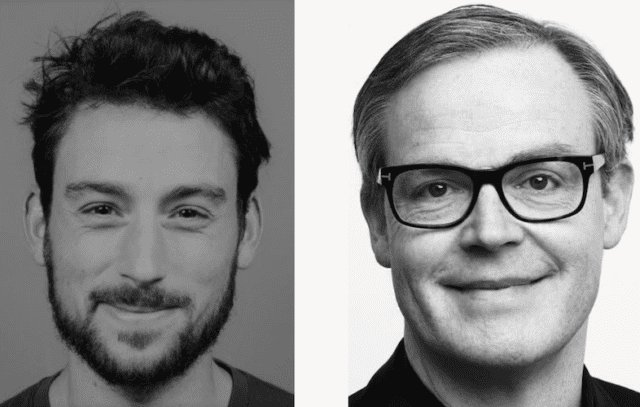
“It’s the beginning of the year, people have been away for a bit of break and they come back here to restart and re-energize their work,” says Ove Rishøj Jensen, Head of Co-production Forum. “It’s a good place to launch and begin new projects.”
There is, he underlines, a lot of “two-way traffic” during Fipadoc Industry. During the International pitch programme of 24 new projects, non-Gallic teams are pitching to potential French investors that have “a lot of muscle,” while French producers and filmmakers will present to an array of potential international partners. Fipadoc 2025 will welcome nearly 2500 accredited guests, Head of Industry Bastien Gauclère tells BDE.
“You are pitching into a French documentary industry that has very good co-production opportunities,” Rishøj Jensen underlines. “So you really are pitching into a solid home market, which I think makes Fipadoc stand out compared to many other pitching sessions…It is a window for French producers and directors to the international world, but it is also a place for the international world to come to France and pick collaborators there.”
Industry Head Gauclère concurs. “We’re the main event [in France] dedicated to documentary, which is actually both a festival and an industry event,” he claims. “Sunnyside is also an important place, but it’s purely a market when we are first and foremost a festival with an industry event that is quite the same size, but gathering many, many more directors. Which means the discussions you’re going to have at Fipadoc and during the Industry Days are much more driven by creation, narration, co-production.”
“Unless you have a film in Sundance or you have a broken leg,” Gauclère ticks off the only reasons, as he sees it, for non-attendance. “So you know that if you want to find a partner in France, a broadcaster, a co-producer, a sales agent, you are almost certain that you’re going to meet them in Biarritz.”
Rishøj Jensen recalls the 2019 “reboot” of Fipadoc when an altogether more creative aesthetic was applied to the overall selection, allowing for films and projects with a bolder cinematic sense – “author-driven and creative documentaries that could very well fit for cinema,” he says. This is not in any way to detract from the seriousness of the subjects of the new projects being pitched this year, or the global context in which the various dramas will play out on-screen.
“With documentary we have the privilege sometimes of having a longer perspective and also spending longer time telling our stories. So I think documentary is fulfilling a very important role here,” he says. “Of course what we see happening in Ukraine and in the Middle East, and also what we see happening now in North America, it’s something that occupies the minds and the projects of many filmmakers. That’s definitely also the case with our selection.”
Not that the selection committee is proscriptive in determining content. Bastien Gauclère reminds BDE of the most important determinant for inclusion. “Quality is the only criteria we follow year after year.” Another factor is how useful the pitch platform can be on a project by project basis. “Can we actually offer something to the projects, is really what we are asking,” he adds. “An international project which is already on board with a French co-producer in Arte, I’m not sure this is going to be the project for which we’re going to be the most useful.”
The International Pitch may be the “core reactor” within the Fipadoc Industry programme, but there are numerous other pitch sessions, masterclasses, keynotes and panel events over the coming four days.
The DOC À LA PAGE pitch session seeks to unite the book and documentary worlds as 12 non-fiction titles are assessed for their doc-worthiness. The European First Film pitch offers a platform for future first or second documentary films to find support across various stages of production. For Story Lab, meanwhile, five journalists have been developing their first documentary over a 5-month period, moving from “investigation to quest, following workshops on the dramaturgy and the artistic direction of their project”. At Fipadoc Industry they will pitch their resulting projects to a panel of international producers.
The Balkans doc industry is in the frame at Fipadoc Industry 2025, as are the Visegrad countries and neighbouring Spain. A series of Producers Meet Producers sessions have been arranged to boost international co-production potential between France and these countries, enabling 18 local producers and a further 18 from these regions to meet and expand their European network.
Furthermore, attendees will be offered guidance on how to co-produce with France during a January 28 panel (English-language), and a January 29 roundtable session titled ‘Co-production Dynamics: Finding the Right Balance’ will present best practices on co-production issues between countries from the Global North and Global South, focussing on ethics, power balance, inclusion and funding.
Rishøj Jensen highlights the final day (Jan 30) ‘State of the Documentary Landscape’ roundtable during which three leading doc exponents will target a specific theme to articulate their viewpoint on where they believe documentary is right now. These are Hanka Kastelicova (HBO Max), Mark Edwards, now an independent consultant, and Renaud Allilaire of France Télévisions.
He also promotes the January 28 session titled “Can We Afford to Do This Anymore?’ when Jane Ray of The Whickers will reveal the results of the organisation’s 7th International Annual Documentary Survey. This will offer an opportunity to assess the true cost of independent documentary making, both financial and emotional.
“We often have these very abstract discussions about the documentary industry, but the Whickers do this yearly report, which is all about the facts,” the Forum Head signs off.