

CPH:DOX Industry swings into action March 23 as a plethora of international toppers converge on the Danish capital to discuss all matters doc. The professional programme has several epicentres – it’s not all about CPH:Forum. Other core elements are the Conference, CPH:LAB, the Market and the inaugural CPH: Summit which will bring together politicians, innovators, researchers and documentary professionals to discuss the future of the audiovisual industry.
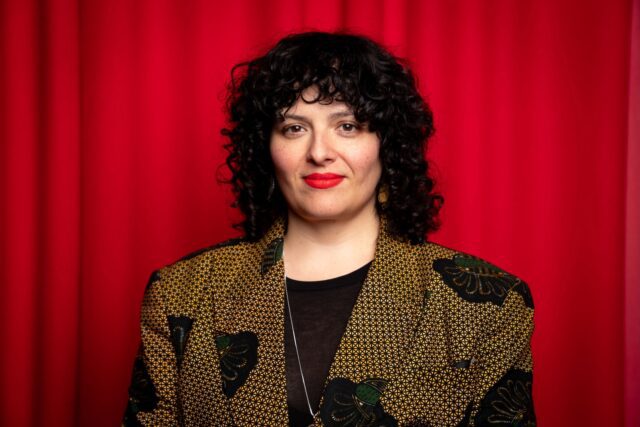
“We want to make sure that the people who actually don’t attend the Forum – those distributors, theatrical people, filmmakers that come to the festival on the programme side – also have a range of activities that can nourish them in their practice, whatever that practice is,” Industry Head Mara Gourd-Mercado tells BDE. “That’s why we make sure that we have a breadth of activities that can answer to those different trajectories for different groups or segments of industry people.”
“And the conference plays a big role for the people who are not necessarily actively participating in any of the other activities,” she adds. “It is a space to renew your energy, to nourish your practice. It’s important that we have that space.”
Kickstarting the CPH:CONFERENCE is the inaugural CPH:DOX Summit taking place March 24. With Denmark’s upcoming EU Presidency as a launching point, Gourd-Mercado and her colleagues are looking collaborate in “shaping a stronger media landscape for Europe and beyond,” one that is vital to “maintaining trust in governments, in upholding democracies, in taking action against climate change, and in ensuring the best possible futures for coming generations.”
“That’s what the summit is answering. It is not specifically on specific events, it’s looking globally at our industry and the policies that will be needed. Our strength is creating spaces for encounters and spaces for dialogues and for people to kind of meet in the middle,” says Gourd-Mercado. “And CPH:DOX has that history of creating those spaces for people to meet on different topics and different themes.”
These different topics and themes are to be found in abundance in the 2025 FORUM section. The flagship financing/co-pro event will this year bring together 75 directors and producers representing 26 countries who will present 30 new documentary projects spanning early to late development and production. Directors such as Anabel Rodriguez, Marc Cousins, Robin Petré, Agnieszka Zwiefka, Anirban Dutta & Anupama Srinivasan, Jennie Livingston, Tamara Kotevska, Maximilien Van Aertryck & Axel Danielson and Margreth Olin will be presenting new projects.
“The space that we create for the Forum presentations is one where we are there to elevate the project and present it in the best possible way to find collaborators,” says Gourd-Mercado. “Yes, the programme is impressive, but it’s also meticulously curated to make sure that each project has its space and that each project can find room. I see the curation of the Forum as the curation of a film programme – you want to tell a story through the projects that you put together. You want them to stand out individually, but you also want them to answer to each other in a way on the topics that they explore, on the way they are made, on what is needed from every project.”
Are Forum organisers and festival programmers therefore interchangeable? No, is Gourd-Mercado’s definitive response, albeit with caveats. “We are trained to look at very different things. Yes, we have common points that we look at in a project or a film. Is this a project or a film that we want to highlight? Is this something that fits with the curatorial line? Of course. But then we, on the industry side, are trained to look at financial sheets and budgets to see how does this make sense? Does this work? Is it a solid project? Is it a solid team? Could it fit in this slot? Could it be picked up by a sales agency? So our brains are trained to look at what is needed for that project to get made.”
“That’s not a set of tools that our programmers have on their side,” she continues. “I don’t want to speak for them, but they look more at how does this film speak to the rest of the program? Which audience are we reaching with this? Which topics are we highlighting? How does it speak to cinema? How does it speak to what documentary is today? So I think there is a very strong intersection in what we do, but I don’t think we’re interchangeable.”
She offers further clarification. “I think what distinguishes CPH:DOX is that we have a curatorial line in both our festival and Industry activities that, to me at least, strike a balance between very artistic documentary, but also very popular and accessible documentary,” she underlines. “And I think that that balance is something that guides us through everything that we do.”
The Industry boss further outlines how she and colleagues assess their duties to the industry in ever-widening geographical terms. “Every year we consult with the Danish industry to make sure that we are there for them and see what are their needs this year. We are also, as you say, smack in the middle of Europe. So we look at what is happening in Europe, in our industry, what is needed, where can we come in and kind of help out in our own way…It’s important for us to have a critical mass of European industry makers or documentary makers in the room. And then we also want to bring the element of North America – because that’s what’s become our trademark in a way – and from all over the world.”
“We really try to strike that balance. Every time we reach out to different partners or industry representatives, the question that we ask ourselves is, what will this person get out of coming to CPH:DOX? But also what will the other people in the room or at the event get out of this person being in the room?”
She also acknowledges that CPH:DOX is a hot festival right now. “It’s all the rage and I think it’s fantastic, but I also think that we can’t rest on our laurels and we have to make sure that we are serving the industry always. Because if we are not answering their needs, then who are we for? I think as long as we are aligned with what our community and our industry needs, then there will always be an interest for CPH:DOX.”
In closing, Gourd-Mercado highlights two Conference elements that she will be particularly looking forward to. On March 26, Olivier Sarbil and Geeta Gandbhir (whose Viktor and The Perfect Neighbour are having their European and International premieres respectively at CPH:DOX) will discuss the notion of transition. “These are transitions in the realm of documentary, going from being an editor to a director, from a cinematographer to a director. What does it mean to hold different positions as a maker? And what does it take? How does it affect you?”
“Then, going back to the state of the world, we have Keri Putnam talking about her research on audiences. To me, at least, documentary plays a big part in building societies, in building shared values, and I think that when we are told that there are no audiences for documentary, to have someone like Keri Putnam and her study come in and say, well, actually it is not the audience, it’s the access and how can we bridge that gap, then that is a really interesting thing to explore. To tell ourselves that we need to keep pushing and we need to keep finding those spaces for documentary to reach their audiences.”





