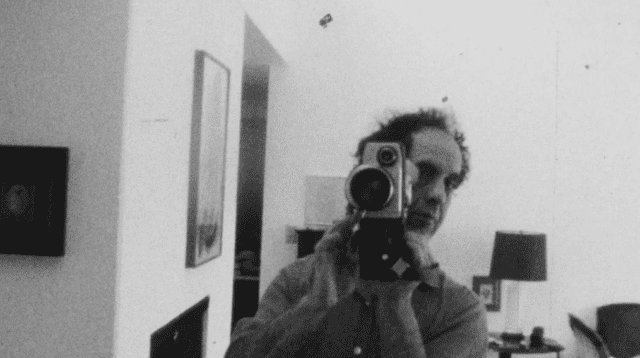
For almost half a century, legendary New York photographer and filmmaker Robert Frank diligently captured his own life on film and video. But the footage was never seen, because for years it sat in the basement of his New York apartment, collecting dust. Until now.
“Salut Robert will be comprised of this film footage, handheld super eight and video that had never been shown to the public, with an array of all kinds of formats and cameras spanning from the 1960s through the 2000s,” says director Laura Israel, who was Frank’s film editor, and archivist of his work after his death in 2019.
“We had it transferred professionally to high resolution files and it was like unlocking a time capsule. “It’s a visual diary of his life over those decades,” she adds.
The 80/100-minute – 45/60-minute film is produced by Israel and fellow New Yorker Ryan Krivoshey of Correspondent.
“I first met Laura more than 10 years ago at a coffee shop in New York, not too far from Robert’s apartment,” said Krivoshey. “ Actually, I had just watched her electrifying documentary, Don’t Blink, Robert Frank, and was eager to work on its release as part of [distribution company] Grasshopper Film, which we were just starting. Don’t Blink would become one of our first releases, also one of our most beloved releases. So it is especially meaningful to be working with Laura once again to be presenting her latest film here, Salut Robert.”
“Unlike Don’t Blink, which offered an overview of Robert’s life and career, this project, using footage as you saw shot by Robert himself, takes a far more intimate approach, and as a result, it’s as close as I think we’ll get to an autobiography of this legendary artist.”
With an expected release date of January 2026, Krivoshey is looking to raise the rest of the project’s €617,166 budget, as well as secure sales representation.
“There’s footage of his friends, other fellow artists, collaborators. He shoots his wife June Leaf, who is an artist in her studio, every day scenes in New York City and rural Nova Scotia,” Israel further comments of her new film. “And he often narrates from behind the camera reflecting on his life and working out ideas, sometimes asking himself, what should I do next? And there’s also a sense of time passing. New York changes, his friends grow old and they have difficulties to keep working. The struggles that he has with the death of both of his children. I think he was ahead of his time in the same way that people film themselves speaking to their cameras now. It was cathartic to him. Much of Robert’s work deals with memory, so that’ll help us create a structure for the film that moves forward chronologically while also incorporating poetic passages and introspection.”
Recently, she and Alex Bingham, art director and editor on Israel’s Don’t Blink – Robert Frank, created a multi-screen installation for the Museum of Modern Art using some of the new film’s footage. Titled ‘Robert Frank’s Scrapbook Footage,’ it launched in September 2024 and has been held over to mid-May 2025. “I feel that that was a perfect preview and exercise for this feature film,” Israel stresses.
“It’s very much a theatrical experience, and we want this film to be viewed in a darkened theatre, but certainly eventually we want it to be available on digital platforms so that we can attract as wide an audience as possible,” adds Krivoshey. “And then we also want to do a very robust non-theatrical educational campaign. So museums, certainly [showing the film] alongside some of Robert’s photography and films, but we definitely want the film to play in schools, universities, libraries, certainly around the US but around the world as well.”
“Robert was an iconic figure, one of the landmark giants of photography in the 20th century, but I think…he’s under-appreciated in a certain way, and people don’t realize how relevant his work actually is to today in our times, how immediate and how contemplative it is. I think that’s gotten lost. So for that reason, we want him to be played in classrooms and colleges and universities, so that he can inspire, hopefully, the next generation of artists and thinkers.”