An Italian philanthropist, an enigmatic painting signed ‘P. Gauguin,’ and a decades-long battle for truth: Reflections of Gauguin unfolds like a cinematic thriller set against the labyrinthine world of art authentication. Directed by Heidi Richert and penned together with Carlos Marroquín, the Finnish documentary is being pitched this week at Rome’s MIA Market by Helsinki-based firm Pig and Horse Oy.
The project is produced by Johanna Poikelainen, with Salla Kozma serving as executive producer and Laura Ahola as head of production. Maria Kivinen’s Norse Key Studios handles international sales.
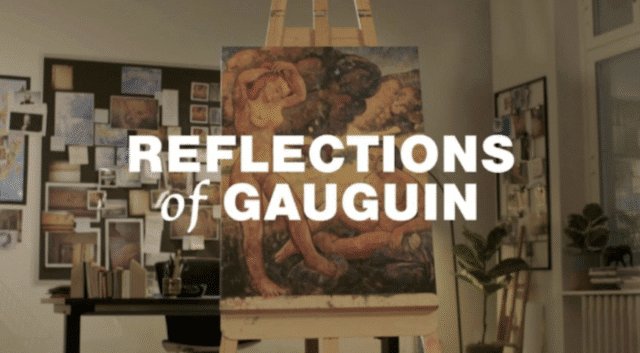
At the centre of the story lies a painting that has troubled its owner, Italian philanthropist Stefano Canepa, for more than twenty years. Scientific analyses suggest that the canvas’ pigments and techniques align with Gauguin’s era, yet the work remains excluded from the Catalogue Raisonné due to gaps in its provenance. In her quest to uncover the painting’s origins, Kozma (also starring) takes viewers on a journey through the high-stakes, opaque corridors of the international art market—where prestige and profit often outweigh truth.
“Reflections of Gauguin stands out because it combines the intrigue of a true art-world mystery with the pace and energy of a cinematic thriller,” exec-producer Kozma tells BDE. “It’s not just a documentary about authenticity in art, it’s about corruption, power, and the people who shape the global art market. At its core lies a twenty-year quest to prove whether a disputed painting is in fact a lost Gauguin, making it a story that resonates with mainstream audiences, art lovers, and investors alike. The mix of crime, comedy, and investigative storytelling makes it more than an art film—it’s a high-stakes, character-driven drama rooted in real life.”
Indeed, Richert’s project positions itself at the crossroads of investigative journalism and art-house cinema, using the framework of a mystery to probe broader questions. What defines a masterpiece? Is it technique, beauty, or merely the market’s belief in a name? As the film delves deeper into competing claims, expert testimonies, and institutional resistance, it becomes as much a psychological exploration as a detective story—one that reflects society’s fascination with fame, wealth, and the value we assign to art.
Behind the camera, Richert brings a strong track record in factual storytelling. “[She] brings strong international experience and a unique creative perspective. With a distinguished background as a TV-maker and journalist, Richert is known for crafting character-driven storytelling that blends investigative depth with cinematic flair. Her journalistic eye ensures authenticity and rigor, while her filmmaking sensibility creates an emotionally compelling narrative,” Kozma explains.
The writing partnership between Richert and Carlos Marroquín ensures both substance and momentum. “The collaboration balances sharp investigative insight with a strong narrative arc that keeps audiences engaged,” adds Kozma. “Together, the team combines journalistic integrity with cinematic storytelling, ensuring Reflections of Gauguin resonates equally with general audiences, art enthusiasts, and industry insiders.”
Visually, the project promises a sophisticated blend of realism and atmosphere. “Reflections of Gauguin creates a mood of anticipation and suspense as Kozma serves as a protagonist-observer, guiding viewers through the mystery of a lost Gauguin and the art world’s hidden power structures,” the exec-producer herself notes. “The film blends exclusive interviews with experts like Marc Restellini and Carina Popovici, archival footage, and atmospheric imagery of iconic yet secretive art spaces, balancing immediacy with depth.”
A distinctive visual grammar will heighten both the mystery and intimacy of the investigation. “The investigation unfolds through a mix of sweeping shots and spontaneous handheld moments, keeping the film dynamic and intimate. Extreme close-ups and X-ray visuals reveal hidden layers of analysis. Interviews are stylized to reflect the emotional nature of art, capturing the depth of feeling that it inspires,” Kozma continues. “Overall, the film combines investigative tension with moments of reverie, inviting audiences to delve deeper into the art and the minds of those who dedicate their lives to it.”
For a project that straddles crime, art, and philosophy, the production team is now seeking the right partners to amplify its reach. “We are looking for international co-producers who can help unlock soft money and rebates in key territories such as France, Switzerland, and Italy,” Kozma underscores. “We are also seeking distribution partners, broadcasters, and streamers with a strong interest in culture, investigative documentaries, and high-quality international stories—the likes of ARTE, YLE, BBC, PBS, Netflix, or similar platforms. Finally, we are open to private investors who are interested in both cultural impact and the potential for a strong return on investment.”
Balancing the rigour of an investigation with the allure of a suspense drama, Reflections of a Gauguin aims to draw both cinephiles and the broader public into an enthralling moral and aesthetic puzzle. As Kozma’s on-screen journey unfolds, it reveals not only the fate of a disputed canvas but also the fragile, often blurred lines that separate truth from illusion in the global art market.