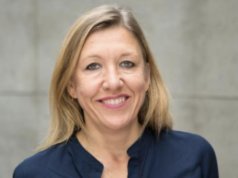
Iraqi filmmaker Zahraa Ghandour has never forgotten the sudden disappearance of her 10-year old friend, Nour. That incident has gnawed away at her for years, even as she has become a very successful filmmaker, producer and actor. She returns to the incident in her haunting debut feature-length documentary, Flana (sold by Split Screen and which received its European premiere in international competition in IDFA earlier she week).
Ghandour has made many TV documentaries for Iraqi broadcasters about women’s stories. Flana, though, is a documentary with a deeply personal resonance.
“At some point, I really felt deep inside that I had to tell the story that touched me or moved me the most,” she says of a project that has taken her more than six years to complete. Looking back on her childhood, she thinks that her obsession with telling Iraqi women’s stories has its roots in what she witnessed that terrible day when Nour, already abandoned by her real family and by her foster family, was taken away.
It was made clear to her growing up that, as she puts it, “being a girl was not to be celebrated.” This puzzled her. “I always liked myself…I didn’t know why I would be less than the boys around me.”
“I’ve always told stories of women but I felt that if I don’t tell what hurts me the most, I am not being fully honest,” she explains why she finally turned to Nour as the subject of Flana. The title of the film is Iraqi slang for a forgotten woman – and that’s precisely what Nour was.
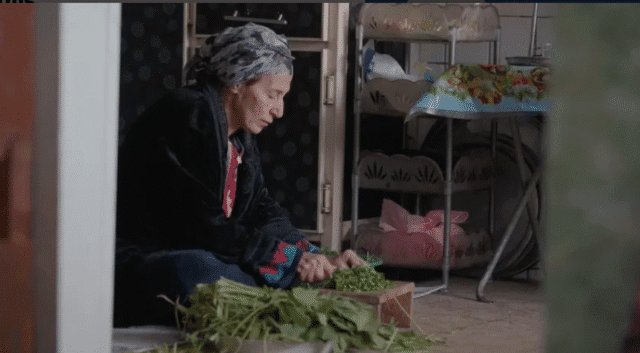
The starting point of the documentary may be Nour, but one of its major characters is the director’s aunt, Hayat, a fiercely independent single woman who has never married but who, in her own quiet way, in her work as a midwife, has fought for women’s rights.
“I know for a fact that my aunt is not married because she cannot even imagine having a man in her life telling her what to do,” the director says. “That woman can do anything…I’ve never seen a woman so many men wanted to marry. Growing up, I could see how many men proposed to her.”
The aunt turned then all down. She kept her independence – but at a cost. As she says in the film, she half wishes she had had children who might have been able to look after her as she grew older.
“But she’s so funny, the way she rejects men. She’s not political. She probably doesn’t know who’s in power and all of that, but she is real feminist in my opinion. It’s from the way she lives. This woman took responsibility for her siblings since before even she was 12. Their father died when they were very little. She took on a huge responsibility in the family.”
And, yes, she’s a great cook. “Cooking is very important and very personal…in the film, I put my two favourite meals from her, the fried fish and the spinach stew. I liked them so much I said the world should see this.”
Ghandour’s mother declined to appear in the documentary. “She’s a very shy character and she doesn’t like the camera, even for photos. I think that is something to do with her very difficult life.” She did interview her mother and contemplated using sound recordings of her – but eventually decided that her own narration could work equally well to give her mother a voice.
“She is the main storyteller in my life. She is the reason I like to tell stories. She was telling me so many stories, but we don’t have the culture of talking about emotions…we tell stories [but] we never talk about our feelings to the point that we saw what happened to Nour, and were so afraid to speak about it. The fear was always there.”
The director never knew her father, who left the family when she was young. “They [my parents] were separated. That’s why I had my aunt and my mother raising me.”
In the documentary, Ghandour searches for Nour within the care system, visiting the institutions where abandoned women often ended up. During her investigations, she finds Layla, another woman whose life has followed the same harrowing pattern.
The film opens with striking imagery of hundreds of women massed together, all dressed in the same dark robes, “abayas,” moving in a wave, taking part in the same religious ritual. It’s a scene with an obvious poetic resonance.
“The abaya, the black thing women wear, is not religious. It is cultural. Even Christian or Yazidi women wear this abaya. I wanted to take it as a symbol that we are all in this together, the rich, the poor. In every level of society, women are not treated as they should be…this is what brings me to make this film.”
Ghandour has had a very successful career, breaking into the media business as a teenager and working in many different fields form acting to producing.
“It’s really not easy, honestly,” she reflects on her experiences within the still deeply patriarchal world of the Iraqi film and TV industry. She sometimes hears men complaining: “why is this girl doing so many things?” Her answer is always that she has the energy. When she was a kid, growing up with her many siblings, she was the livewire of the family. She had already decided she wanted a career by the time she was 12, and refused to be restricted by an educational establishment which gave her no encouragement.
“Storytelling is really my passion. I want to do it with writing, producing, directing, acting…it is all different forms of storytelling. I feel really very lucky, if luck is a thing, that I am doing something I love and then learning that I could have it as my voice.”
She describes filmmaking as a very powerful tool for social activism as well as storytelling. Her company Karada Films is busy hatching features, documentaries and shorts, all of which are reflecting on aspects of contemporary Iraqi life. She sees herself as part of a new wave of young Iraqi filmmakers.
Flana, which had IDFA Bertha Fund support, has already screened at the Toronto International Film Festival – the first film from an Iraqi female director to do so. The film is also up for the IDFA Award for Best First Feature – and it will receive its Iraqi premiere in December.