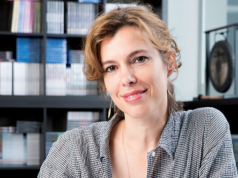
Business Doc Europe caught up with EURODOC’s Nora Philippe before the IDFA closing ceremony that awarded three films that were developed at the leading producer training lab.
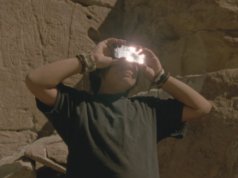
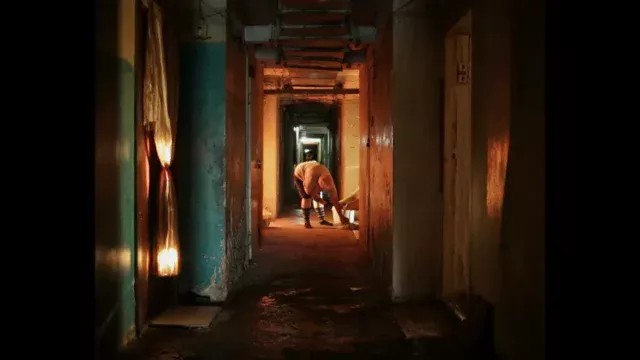
These were The Kartli Kingdom by Tamar Kalandadze and Julien Pebrel (which won the IDFA Award for Best Directing), and Dmytro Sukholytkyy-Sobchuk’s Silent Flood that picked up the IDFA Award for Best Cinematography, both in in International Competition. In Envision Competition, Miguel Eek won the Award for Outstanding Artistic Contribution for Amílcar.
Additionally, the EURODOC-developed Imago by Déni Oumar Pitsaev, and Letters From Wolf Street by Arjun Talwar were selected for Best of Fests at IDFA 2025.
In total, no fewer than 37 EURODOC alumni producers/teams were selected this year for IDFA, including nine within International and Envision competitions. Twelve alumni received Best of Fests nods, four went down the Luminous route, three were selected for Frontlight, two for Short Doc Competition, and two more each for both Signed and Paradocs. Five films by IDFA 2025 Guest of Honour and EURODOC alumnus Susana de Sousa Dias were selected, including her Envision title Fordlândia Panacea.
Additionally, seven EURODOC alumni were selected for Forum 2025.
Right now, EURODOC is inviting applications for its 26th edition, running March to October 2026. The deadline for applications is November 26 2025.
“My first reaction would be to say, well, IDFA selects great, highly creative projects, and EURODOC helps good projects become excellent, highly creative projects that definitely deserve such prestigious selections,” Program Director Nora Philippe told BDE. “We do recommend IDFA as a very relevant and desirable objective in our trainings, because we share the same regard for ambitious author-driven films, but we also mention dozens of other festivals on all continents as other ideal destinations for projects that are developed at EURODOC.”
“I would actually be tempted to say that I was quite disappointed to see that some wonderful projects that were short-listed in certain selections of the festival did not pass the final gate,” she added, with a note of regret. “So I also see the disappointments and not only the successes, in a sector where a selection at IDFA objectively changes the life of a film and for some, a career… I would like to underline we take our training responsibilities very seriously and do not ‘select’ projects that would be already IDFA-compatible or IDFA-ready (if this exists) – we select producers from across the globe who need training at a certain key moment of their career, with a project or with their slate.”
In a sector where the plaudits mainly go to directors, Philippe emphasises the importance of the producer, and their influence in getting a completed doc to market or to a top festival.
“I think it is useful today to get completely and definitely rid of the idea, which comes from the fiction sector or the TV world, that the producer is simply a money person or a company owner,” she underlines. “Independent documentary producers often work as hard and as many hours as the director. We are talking about a very symmetrical commitment.”
“Producers co-steer the vision, they are sometimes in a daily dialogue, over years and sometimes a decade, on the script, the intentions, the shoot, the footage, the editing, the post production, and of course all aspects of the crew choice and management, the production / co-production / distribution strategy, and often the ethics of the relationship to the protagonists, and all issues regarding the security and the safety of the people involved.”
She continued: “Producers are leaders, managers, shrinks, strategists, publicists, peace-makers, accountants, creative advisors and diplomats. And yes, their job is to take your film to IDFA, if this is the objective you share, and the right thing for your film. What I would like to conclude with, is that festivals evolve and amend their priorities, politics and curatorial choices. The producers’ task is to remain updated on festivals’ trends, to be in touch on a regular basis with curators and programmers, and to fine tune the strategy for each film, in dialogue with sales agents.”