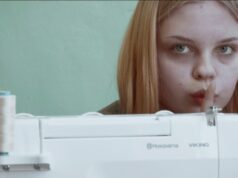
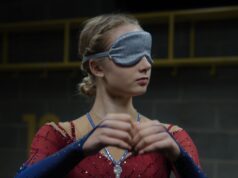
First things first: Whispers in May is an intimately shot, engaging film about a fascinating subject – young Chinese girls fending for themselves because their parents are migrant labourers – with three mesmerising teenage leads.
But while I was watching, I increasingly wondered about its documentary status. I went in blind, having read nothing about the film. I like to do this when reviewing, to avoid letting the filmmaker’s stated intentions influence my experience. In this case, however, one thing is absolutely essential to know beforehand: Whispers is a hybrid documentary.
Generally speaking, I am a big fan of hybridisation – documentaries making use of fictional, scripted or re-enacted elements – and find it probably the most interesting trend in the documentary landscape this century.
There is a general rule, however. It should be reasonably clear which parts of the documentary are scripted or re-enacted and which are documentary. Unless you’re Werner Herzog, in which case you’ve earned your lifelong ‘get out of documentary jail free’ card.
Director Dongnan Chen follows three teenagers as they walk to Buxte in the Liangshan Mountains to buy one of them, 14-year-old Qihuo, the traditional coming-of-age dress girls wear after their first period. Normally, an older weaver tells them, your mothers would have made you one, but as they’re not here, you’re right to go and buy one.
Buxte turns out to be much further away than the girls reckoned – “it’s behind that mountain”, one elderly man says, gesturing vaguely towards the distance – but they keep going. Even though one of their younger sisters has forced herself on them and is tagging along.
Not realising yet that I was watching a hybrid documentary, the longer their quest lasted (and the clearer it became that it would comprise most of the documentary) the more I started to wonder. There are many shots where the camera was far ahead of the girls, or far behind, or even filming from another mountainside. At the very least, this implied some directions given to the girls (“wait here while we go ahead”), but more likely the crew had some means of transportation.
But that meant that the darker it got, and the hungrier and colder the girls became, the more the whole situation became ethically suspect. On the other hand, when the girls break into an empty house and spend the night there, they aren’t really alone: the crew are there with them, as co-trespassers.
I should mention that the documentary has been given a mythical framework (which the end credits describe as ‘folklore segments inspired and adapted from Nuoso oral tales about Coqotamat, with contributions from the girls and the filmmakers’), consisting of the story of a poor mother leaving her daughters in a forest, where they are found by a cannibalistic old woman (not unlike the German fairy tale of Hänsel und Gretel). But this framework itself doesn’t tell us anything about the documentary status of the other material. Adding the drawings could simply have been a mythical afterthought.
One could argue that the way their trip is shot should be enough to make clear this isn’t strictly documentary, which in itself is probably fair, but it raises other questions.
Such as, what do the angry phone calls that Qihuo receives from her mother, while walking to Buxte, mean? Are those fake, too? I guess, because one would assume the parents gave permission for the documentary crew to take their children on an invented trip, spending the night in some abandoned house – which, I suppose, probably also wasn’t really abandoned.
And when one of the girls is called by her grandmother and ordered back home, their tears of separation are probably also acted. At first, I thought the girls turned away from the camera because they were embarrassed, but now I’m thinking they were probably hiding the fact they were pretending, as grandma presumably also was in on the act.
But wait, did Qihuo then really have her period – the event which triggered the adventure? Maybe not: if the quest was invented, then its trigger possibly was as well. But in that case, the intimate scene in which Qihuo confides to her best friends about this, only to be berated for not telling them sooner, was also pretend.
What about Qihuo’s mother telling her on the phone: “I work so hard but you disobey me. Your grades are bad, and you don’t meet the boys I’ve arranged for you. Where do you think money comes from? (…) Boys can marry and have kids at thirteen. You’re already fourteen. My duties are over. I’m done!” – the most intense and painful moment in the film?
I now think this conversation was most probably also agreed upon, given the role it plays in the overall structure of the film, and thus might not reflect her mother’s true opinions. It’s also through those phone calls that we learn that Qihuo’s grandfather recently passed away. And I honestly have no idea if that’s true or part of the set-up for the story as well. Or Qihuo telling her friends: “My aunt told my mom to sell me for 300,000 yuan so my brother could get a wife.” Could that also be fake?
Or should I say ‘fiction’? Because if the film would have been classified as fiction, it would still be very clear these girls are improvising, are probably real friends, acting in their true surroundings in a story close to their hearts. And the film would still be addressing some very interesting, very important subject matter: the situation of children of migrant labourers left alone at home, and the young age at which they are traditionally married off.
Just think of the amazing fiction films, with their outstanding documentary feel, created by Italian director Roberto Minervini. That’s not a bad category to belong to.
If this year, Business Doc Europe had participated in the Ekko Critics’ Grid (which regretfully it isn’t, but will be in 2027) and, honestly, if this had been presented to me as a work of fiction, I would have given it a full star extra!
Meaning: it is a very good film, but presented under the wrong label.
Hong Kong/Netherlands/South Korea/Sweden, 2026, 95 minutes
Director Dongnan Chen
Production Tail Bite Tail Films, Muyi Film
Producers Jia Zhao, Kay Xu
International sales Muyi Film
Cinematography Ming Xue, Xiao Xiao
Editing Sisi Chen, Tao Gu
Sound design Mark Glynne, Olmo van Straalen
Sound Kelan Li
Music Chad Cannon
With Jjippupmop Qihuo, Mathxiemop Atnyop, Lhithxamop Itgop, Lhithxamop Itsi