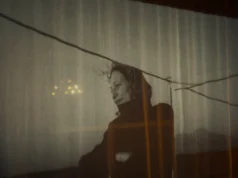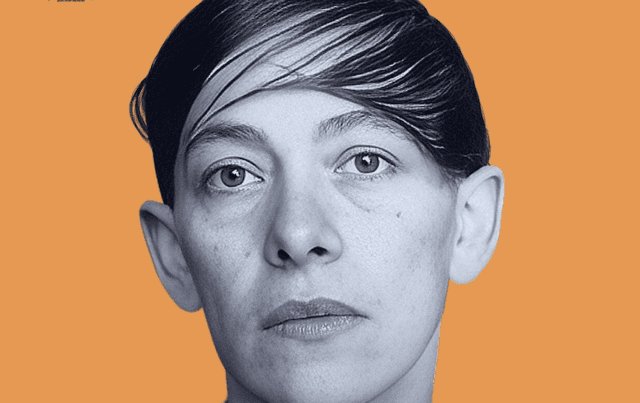
German director Maria Wischnewski grew up in the former GDR (East Germany), where Helene Weigel, the heroic subject of her new feature documentary, was eventually to settle, even after escaping Nazi Germany in the 1930s. But while Weigel retained a legendary status for Wischnewski as she was growing up, and into later adulthood, the filmmaker discovered that she actually knew very little of the great woman’s life when it came to profiling her on film.
“My parents and grandparents used to go to the Berliner Ensemble and saw her perform on stage. For me – I was born five years after Helene Weigel’s death – she was simply ‘just’ the famous actress who played Mother Courage, the founder of the Berliner Ensemble – and wife of Bertolt Brecht,” the filmmaker tells BDE before her the DOK.fest Munich world premiere of Helene Weigel – Instructions for a Revolution.
In the intensely researched feature documentary, the revered playwright and entrepreneur Brecht is of course a core element within the story, but it is Weigel – actress, mother, revolutionary, Communist, theatre manager and matriarch – who is placed centre-stage.
The film recounts her life from her Jewish upbringing in Vienna in the early 20th Century to her status as one of Berlin’s most celebrated and “noisiest” performers in the 1920s. We are told of her collaboration with, and marriage to, Brecht after his declaration by letter that he felt “favourably disposed” towards her, their flight from Nazi Germany and her assuming the stage role of the revolutionary Mother Courage. After the death of the promiscuous Brecht, she led the Berliner Ensemble in uncompromising fashion, refusing to kowtow to Party demands and requirements.
When the Wall went up she opted to stay in East Berlin, where she represented a brand of feminism seemingly unrecognisable to Western tastes. German actress Katharina Thalbach, who was adopted by Weigel’s own daughter, notes of the time how, “in the GDR, things were different anyway. It was only in the West that I learned that women still had to fight for their rights. I would say that feminism still hasn’t arrived there the way I experienced it.” Weigel epitomised this attitude.
“Helene Weigel simply does her own thing right from the start. Defying all conventions,” director Wischnewski points out to BDE. “You only have to look at the many photos of her, with her short hairstyles and that powerful, intense gaze, a cigarette in the corner of her mouth, legs apart, not giving a damn about being pretty or cute. Even very early on, she was at odds with the commercialisation of femininity. When I see the photos of her alongside Sophia Loren or Simone Signoret, they are worlds apart. Weigel made her own way. It was mainly about being human, about politics and about art.”
“It is a strikingly modern story which, despite all its ambivalence, is far ahead of today’s feminist debates. In a time when we desperately need role models, there is still much to learn from her,” Wischnewski adds.
Weigel died in 1971, still at the helm of the Berliner Ensemble, following an international tour arranged to celebrate the 100th anniversary of the revolutionary Paris Commune. She is buried in East Berlin.
“Helene Weigel’s story touches me on many different levels,” Wischnewski underlines. “My great-grandparents, as communists, took a similar path into exile with my grandmother in 1933, and so, through this film, I am exploring questions that have long preoccupied me. How does one endure a life on the run? What becomes ingrained in one’s DNA? What does exile, the constant move from country to country, and the fear of persecution do to people? What does it do to us, the children and grandchildren?”
“After the war, my grandmother also chose the GDR and enthusiastically joined in building it up,” Wischnewski continues. “For her, as for Helene Weigel and all wholeheartedly committed Communists, the Prague Spring marked a break with the GDR. I’m also interested in the visions that drove them. Through Helene Weigel’s life I also wanted to trace the utopia of Communism.”
Weigel’s life spanned the most dramatic and terrifying years of German and European history, from the unstable, at times carefree, Weimar period to the Second World War, to the post-war restoration of Germany and later construction of the Wall. In the film, Wischnewski therefore presents a woman not only possessing great talent, but enormous gravity.
“Yes, she is an exceptional figure, a century-defining woman. From celebrated stage star of the 1920s to artistic director of the Berliner Ensemble, anti-fascist, trailblazer—and, not least, Bertolt Brecht’s artistic partner,” agrees the director. “Weigel’s life story reflects the extremes of the 20th century. And her themes are timeless: pacifism, anti-fascism, anti-capitalism, the search for a way out of the crisis.”
“At first, I didn’t realise just how significant her role really was, because the story hasn’t been told from that perspective,” Wischnewski adds. “But I soon realised that the existing stereotype of Helene Weigel had little to do with the woman I came to discover over the years. I was particularly struck by the fact that, from her earliest youth, she had forged her own path with a strong will. I was fascinated by her free-spirited nature, her independence, her networks of women, and also, very much, her political stance. Even as a young actress, she was passionate about the utopia of a fairer society.”
“Also the artistic, intellectual and personal symbiosis between Brecht and Weigel amazed me and was a real discovery. It is a story full of contradictions, and that is precisely what makes it so fascinating.”
The Brecht we see in the film isn’t the one audiences may expect to see presented. There is no mention of his creative partner Kurt Weill, and he is a man happy to indulge the attraction that women (some of whom are Weigel’s friends) feel for him. What’s more, his stage direction seems at times particularly one-dimensional. Weigel smarts at his insistence that there is only one way to play a role. “One of the joys of this profession is finding variation within boundaries,” she bemoans.
That said, Wischnewski nevertheless retains an admiration for the man.
“The expectation seems to be that you discover Helene Weigel through Bertolt Brecht, but for me, in a way, it actually was the other way around,” she tells BDE. “I wasn’t an expert on Brecht and, to be honest, I’d hardly read any of his work. He hadn’t really interested me much up to that point. And at first, I deliberately wanted to keep Brecht entirely in the background. After all, the focus of theatre history has always been on Brecht. Even in films about Brecht, Helene Weigel plays, at most, a minor supporting role. Rather, Brecht’s ‘women stories’ have been of interest.”
“It was clear that a change of perspective was needed: the focus should not be on Bertolt Brecht, but on Helene Weigel: the acting icon, theatre director, anti-fascist and defining figure of the 20th century. To bring Helene Weigel to life, not to tell her story in isolation from Brecht, but to free her from the tired trope of Brecht’s ‘supportive’ wife suffering at the hands of his womanising escapades,” she adds.
“Nevertheless, it was important to me to work with texts by Brecht that are spoken and performed by her, for they are highly relevant today. Ultimately, my view of Brecht has improved, or let’s say, become more refined. I bought Brecht’s Collected Works – their full, gap-less publication is also a product of Weigel’s work – and read much; I am both thrilled and, in a sense, shaken by how relevant these texts are today.”
Wischnewski further reflects on Weigel’s relevance to, and fascination for, younger audiences, for whom the past can be both instructive and inspirational, and certainly not something fixed in impersonal monochrome.
“My daughter’s generation is currently developing new visions, often looking back with great interest at figures and movements that tried something, that dared to do something. With Helene Weigel – Instructions for a Revolution, I wanted to make a film that would interest and move people across generations. A film about a woman with an unwavering determination to make the world a better, fairer place. To change it. A counter-narrative to the age of selfishness,” Wischnewski concludes.