Freak Show is the first collaboration between filmmakers and artists Lukasz Ronduda and Filip Pawlak. Ronduda is a distinguished filmmaker and art curator who has already made several features including Tell Me What You Feel (which was in the Big Screen Competition at IFFR earlier this year). Pawlak is from a theatre and performing arts background. He was also Polish ambassador for Creative Europe’s international project ‘Europe Beyond Access’, a huge programme for disabled artists across Europe.
In Freak Show, the duo are working with a group of disabled performers as they prepare for a show at Warsaw’s Museum of Modern Art. The idea was to explore different ways in which they could represent the disabled body on stage while reflecting on the pain and contradictions of disabled life.
“We started almost three years ago, looking for a way to process this disabled ‘spleen,’ this disabled nostalgia and pain,” Pawlak explains. “We were looking for a format that could link all of these topics.”
Freak Show the ‘film’ (screening this week in Millennium Docs Against Gravity) is part of an ongoing process. It sits alongside the live show which premiered at MoMA Warsaw, and that has also now been performed at several other venues.
“The documentary is looking at the process of creation and the formation of the group,” co-director Pawlak continues. “The cameras were with us from the first year of the project, [covering] the first rehearsals and the development work of the performers.”
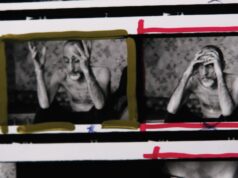
The performance style is bold, confrontational and expressionistic, involving extravagant costume design and avant-garde choreography. The work forces audiences to confront their preconceptions and prejudices about disabled bodies.
Some of the disabled artists were initially wary about working with an organisation like the Museum of Modern Art. Pawlak acknowledges that all art institutions are “political” and have their own agendas. Nonetheless, the Museum of Modern Art is one of the most prestigious cultural centres in the country.
“Of course, it is never neutral. The Museum decided to show us for a certain reason…it was really important for us to be aware of this. Also, that’s why we included the discussion in the film. It was not that easy to decide whether we wanted to be in the Museum or not. We had to accept that we were losing control – it was the museum’s decision how they would present us. We took that risk and, in the end, we were really happy about it.”
Ronduda himself works with the Museum – so that provided an extra layer of reassurance.
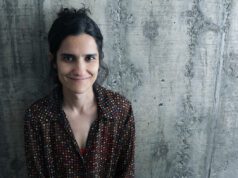
Early on, the two directors were collaborating in the writing and directing with artist Nadia Markiewicz but she soon became one of the main performers, moving in front of the camera instead.
Freak Show was produced through Madants, the Warsaw-based outfit set up by Klaudia Śmieja-Rostworowska and Beata Rzeźniczek in 2015. “We were looking for some producer who we thought would be tender as well, sensitive enough to be able to produce a movie like this, about exclusion,” Pawlak observes. One key priority was to provide a safe environment in which the artists could work, and Madants helped with this.
In the documentary, the filmmakers expose the extent of ableism that still exists in Poland as elsewhere. After the show’s premiere, one of the performers is viscously attacked on social media. Such abuse is depressingly commonplace. “We can’t really get used to it. It is always painful to have this kind of hate,” Pawlak states. “It is not just criticism. It has no value at all.”
He suggests that the antagonism toward Freak Show may have been partly caused by anger among some sections of right-wing conservative Polish society toward the Museum (which reopened in striking new premises less than two years ago).
“It’s either the ugliest building in Poland – or the best building! It depends on the political side,” Pawlak says of how the Museum polarises opinion. “We became a part of this conflict…strange, ugly people in this controversial building. We were used as a weapon in this public battle about the building.”
Whatever the causes of the online trolling, it was still “really painful” for the performers to endure. “It is always harmful and sad to read the comments based on the bodies of disabled people, calling us freaks but without irony…it is hard to find words for this kind of stuff.”
However, as the film also shows, the performers refuse to be passive victims. When someone attacks them, they know just how to fight back.
Pawlak acknowledges he was “scared” initially about how his creative partnership with Ronduda would develop. “I was not sure if it would work when we decided we would co-direct because I thought about our different artistic roots….but surprisingly it was a really good match. We balanced each other in an organic way – it was really smooth and it worked well.”
He talks of Rotunda’s “curiosity” as he looked through the camera lens and of his own work “focusing on the characters and their perspectives.” When it came to the editing, they were also in synch. “We managed to do it without a conflict.”
The film has references to the Nazi era and to the Hitler-era onslaught against disabled people. “I am curious about how the audience will react to it,” Pawlak notes. “Especially for the young audiences, lot of the details we are sharing will be something new. Also, we wanted to show that we are part of the history of Poland.”
Since 2017, Madants has had its own distribution arm, Madness Distribution – and they will take care of the Polish release of the film. Special screenings are also being planned for the UK and the Nordics, and possibly further afield too.
And, yes, the two filmmakers are very well aware of the controversial Tod Browning MGM movie, Freaks (1932), about a travelling circus – and which the New York Times recently called a “touchstone for disability representation.”
“For us, it [the title Freak Show] is referring to the [Browning] film, obviously, as it is one of the few representations of these kinds of bodies in mainstream culture and art. Without it, we don’t have many more! Obviously, the ‘freak show’ history and tradition is cruel and horrible but we were trying to re-think it and to think about it as a potential space for liberation,” Pawlak states. “We were inspired by re-watching this film and noticing that, look, this is a group of great artists who are aware of their talents. They are strong…and they have found something beautiful in this terrible tradition…”