Five Nordic documentaries at advanced stages of production were pitched to international decision-makers May 16 during Cannes Docs’ Docs-in-Progress, with teams from Denmark, Norway, Iceland, Finland and Sweden seeking festivals, sales agents, distributors, gap financing and impact partners.
Hosted by Sara Rüster of the Swedish Film Institute, the Marché du film session brought together one project from each of the five national institutes under The Five Nordics umbrella.
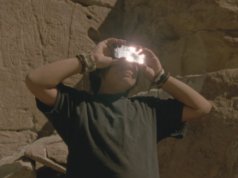
Icelandic-UK project Island Nation, directed by Nikolai Galitzine and produced by Dögg Mósesdóttir for Northern Wave Productions, was presented as a portrait of a remote Arctic island facing depopulation, climate pressure and reduced public services. The film is now in late post-production.
Galitzine said the project emerged after a long-researched film in Russia became impossible following the war. In Reykjavík, a friend told him he was heading to an Arctic island to rebuild a church destroyed in a storm. “What the hell, I went there,” the director recalled. He stayed seven months, building the church and filming the community. The film, he stressed, is not simply observational: “I wanted their voices to be heard.”
Mósesdóttir described the location as “a little bit like stepping into the past,” a place structured by seasons, ferry days and isolation. The team is seeking sales, distribution and other strategic partners, while Galitzine hopes the film can also reach other remote communities facing similar challenges.
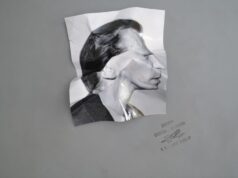
Norway’s The Greatest Illusion, directed by Benjamin Ree and produced by Ingvil Giske for Medieoperatørene, turns on the story of illusionist Alexx Alexander. When Alexander was young, his mother disappeared and was later found dead; his father was convicted of the murder. At 21, Alexander became responsible for his three younger siblings, and the family survived by touring Norway with magic shows.
Ree said the film grew out of conversations with Alexander about trauma and memory. “Is it possible to find a cinematic form using magic and illusions to show Alex’s internal state of mind?” he asked. Alongside observational material and therapy sessions, the film will include large-scale practical illusions, to be shot in Estonia later this year.
The helmer said the aim is to make visible what a camera alone cannot capture. “We will recreate it openly for the audience so they understand it,” he said. The Norway-Denmark-Estonia co-production is looking for festivals, sales agents, distributors and buyers.
Swedish director Simon Klose presented his untitled Timbuktu documentary, produced by Martin Persson and Elin Kamlert for Anagram. The film follows Swedish rapper and anti-racism figure Jason “Timbuktu” Diakité as he confronts his African-American heritage and his fraught relationship with his father, Madubuko “Buko” Diakité.
Kamlert confirmed the Sweden-Denmark-Norway co-production has backing from the Swedish, Danish and Norwegian film institutes, broadcasters SVT, NRK and NDR, regional funding in Skåne, and theatrical distribution in Scandinavia via Scanbox. The team is targeting a fall 2027 premiere and is seeking sales, distribution and festival partners.
For Klose, the film is unusually intimate. “This is my most personal documentary ever, because it’s about my best friend,” he said. The project began when Diakité feared that his father’s illness might cut his last living link to his African-American roots. When Buko refused to travel back to South Carolina, Diakité went without him, accompanied by Klose. The film expands from that journey into a broader story about ancestry, race, fatherhood and reconciliation.
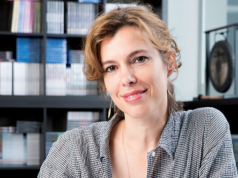
From Denmark, Christina Martiny Moltke presented All I Ever Wanted (pictured), produced by Esther Nissen and Maria Kristensen for Final Cut for Real. The project follows Leslie, a film composer whose career is beginning to take off (perhaps best known for scoring the series Dark Horse), and her wife Thilde, who is pregnant with their second child. Leslie is diagnosed with acute leukaemia three weeks before the due date.
Moltke said Leslie, an old school friend, called her in January 2024 shortly after the diagnosis. Her doctors had advised her to find something to hold on to, and Leslie wanted to use filmmaking as a way to process the experience. “If sharing their story would help others, they might find meaning where there seemed to be none,” Moltke said.
The film, available as 90- and 52-minute versions, is in editing and slated for delivery in February 2027. The producers described it as a work about illness, motherhood, care, mental health and the fragile structures of everyday family life. The team is looking for festivals, sales agents, distributors and buyers.
The Finnish selection was Virpi Suutari’s Lonesome Land, produced through Euphoria Film. The documentary follows a real environmental case in eastern Finland, where a forestry machine driver crossed a river and unknowingly crushed thousands of endangered freshwater pearl mussels.
Suutari described the film as “a philosophical crime film with an absurd comical twist.” The mussel, she underscored, can live in the same river for over 200 years, and becomes one of the film’s central characters. The case, still under investigation, opens onto wider questions about responsibility, rural labour and corporate power.
“Who is the real criminal here?” Suutari asked. “Is it the small human being in the wheels of capitalism or the multinational corporation that commissioned the work?” Currently in rough cut, the film is due to be finalised by the end of 2026 and is seeking a sales agent, distribution and festival exposure.