Western filmmakers can’t just turn up in the jungle and start recording the lives of new recruits to the Myanmar’s People’s Defence Force. It’s five years now since the military junta overthrew the country’s democratically elected government. Since the coup, civil war has broken out. The country’s current rogue leaders are doing everything they can to destroy the resistance.
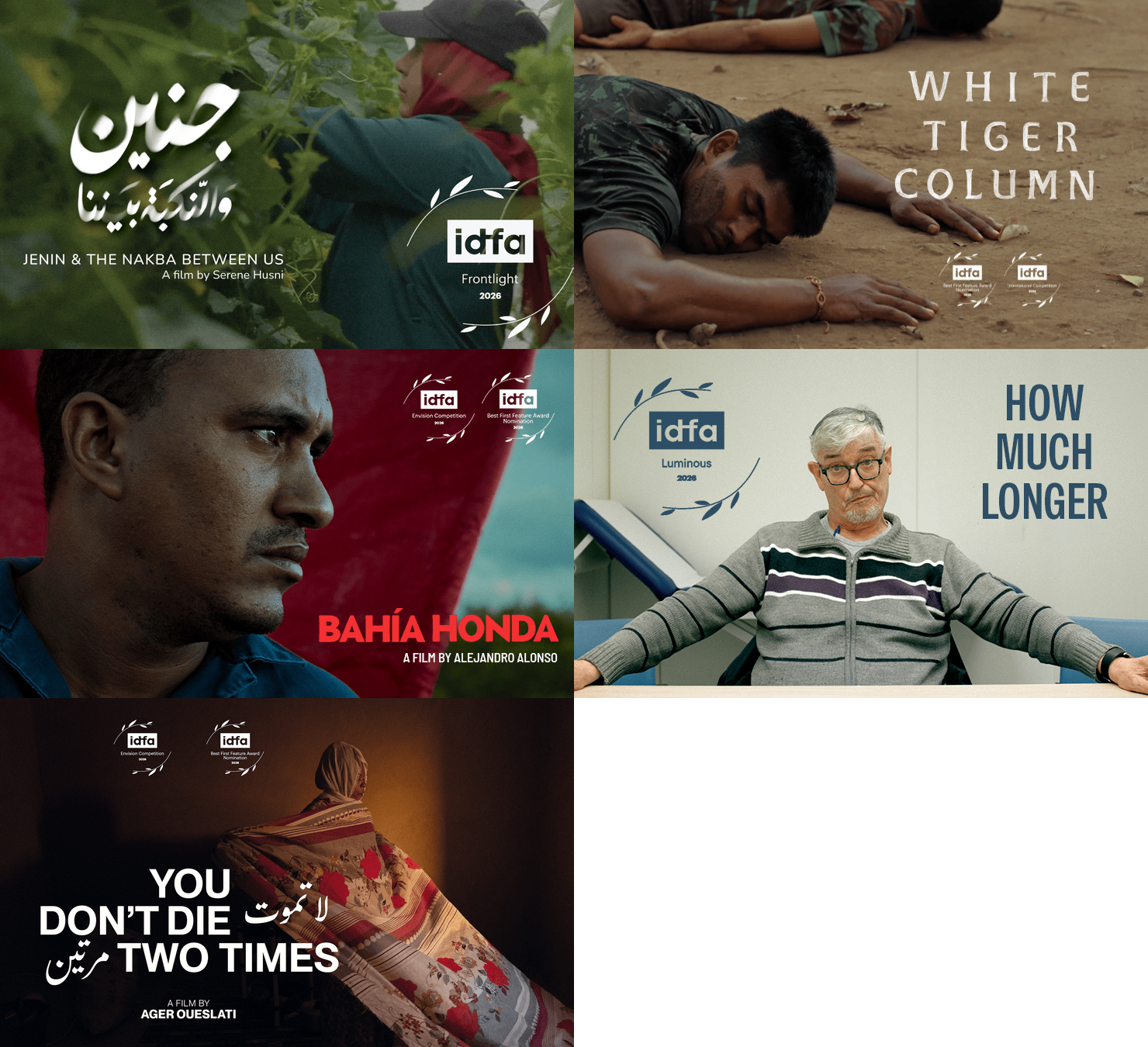
Robert Mentov, Dwight Jantzi, and Bryan Dickie, three intrepid Canadian directors, somehow secured permission to embed themselves with the resistance forces. The remarkable film they have made, White Tiger Column, produced by Lightwood Green, opens IDFA on November 12. It records the experiences of raw young recruits, some of whom may never have held a weapon before, as they undergo a 45-day crash course training programme before being sent to the front line.
“A lot of years of preparation went into making this film,” says Jantzi.
Dickie is a photo-journalist who has extensive experience of working in Myanmar. He has “deep connections” both in the country and with the Myanmar diaspora in Toronto. Even before the coup, Dickie had spent time with many of the ethnic armed organisations in Myanmar. He lists some of them: the Shan State army, the Chin independence army, the Ta’ang National Liberation Army and the Wa State Army. Not long after the coup took place, he had been sitting with a group of exiled Myanmar friends in Toronto, lamenting the fact that he couldn’t do anything to help. He told his friends he “would love to be there.”
“They looked at me kind of quizzically and said, ‘what, you want to go?’” The months passed. “One thing led to another – and we ended up in one of the camps.”
The filmmakers won’t disclose precisely how they got there. “It’s trust and people, you know,” is all they will say. Thanks to his “groundwork there for so many years, going in and out,” Dickie had people ready to help him when he went back to Myanmar in October 2021, ten months after the coup, on a research trip. The filmmaking team returned together in early 2024 to “to do the heavy lift of the film.”
For the first week, they didn’t shoot anything. They “just wanted to break bread” with their subjects, connect with them “on a human level,” and win their trust that way.
“A lot of it was using our instincts,” Mentov explains why they eventually chose against a handheld shooting style. They had arrived in the jungle around the same time as the latest batch of would-be soldiers. “None of the recruits knew what to expect. We realised this should be a more quiet and observational film.”
They often set the camera up at a distance and let it run for long periods. The fact there wasn’t obtrusion, and the crew was small “allowed a certain level of intimacy with these characters.” Through this technique, they picked up some raw and revealing moments. For example, in one poignant sequence, we hear young soldiers talking nostalgically about what they miss being away from home – their parents, the TV and the fridge.
The bitterness of some of the recruits is also palpable. Their loved ones have often been killed and tortured by the junta and many are thirsting for revenge.
“I am saddened and my heart breaks every time I hear things that the military government has done to people. I have heard a lot of stories over the years. The regime uses rape as a weapon. People talk about the Rohingya genocide,” Dickie says. He talks of “jaw dropping” stories about families forced to disown their children to avoid facing reprisals from the regime.
In the era of Gaza and the full-scale Russian invasion of Ukraine, the civil war in Myanmar risks being overlooked in the west. It receives relatively little mainstream media coverage.
“It is definitely a war that gets passed over,” agrees Dickie. He adds that Myanmar as a country is also often neglected in general. “Very few people could point out Myanmar on a map when it is right next to Thailand, one of the most touristy countries on the planet.”
Dickie and Mentov have been working together for several years on smaller projects, for example Paradise Heights (2025), a short focusing on Toronto’s Burmese diaspora (and on which Jantzi was also a producer). “And we did a small little project on Guyanese bird-racing years back,” Dickie volunteers about their 2020 short, The Flock.
The trio had been talking about the White Tiger Column project for years. When they finally got to Myanmar, they still often had to improvise. “Each evening, we would make a plan of what we were shooting the next day and we’d have to adapt every day,” Mentor remembers.
“But being such an intimate team of just three of us, being together for 24 hours a day, sleeping within inches of each other every night in this tiny bamboo hut, it just bred a very close collaboration, a bit of a hive mind if you will,” suggests Jantzi. “It came together very naturally.”
The bulk of the shooting was done over a 6-7 week period. The filmmakers weren’t sure how long they would be allowed to stay as there were obvious security issues about them being there.
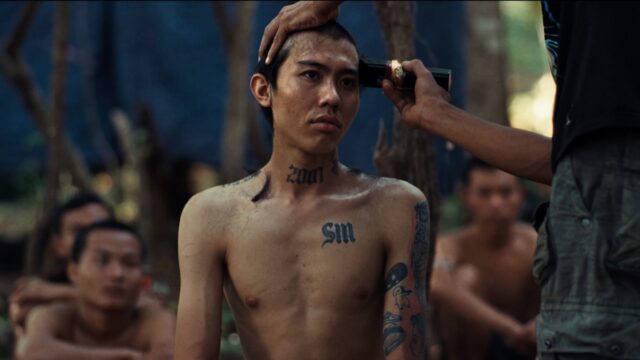
The recruits are put through their paces in a way that may be familiar to viewers from films like Full Metal Jacket. Their hair is shaved off. They’re made to go on assault courses and taught to assemble and use weapons. Characters discuss what lies ahead. They know that the front line won’t be like an American movie, but they’re not sure what exactly to expect.
“We didn’t set out to make a traditional war documentary. We very much didn’t want to glorify violence in any way and we wanted to connect this with the widest audience possible. We were trying to focus on universal human ideas of change, sacrifice, missing home, missing your parents,” Dickie remembers. “We really wanted to lean into ideas like that, these people’s experience of changing from being a civilian to being a revolutionary soldier.”
Post-IDFA, the film is expected to screen widely on the festival circuit. The filmmakers are currently in talks with sales agents. There may also be a premiere in Thailand which some of the protagonists in the documentary may be able to attend.
“That is in the early stages of planning for next year but, in terms of broader distribution, that is still up in the air,” the filmmakers say. “This [IDFA] is just the first step in the journey.”