Documentary Association of Europe and EURODOC published November 16 an open letter to the EC and EU policymakers demanding they maintain and strengthen their commitment to documentary filmmaking within the new AgoraEU framework.
The letter is co-signed by 100 documentary institutions including major European and international docfests, funding organisations, doc training programmes, production bodies and national promotion bodies.
“Our ambition is to bring together a broad coalition of organisations across Europe and beyond, and to make a compelling case for the essential role documentaries play in our societies: in fostering democratic debate, safeguarding freedom of expression, fighting against disinformation, preserving collective memory and bringing diverse perspectives to audiences,” writes EURODOC Director Nora Philippe and Charlie Phillips, new Programme Director of of Documentary Association of Europe.
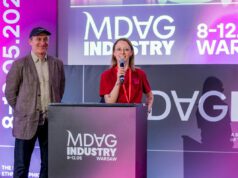
At the opening of Forum 2026, IDFA’s Artistic Director Isabel Arrate Fernandez underlined “that connectivity, that standing together and engaging is super important.” She called upon “upon all independent organisations that support documentary cinema” to sign the letter. “I’m saying this…in the European context. Yes, it’s the Media Programme, and it’s very important for European producers. But don’t forget, it’s also [about] the festivals, the markets, the training programmes, the co-production funds that extend their activities far beyond only the European context.”
The open letter states how: “Documentary belongs fully within European film and audiovisual policy. It is a cinematic art form, an essential expression of cultural and linguistic diversity, and a powerful vehicle for European creation internationally. It must benefit, alongside fiction and animation, from a distinct, adequately funded and protected audiovisual framework within AgoraEU.”
The letter further states: “Documentary also champions Europe’s commitment to independent information, media pluralism and democratic resilience (as affirmed by the European Democracy Shield and the EU Strategy for Civil Society). At a time when young generations take to the streets to demand greater investment in education and social justice, when the use of artificial intelligence agents profoundly transforms the production and circulation of images, and when widespread disinformation rapidly erodes public trust, our societies urgently need films in which reality can be represented and critically examined.”
“What is documentary, if not a rigorous engagement with reality?” it questions. “Supporting documentary means investing in Europe’s capacity to see, to remember, to question and to understand itself, and the world. Documentary needs Europe. Democracies need documentary”
The letter reads as follows, plus signatories:
DOCUMENTARY NEEDS EUROPE. DEMOCRACIES NEED DOCUMENTARY.
An Open Letter from the Documentary Sector to the European Commission, the European Parliament and the Council of the European Union
16 November 2026
We write as festivals, markets, associations of producers, directors and writers, training labs, distribution networks and institutions of the European documentary sector, joined by allies from all continents. Together, we form a vibrant ecosystem of independent creation, production and exhibition, bringing documentary films, series and immersive creations to audiences across Europe, and around the world.
Documentary is an integral part of cinema and creation. It can also intersect with research, investigation, and education. Documentaries bring artistic expression and the pursuit of knowledge together. We tell stories, investigate facts, preserve memories and make visible what otherwise remains unseen. This unique position at the crossroads of cinema, research and education is not an ambiguity to be resolved or an administrative inconvenience to be managed. It is one of documentary’s greatest strengths, and one that Europe must protect and nurture.
The recently published report by the European Audiovisual Observatory shows that in 2025, Europe produced 1,018 feature-length documentaries, representing more than 40% of its total feature-film production (1). Yet these figures capture only part of a much wider reality. From creative feature documentaries first premiering at IDFA or CPH:DOX and then travelling to thousands of community venues and schools across borders, from in-depth investigations broadcast thanks to more than a hundred public service media organisations across Europe, to documentary series on streaming platforms, from prestigious international festivals to grassroots screenings in Europe’s most remote territories, documentaries reach audiences through an extraordinary diversity of forms, formats and channels, and through the everyday fieldwork of committed cultural workers and creators.
The European ecosystem that makes this possible is being weakened.
Recent Creative Europe MEDIA funding decisions have left established documentary organisations (Ji.hlava/Emerging Producers, Documentary Campus, ESoDoc, FIPADOC, Nordisk Panorama, DOK.fest München…) without support. Increasingly, funding priorities favour “market performance” above public-service and democratic value, while the specific economic realities of documentary production and circulation receive too little recognition.
Meanwhile, public service broadcasters, historically among the most important partners of independent documentary, are under mounting pressure. According to the European Broadcasting Union, public service media funding has fallen by 9% in real terms over the past decade (2). In France alone, the volume of publicly supported audiovisual documentary production fell by 9.4% in 2025, while broadcasters’ investment in documentary production declined by 12.7% (3). Across Europe, from Italy and the Nordic countries to Romania and Slovakia, public broadcasters face a combination of budgetary constraints, contested reforms and concerns over political interference. In Czechia, the threat has triggered an extraordinary public mobilisation: on 24 October 2026, parliament rushed through the first reading of a bill that could cut public broadcasting funding by approximately 15%; this sparked one of the largest public protests in the country since 1989.
These pressures affect the entire documentary value chain: independent producers, filmmakers, labs, festivals, distributors and the audiences they serve. At precisely the moment when Europe needs independent documentary more than ever, the conditions that make it possible are being threatened. As the European Union prepares AgoraEU to succeed Creative Europe, this contradiction must be confronted.
The Commission has proposed €8.58 billion for AgoraEU. The Council’s negotiating proposal would cut that by 30%, to roughly €6 billion. The entire reduction amounts to barely 0.14% of the EU’s long-term budget. For such a marginal saving, Europe would risk undermining a significant part of its cultural and democratic infrastructure. And let us remember the scale of what is at stake: according to Eurostat (4), 8.9 million people worked in the EU’s cultural sector in 2025 – 4.3% of total employment – including professionals in cinema, audiovisual production, journalism and broadcasting. We should also stress that, at a time when « cost-effectiveness » increasingly dominates European cultural policy, documentary achieves an exceptional cultural, social and civic impact with comparatively modest resources.
Documentary belongs fully within European film and audiovisual policy. It is a cinematic art form, an essential expression of cultural and linguistic diversity, and a powerful vehicle for European creation internationally (5). It must benefit, alongside fiction and animation, from a distinct, adequately funded and protected audiovisual framework within AgoraEU. Only to cite just a few instances, No Other Land, a Palestinian-Norwegian coproduction, won both the European Film Award for European Documentary and the Academy Award for Best Documentary Feature. Mr. Nobody Against Putin, a Danish-Czech-German coproduction, also won an Oscar, and Four Daughters, a French-German-Tunisian coproduction, won L’Oeil d’or in Cannes. These films shine on the industry’s most prestigious stages, but they also transform the perspective of millions of people, directly informing democratic debate…and fostering empathy.
Documentary also champions Europe’s commitment to independent information, media pluralism and democratic resilience (as affirmed by the European Democracy Shield and the EU Strategy for Civil Society). At a time when young generations take to the streets to demand greater investment in education and social justice, when the use of artificial intelligence agents profoundly transforms the production and circulation of images, and when widespread disinformation rapidly erodes public trust, our societies urgently need films in which reality can be represented and critically examined.
What is documentary, if not a rigorous engagement with reality?
We therefore call upon the European Commission, the European Parliament and the Member States, in shaping AgoraEU for 2028–2034, to:
1. Protect the budget. Reject the proposed cuts to AgoraEU and guarantee a distinct, adequately funded MEDIA audiovisual framework, with explicit recognition of documentary filmmaking and independent production.
2. Recognise documentary’s plural identities. Ensure that its diverse forms and practices are eligible for appropriate support across and through film/audiovisual, media and democratic participation distinct strands.
3. Safeguard the entire ecosystem. Support documentary from development, production and international co-production, through to professional training, festivals, distribution, exhibition, subtitling, accessibility, film education and audience engagement, with particular attention to smaller organisations and underrepresented European voices.
4. Recognise documentary’s cultural, educational and democratic profound impact on our societies in Europe and in the world, through evaluation criteria that value inclusion, cross-border circulation, public engagement, long-term impact and access to underserved audiences.
5. Defend creative freedom and fight media concentration.
Supporting documentary means investing in Europe’s capacity to see, to remember, to question and to understand itself, and the world. Documentary needs Europe. Democracies need documentary.
EURODOC & DAE (Documentary Association of Europe) and:
- AAAPA
- ADDOC
- ADocPR
- Alianta Producatorilor de Film din Romania
- AnimFrance
- Apordoc – Associação pelo Documentário
- Archivio audiovisivo del movimento operaio e democratico
- ArmDoc Armenian Documentary Association
- Association Les Amis du Cinéma du réel
- ATC
- Audiovisual Producers’ Association Czech Republic
- Beldocs International Documentary Film Festival
- C.R.I.M. Produçoes
- Cannes Docs
- CBA – Centre de l’Audiovisuel à Bruxelles
- CEPI, the European Audiovisual Production association
- CPH:DOX (Copenhagen International Documentary Film Festival)
- Danish Producers’ Association
- Die Produzent*innen. Allianz für Innovatives & Vielfältiges Filmschaffen
- DMZ Docs (DMZ International Documentary Film Festival)
- Doc Edge New Zealand
- Doc Society
- DOC.DREAM services s.r.o. (Ji.hlava IDFF and EMERGING PRODUCERS)
- Doc/it Associazione Documentaristi Italian
- DocedgeKOLKATA
- DOCMA, Asociación Española de Cine Documental
- Docmondes
- #DocSafe Initiative
- DocsBarcelona
- Documentary Film Association Georgia (DOCA)
- Documentary Film Association of Ukraine
- Documentary Filmmakers Association South Africa
- Documentary Organization of Canada
- DOK Leipzig
- dok.at – Austrian Documentary Film Alliance
- DOK.fest München / Internationales Dokumentarfilmfestival München e.V.
- dok.incubator
- DOKSerbia
- DokuFest
- DOXA Documentary Film Festival
- DOX BOX e.V
- DOXS RUHR
- Estonian Documentary Guild
- Estonian Film Industry Cluster
- European Producers Club
- FIFDH
- Film and Music Austria (FAMA)
- Filmadaran (Apricot Tree International Documentary Film Festival)
- FIPADOC
- FLANDERS DOC
- Foundation DocBaltic
- Greek Documentary Association (Hellas Doc)
- Human International Documentary Film Festival, Oslo
- Hungarian Documentary Association (MADOKE)
- IDFA (International Documentary Festival Amsterdam)/ IDFA Bertha Fund
- IDFF Docudays UA
- IEFTF – The International Emerging Film Talent Fund
- Independent Filmmakers Association of Sweden (Oberoende Filmares Förbund)
- Institute of Documentary Film (IDF)
- International Documentary Association (IDA)
- International Media Support (IMS)
- Kids Regio