Yes, 2023 was a low point in the relationship between IDFA and the Palestinian doc community, following the pro-Palestine demonstration at the opening of the festival, and the subsequent withdrawal of Palestinian films from the programme and departure of personnel from Amsterdam.
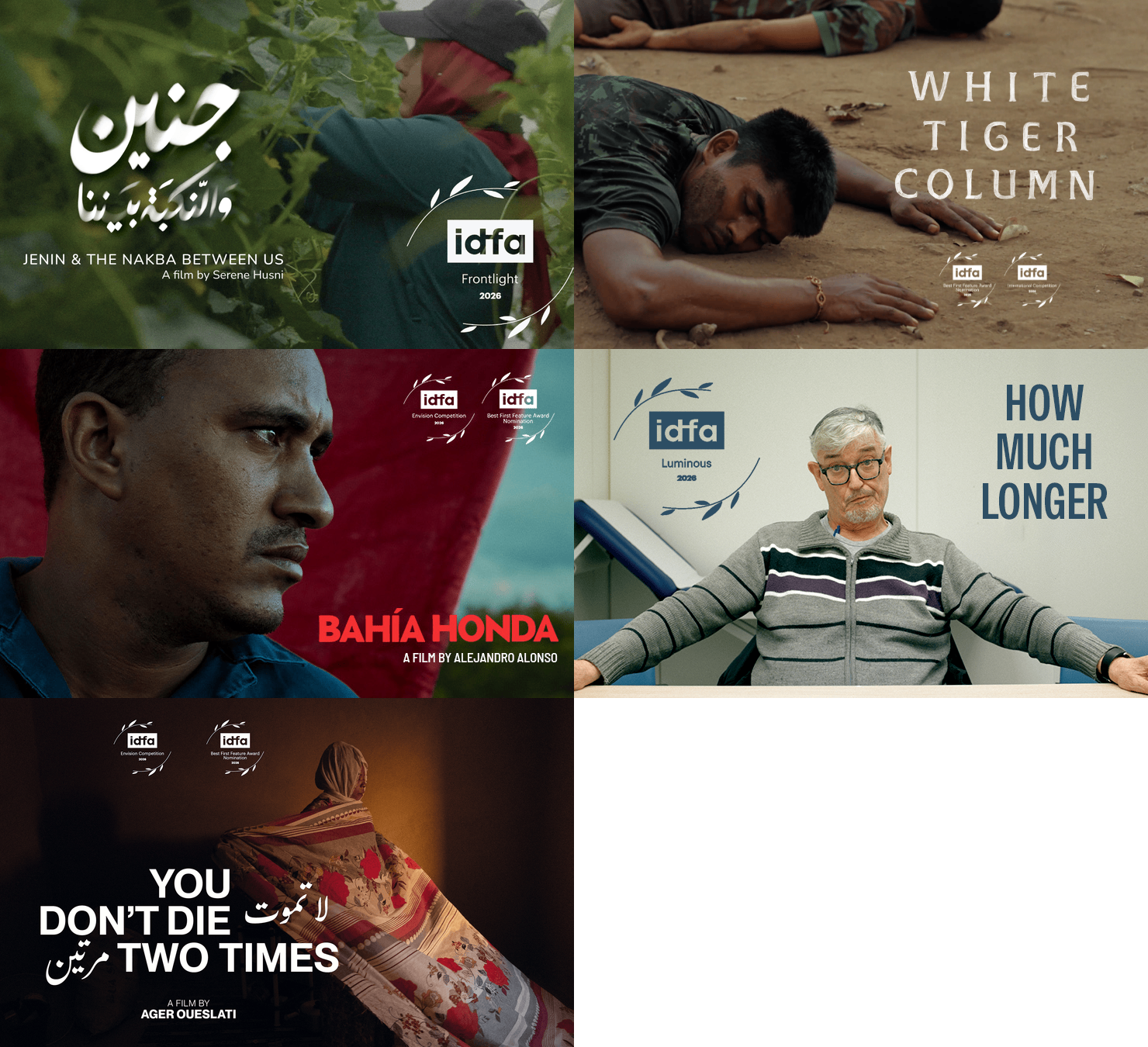
As fraught as that edition seemed, three years on, harmony is restored, with nine Palestinian films in IDFA selection (including the highly lauded and deeply moving Revolutionaries Never Die, Concrete Land and Citizen Osama), four projects in the Palestinian showcase, and a further two projects in Forum.
Additionally, on November 14, Mohanad Yaqubi discussed his Revolutionaries Never Die on a panel title Fighting back – Cinema as an Act of Resistance?, while on November 18 Salma Abu Ayyash (Co-Chair, Executive Board, Palestine Film Institute) will be a core component within the Industry Talk titled ‘Ownership of the Archive – Exposing Erasure, Reclaiming Histories.’
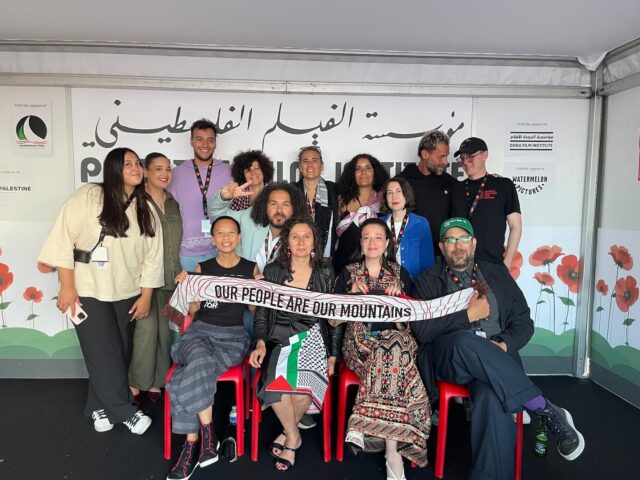
Before the November 15 Palestinian Showcase at IDFA Industry, Salma Abu Ayyash and PFI co-chair Mohanad Yaqubi, together with executive board member and head of the Film Hub, Mohamed Jabaly, responded to questions posed by BDE.
“IDFA has long been one of the most important platforms for Palestinian documentary. Since our first showcase there in 2018, we’ve supported Palestinian filmmakers and their projects at the festival, and we’ve watched the number of films from Palestine and the wider region grow steadily,” they say. “The PFI has worked closely with the IDFA leadership and team to build that presence. It is the result of relentless work by many people, at the PFI and beyond, sometimes against the odds, who have created the space for Palestinian filmmakers to be seen and heard in the industry. IDFA in particular has taken to heart the Industry Protocol we developed with our community helping foster an environment in which Palestinian filmmakers feel safe, supported, and welcome.”
“The IDFA Bertha Fund was also one of the first supporters of the PFI’s Palestine Film Fund, which we launched in Cannes in 2025, and in doing so encouraged others to join,” they continue. “That support is another result of the trust and exchange we’ve built with IDFA over time. This year’s programme shows how far Palestinian cinema’s presence at IDFA has come… At a time when Palestinian stories are more urgent than ever, we see IDFA as a key partner in making sure these films reach audiences, buyers and collaborators around the world.”
For the Palestinians at IDFA, documentary remains the essential means to chronicle the country’s turbulent history, and the ongoing resilience of its people.
“Not to belittle what fiction can accomplish, documentary films, especially well-made ones, bring us closer to truths that we often escape, are too complex to think about, but that can shape our attitudes and thinking about the world in ways that are grounded in reality, and can mobilize people in ways that are more collectively felt,” they say.
“For the Palestinian people, this matters especially. Documentary has long been a way of recording our lives, our history and our losses when others have tried to erase or distort them, they add. “Many of these films become an archive as much as a story, and they reach audiences who might otherwise only encounter Palestine through headlines.”
“This history is not separated from what the Palestinian filmmakers are dealing with today. for many of them, to understand the genocide in Gaza, is to look at what happened 80 years ago. They are connecting the histories, through their own stories of their families, their villages, and their archives,” the collective underlines.
COLLECTIVE LIBERATION
Palestinian cinema, the docmakers note, is working in service of collective liberation. “The road map [to the establishment of a robust doc industry] is manifold, but we believe it is important to ensure that our narratives remain not just visible, but active in the road towards a free Palestine.”
“The PFI was established, not only in response to limited production funding and distribution opportunities across the Arab world, but more importantly, to the absence of a stable national film infrastructure and sustained public funding for Palestinian cinema,” the collective stresses. “As an independent, Palestinian-led institution, we work together to create resources, expertise, and networks of our community to support filmmakers across the entire filmmaking cycle, from development and production to film streaming and preservation. Our programs have evolved in direct response to the needs of filmmakers, including mentorship, professional access, international partnerships, and the preservation of our film heritage.”
“If you look at our programs, we address each of these areas. We have launched a film fund – still only modest – and we are spending time and effort in engaging international film funds to support the idea of a solidarity fund for Palestine that goes towards sustaining Palestinian film projects.”
“We are also exploring co-production opportunities between regional funds and Palestinian producers. With the exception of the fund coordinator, every PFI team member is an unpaid volunteer, but we are determined to continue on this path and hope that interested parties will support our efforts. Our greatest resource remains the commitment and solidarity of the film community itself. What we are building is not simply support for individual films, but the foundations of a sustainable Palestinian cinema,” they add.
PALESTINIAN PROJECTS AT IDFA
The Palestinian Showcase features three projects by Palestinian filmmakers and, for the first time, a Sudanese project. The projects are at different stages, from development to finance, and are looking for co-producers, funders, broadcasters, and sales and distribution partners.
Raya Shaban’s Between Two Houses uses architecture as both subject and method, tracing Bushra’s life through the house in Nazareth she was forced to leave as a child and the house in Amman where she spent her last decades.
Shall We Meet Again? is made across a border by two young filmmakers, Amjad Sokkar in exile in Egypt and Woroud Al Qassas in Gaza, whose exchanged diaries become a testament to friendship, loss and the memory of Gaza.
MILAD – The Birth of Walid by Ahmad Saleh, Basel Nasr and Mats Grorud is a stop-motion film in which the imprisoned Palestinian writer Walid Daqqa and five animal companions try to solve an olive tree’s riddle about real freedom.
Where Do I Belong? by Sudanese filmmaker Ibrahim Snoopy Ahmed, whose Khartoum premiered at Sundance and the Berlinale, follows his return to wartime Sudan to reunite with his parents, in a hybrid road movie about displacement and belonging.
In IDFA Forum, Mohammed Alshareef’s Super Sila is a documentary set in the heart of the siege on Gaza, where a father invents an imaginary world where his young daughter becomes a superhero, trying to protect her from the war and carve out a fragile space of safety inside a collapsing world.
Ida Kat Balslev’s My Rebel Heart follows young actress Yara as she navigates the delicate balance between her artistic ambitions and the fight for liberation, amid occupation and war. In the West Bank, she and her community face the harsh realities of oppression while holding on to their dreams, resilience, and identity. Holding Israeli citizenship but rooted in the West Bank, she lives between two worlds.
“Each of these projects speaks for itself and is a representation of the creativity and breadth and power of Palestinian filmmaking. It is by the films’ own merit and through the important stories they tell that they make it to platforms like IDFA – our work is to facilitate, support and prepare our filmmakers to engage with the wider industry and benefit from it as they truly deserve to,” writes the Palestinian team.
“We work with festivals that have a tradition of enabling filmmakers to tell stories on their own terms, and who have historically worked to make us and our filmmakers feel welcomed and heard, besides material support offered,” they add. “This hasn’t always been a given. Palestinian filmmakers and activist communities around the world have paved the way for including Palestinian narratives, including revolutionary and anti-colonial ones in the mix of these festivals on central stages. But these things have often had to be fought for; Palestine has come a long way in the consciousness of decision makers.”
The Palestinian collective articulate their hopes for IDFA and what would constitute a successful edition for them in 2026.
“Awards are always welcome, but they’re not the only way we measure success. Just as important is what the filmmakers and producers in our delegations walk away with: new connections, follow-up meetings with key funders, broadcasters and sales agents, and a sharper understanding of how the industry works,” the say.
“Every year we see projects move forward because of the encounters that happen at these markets. That depends on an enabling environment, one where our filmmakers can focus on their work and meet the industry on equal terms.”