Hong Kong filmmaker Ma Chi Hang turns to two decades of personal recordings to explore bereavement, belonging and the aftermath of the city’s 2019 protest movement in Moon Is Watching You, selected for IDFA Forum’s Rough Cut section.
Produced by Ma and Catherine Chan, the first-person essay takes as its point of departure the recent death of the director’s father and a search for a missing family album. As a teenager, Ma left the album in a drawer when his family moved home, losing photographs that preserved his parents’ past and his own childhood. That absence now provides a starting point for a wider inquiry into memory and displacement.
“For me, ‘home’ is where personal and social memories intertwine,” Ma writes in his director’s statement. “When I found my father in those DV tapes, the feeling of loss is same for Hong Kong.”
The project draws together forgotten family archives, home videos and footage recorded across Ma’s life as an artist, teacher and filmmaker. Revisiting these images allows him to trace the connections between intimate experiences and the upheavals that have shaped his relationship with the city.
“The diary-like, home-video images restore a sense of belonging, helping me identify my role in this city – as a son, an art student, a teacher and a documentary filmmaker,” he adds.
Ma’s account of his political awakening takes in the 1997 handover, local land rights campaigns in the 2000s and the 2014 Umbrella Movement, when he stood alongside his students in occupied areas. His recordings of the 2019 protests bring that personal history into contact with a collective experience of loss, with friends, students and fellow citizens subsequently imprisoned or living in exile, according to the project synopsis.
Since the protests, Ma has collected stories from Hong Kong’s diaspora in Germany, Taiwan, Japan and the US. His statement describes a growing sense of alienation on returning to the city, where familiar streets, alleys and bridges trigger memories of events that continue to shape the present.
“Pain complicates memory: we try to forget what happened, yet we are compelled to remember,” he explains.
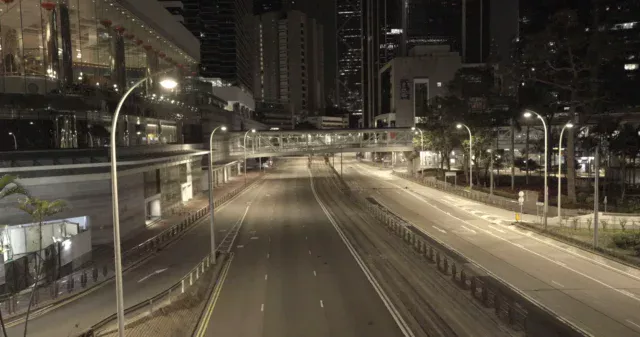
The doc’s proposed form follows these overlapping layers of experience. Ma brings his older recordings into dialogue with footage from 2019 and contemporary images of Hong Kong’s streets at night. He is co-writing the project with a Cantonese poet and a Hong Kong ethnomusicologist, bringing poetry and original music into an essay conceived as an immersive encounter with memory.
The juxtaposition of the Hong Kong of his youth with the city today also helps him examine his own development as a dissident voice. His statement positions the film as a bridge between generations, drawing on the experience of standing with his students while recognising the histories that preceded their struggles.
“My footage may not articulate grand political narratives, but it traces my personal path towards becoming a better human being—one who has never given up,” Ma underscores.
Moon Is Watching You is Ma’s second feature, following Ballad on the Shore (2017), which won the Royal Anthropological Institute’s Intangible Culture Film Prize. An independent filmmaker, educator and visual artist, he is now based between Hong Kong and Okinawa. Chan’s credits include an associate producer role on Blue Island (2022); her work also encompasses research into a privacy-first film distribution tool.
The production notes describe Moon Is Watching You as a project that began with a promise. Private supporters have backed it since 2020, and those supporters are now dispersed internationally following emigration from Hong Kong. For the team, bringing the film to audiences means sustaining that relationship with its backers while finding international collaborators able to help it travel.
The latest deck lists the Cantonese-language documentary, now in post-production, with a 2027 release date. It reports that more than 60% of the production budget has been raised.
The project’s trajectory includes Yamagata Documentary Dojo in 2025 and support from the IDFA Bertha Fund Classic in 2026. At IDFA Forum, the team is seeking gap financing, festival and distribution partnerships, alongside impact funds and philanthropic foundations offering financial or in-kind support.
Audience access is a central concern in the production notes, which call for a distribution strategy able to confront self-censorship and help the film reach both Hongkongers and a wider public safely. The filmmakers are seeking collaborators who can rethink how viewers discover and engage with the work.
Ma acknowledges that his personal and social journey may not provide answers to the current political impasse. His ambition centres on what the film might make possible for those carrying its memories.
“I hope we can find courage from within when facing the struggles for democracy, even knowing it is a never-ending battle carried from one generation to the next,” he says.