The powerful and emotive relationship between film/photographic media and war is brought into striking yet dispassionate relief in co-directors Massimo D’Anolfi and Martina Parenti’s often mesmerising new film War and Peace.
The Italian feature doc offers an intriguing delve into the restoration of archive war footage as well as presenting us contemporary images of conflict. All the while it questions our intellectual and emotional responses to material that in many cases is designed and manipulated to provoke a response in the first place.
The film initially veers between the old and the very new. It opens with archivists at Rome’s Fotocinema laboratories, housed by the Istituto Luce Cinecittà and the Centro Sperimentale di Cinematografia – Cineteca Nazionale, going through old film cans and repairing footage that recounts Italy’s invasion of Libya in 1911. This soon switches to footage from the Italian Ministry of Foreign Affairs’ crisis unit, where constantly updated computerised mapping pinpoints where current danger lies in conflict zones, and who might be impacted.
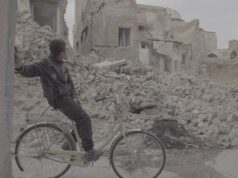
The juggling between archival and modern-day footage – often shot via smartphones – makes for jarring, uncomfortable and often violent viewing. The film is divided into four chapters – the remote past, the recent past, the present and the future –juxtaposing almost respectful archive material (which naturally has a historical importance) with the brutal immediacy of attacks that appear on social media, which are both challenging and harrowing to watch.
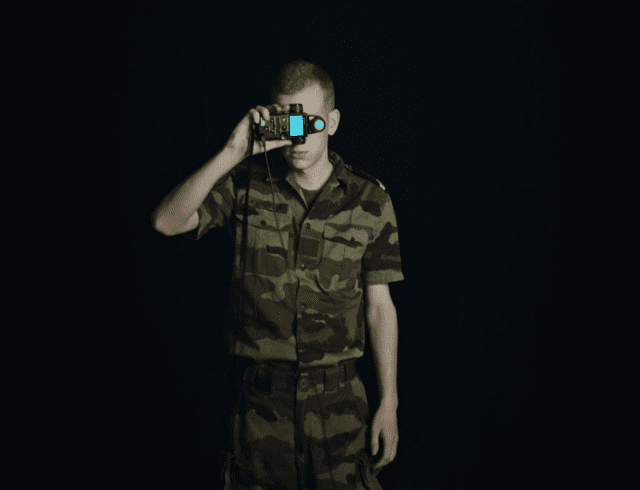
The ‘present’ section focusses on ECPAD, the French Ministry of Defence’s archive and images agency, where smartly dressed young soldiers learn to analyse wartime paintings and photographs (while at the same time outside their building Foreign Legionnaires train for combat, strip weapons, clad in fatigues or bright yellow t-shirts). The imagery that the soldiers study is inaccessible to the public, but respectfully and clinically presented, again offering up a contrast between the brutality of the image and the organised way it is made available to them.
The last chapter is set in the laboratory-like archives of the International Red Cross, located at Lausanne’s Swiss Film Library. Here, the value of storing imagery and memories takes on a non-military aspect, and stresses the importance of seeing images not in terms of how they can be exploited, but how they can reinforce the mantra that War is Hell.
That said, War and Peace is no simplistic reinforcement about the horrors of conflict, but rather an examination of how imagery of war can and perhaps should be used. It is grim and thought-provoking at times for sure, but there is also a sense of restraint and reflection as it dwells on how film and photographs of war can be utilised both as an instrument of war but also possibly as an instrument of peace.
Director: Massimo D’Anolfi, Martina Parenti
Countries: Italy-Switzerland, 2020, 128mins
Production: Montmorency Film, Lomotion AG
Sales: Taskovski Films
Producers: Massimo D’Anolfi, Martina Parenti
Cinematography: Massimo D’Anolfi
Editor: Massimo D’Anolfi, Martina Parenti
Music: Massimo D’Anolfi