A Vida em Comum (Life in Common) tells of the sustainable lifestyle within a poor community on the outskirts of Lisbon, where self-made houses and domiciles are now threatened with demolition. Director Diogo Filipe talked after the world-prem to Business Doc Europe.
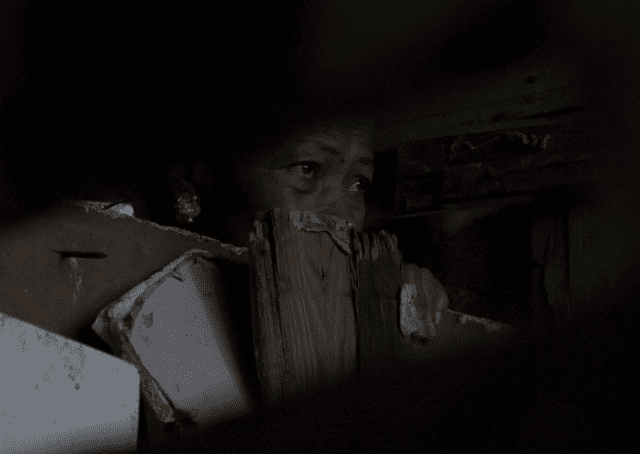
After 55 years of marriage Poeta and Belinha are like two peas on a pod, even though they don’t burden each other with an excess of conversation. They live in Portugal, close to Lisbon, in the very poor Barruncho neighbourhood where it seems to rain incessantly, or at least it did so during the five months that director Diogo Filipe spent filming the pair.
The aged couple own goats and chickens and grow their own vegetables in a garden whose fence is made of makeshift items, such as discarded bed frames.
But, like the protagonists of A Nossa Terra, a Nosso Altar, also screening in the Spaces of Intimacy ‘moment’ of Doclisboa 2020/21, Poeta and Belinha are facing eviction and the imminent dismantling of their house by the authorities.
“In the beginning I didn’t quite understand what the film was going to be the film about,” explains Filipe, who himself used to live no more than ten minutes’ drive from Barruncho before he left to attend film school in Sarajevo. “A friend of my brother took me there once, and this curiosity arose within me. I didn’t know why, but I had an interest in filming there.”
While researching the doc, he met his core characters Poeta and Belinha. “I was amazed by them. I connected a lot with them, and then I said, ok, this is going to be a film about their routines, their lives.”
“They built the houses, these people with their own hands, and a lot of effort was put into creating a nice community and environment,” he continues. Belinha also runs a bar-cum-shop where she sometimes gives change in sweets (candies) as opposed to money.
“For me it was really amazing, something you don’t see any more in more advance society – this sense of caring, this sense of sharing which there is very present. They help each other. They go to each other’s houses. They share food. They are very much connected with the land. They grow their vegetables. They have their animals. It is an almost self-sustainable way of life. If you go the centre of a place like Lisbon, people are dependent on the supermarket. The connection with the earth and the land is gone.”
The pace of the film is measured, and the onset of demolition is a constant threat. At the conclusion of one night-time sequence, the emerging light reveals the new space previously filled by a house, now demolished.
But for the most part, director Filipe is happier to linger on the vitality and resilience evident within the couple’s lives and as they prepare, dig and plant, and lead their goats on tethered ropes through the encampment.
“I was there every day from eight or nine in the morning and stayed until eight or nine in the evening,” comments the director. “I think it was important for me to put in this kind of discipline to go there every day, even if I didn’t necessarily have to shoot anything, but because I also liked to be there with them.”
“They were the first people to see the film after I had locked the picture,” Filipe stresses. “I really wanted them to see it and they really liked it. They thanked me a lot…It was for them like revisiting a memory from that period we worked together. It was like a document to preserve and to revisit a past time.”