

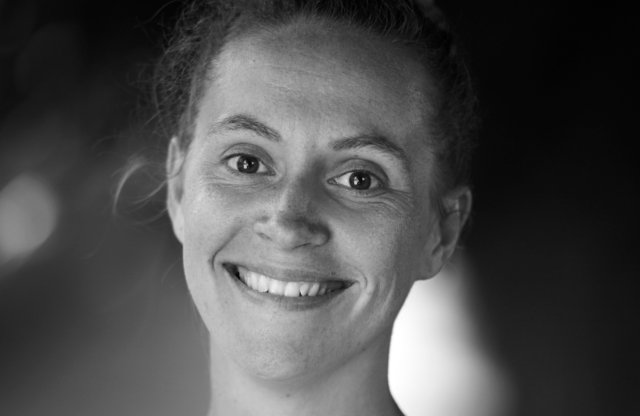
The industry programme of Nordisk Panorama kicks off in earnest this weekend, heralding 5 days of intense pitching, deal-making, networking and debate in the Swedish city of Malmö.
Head of Industry Lea Maria Strandbæk Sørensen points out that her event provides a perfect Nordic accompaniment to CPH:DOX, which is held six months earlier (or later, depending on one’s viewpoint). “We hear, again and again, how privileged people feel that they are to have two important events with half a year in between,” she says. “We work with CPH:DOX. We collaborate with them quite a bit on making this synergy happen so that it works the best way possible for the Nordic community, which is of course our core essence.”
While Sørensen further agrees that the Nordic countries comprise a powerful epicentre of doc activity, she argues that its practitioners must still seek to look beyond Nordic borders to practise their trade and extend their skills.
‘No-one is served by being self-sustained within the bubble, never looking out, and never collaborating with anyone else,” she says. “That benefits absolutely no-one. Yes, we have seen several examples of films that have been co-produced and funded just within the Nordics, that do immensely well on an international stage as well. So, of course, it is possible. As, I would venture, it’s also possible in other regions and in other areas. But I don’t think anyone is interested in, and I never think it is a good idea, to just close down upon yourself.”
“We have the great editors, we have the great cinematographers, we have the great sound. We have so many fantastic, wonderful people in the region,” she adds. “But you need input from somewhere else as well. There are other great people out there that might be better for your specific film or specific project. And you should never close your eyes to that.”
Core to the Nordic Panorama offer in 2026 is the presentation of no less than 52 projects (24 new pitches, 22 Observer+ projects and 6 works-in-progress) during Forum, and not just from the core Nordic countries. “The Faroe Islands have such a strong input this year, which is really nice to see, plus the regions of Greenland and Sápmi. We are, of course, extremely important for those regions, the smaller areas, to get access into the industry, and I think especially for newcomers,” says Sørensen.
The six works-in-progress projects are of particular interest, given they are very near to completion, and therefore ripe for selection at major docfests, or more general A-festivals, over the next 9-12 months.
“They’re very, very different, all six of them, and they reflect the broad scope of different stories being told in different ways, from different perspectives. They are so engaging, and each strikes such a beautiful note,” Sørensen tells BDE. “They go from established filmmakers to very new filmmakers. They go from very personal stories to very broad, bigger stories on the world stage.”
The projects range from Oscar-short-listed Ömer Sami’s True Scott (Denmark, produced by Monica Hellström), which attempts to unravel the myth of a legendary teacher, Scott Peake, known as ‘The Indiana Jones of Scotland,’ to the Swedish The Days I Will Forget by Morgane Dziurla-Petit, about a recovering alcoholic who finds himself reliving the same day over and over, trapped in a time loop orchestrated by his filmmaker daughter.
In Lars Henrik Ostenfeld’s An Unlikely Hero, sold by Rise and Shine, an engineer and inventor with autism, ADHD and OCD faces his worst nightmare when he must go to Greenland to help find out how quickly the sea level is rising. Meanwhile Sean Ricks, Jussi Sandhu & Ville Hakonen’s Myllylä (Finland), produced by Wacky Tie Films, tells of a national icon and Olympic hero whose fall from grace shook Finland.
In the Swedish Out of Place by Mohammed Fares Al Majdalawi, after years in exile, the director returns to Gaza in 2021 and finds something has shifted – in the city, in the people, in himself. Back in Europe, he embarks on a road of discovery, searching in scattered friends and half-forgotten memories for something he can’t articulate but can’t survive without. Tone Grøttjord-Glenne’s Holding On, produced by Anita Rehoff Larsen of Sant & Usant, paints a cinematic portrait of the Norwegian upper secondary school as a system, as an organism, and as an everyday drama.
“These six projects represent such a broad spectrum…and present the core of the Nordic [approach],” Sørensen tells BDE.
Another key element of Nordisk Panorama Industry is the annual ‘Town Hall’ summit (this year held on Sept 20), where players across all disciplines and sectors look to thrash out solutions to problems and issues arising within the local and regional doc scene. This year’s debate, moderated by Ove Rishøj Jensen, Documentary Advisor at Nordisk Film & TV Fond, asks “Where is the Nordic Documentary Market Heading?” and will scrutinise the current funding and distribution landscape and the state of financing from broadcasters, film institutes and film funds, currently undergoing substantial change.
“I think it’s safe to say that making documentaries has never been an easy feat and it still isn’t,” says Sørensen. “The Nordics have a long tradition, as I’ve been saying, of collaboration both across the borders but also between the sectors and the partners. The broadcasters, the film institutes and the creatives have had a very close collaboration. It’s referred to even as the Nordic model, and has been the envy of many people I talk to abroad… But I think it’s just very important that that is something that’s nourished and not taken for granted. We have to adapt to the realities…but be careful not to lose the core essentials in the process. And I think this requires that we have sort of a democratic conversation about the challenges that are facing the industry.”
“That is why we reinstated the Town Hall,” the Industry chief underlines of the event which was reintroduced to the programme some five years ago. “I think last year there were 250 people in the room engaging in that conversation, including all the broadcasters, all the institutes and the funding bodies.”
“We actually try to move that conversation further on to what are the actual [problems], instead of just sitting in each corner throwing stones and saying, ‘ah, it’s the broadcasters, they’re not willing to do anything…ah, it’s the film institutes, they never work with the broadcasters…ah, it’s the producers, they always complain.’ We actually listen to what they have to say, and try to find a way forward together. I think Nordisk Panorama is quite a unique place to have that conversation, because we’re all here.”
Sørensen highlights other aspects of the 2026 programme, such as the “extremely honest” September 21 seminar to be given by Joanna Solecka (Alphapanda) and Helle Faber (Made In Copenhagen) on their successful Oscar-winning campaign for Mr. Nobody Against Putin. The talk will examine what worked and what didn’t, which pitfalls should be avoided and which elements should be readily embraced. In essence, what can filmmakers and producers learn from a campaign that ultimately led to such success?
A day earlier, producer Siri Hjorton Wagner (who has, in the past, presented three films at Sundance), publicist Kathleen McInnis, and Anne Gaschütz, Festival Director at Filmfest Dresden and selection committee member at Locarno Film Festival, will be sharing insights, perspectives and strategies to give filmmakers, and their festival journey, the best possible start. “It’s focused on short films. But I think many of the things hold true for both [shorts and features], where especially the producer (Hjorton Wagner) has had big premieres at Sundance with films that then did extremely well, or ones that performed not quite so well afterwards.”
The Industry head also points to a new prize at Nordisk Panorama this year, offered by ARTE to one of the 24 new pitches, and which comprises a “no strings attached” €10,000 cash prize. “The alliance with ARTE reinforces Nordisk Panorama as a bridge between Nordic filmmakers and key international industry players, strengthening its role in giving documentary projects greater visibility, recognition and access to the support they need,” the festival wrote when the award was announced earlier this month.
Sørensen further recalls the thoroughly depressing group Zoom chats we all had during Covid when 200 professionals would meet for 30 minutes from their living rooms. “The most anticlimactic feeling I’ve ever had in my life was in 2020 when I said, ‘this is a wrap, thank you so much, this was a lovely forum,’ and you press a button, everyone disappears, and it’s all gone,” she laments.
Which is why her ideal take-aways from Nordisk Panorama 2026 are tangible, physical and relationship-oriented. “I think the most satisfying take-away is when people come up to me on the last day, or send me an email a couple of days later and say, ‘I met this interesting person and we really connected, and I think we might go into a co-production,’ or ‘I never thought I would, but now I think I’m actually going to co-produce with Iran.’ When we get those kind of things, that’s magic to me. It’s like, OK, this all makes sense. So when the doors close, if that is what I hear, I’m very, very happy,” she signs off.





