Speaking on the eve of IDFA, Cinephil boss Philippa Kowarsky has highlighted the challenges currently facing the documentary world during a period of “crazy transition” as slots for films on public TV, cable and satellite continue to disappear.
The reality now, Kowarsky suggested, is that a handful of blockbuster documentaries (films with the “wow” factor and that are “greater than life”) are selling to the streamers or securing big theatrical releases while the rest are being left behind. “There is scope for the very small and the very big – and the middle suffers,” is how the Cinephil managing director sums up the state of a now very polarised market.
Cinephil itself has enjoyed spectacular recent success with Romanian director Alexander Nanau’s HBO backed Collective. “When we took it to Venice and Toronto, we rocked,” Kowarsky noted of a film which sold to Participant and Magnolia for North America in a “fabulous” deal.
“The film is exceptional but every industry also needs the middle of the road. From the middle of the road, the exceptional will grow from there,” Kowarsky continued. The danger now is that the middle of the road is disappearing.
Docs with backing from major funders like National Geographic (The Cave, Free Solo) and HBO Europe have a visibility in the marketplace which smaller docs lack.
“If you’ve got a strong documentary on Netflix or on public television, more people will watch it on public television,” Kowarsky noted, but added that, in most cases, filmmakers will “get more money on Netflix, and filmmakers like being on Netflix.”
What may now be lost, the Cinephil boss suggested, is the high level curation that public television once provided.
Cinephil itself continues to thrive with a varied slate including titles licensed to the top platforms, docs which sell to public TV and plenty of films like Collective being sold on an all rights basis.
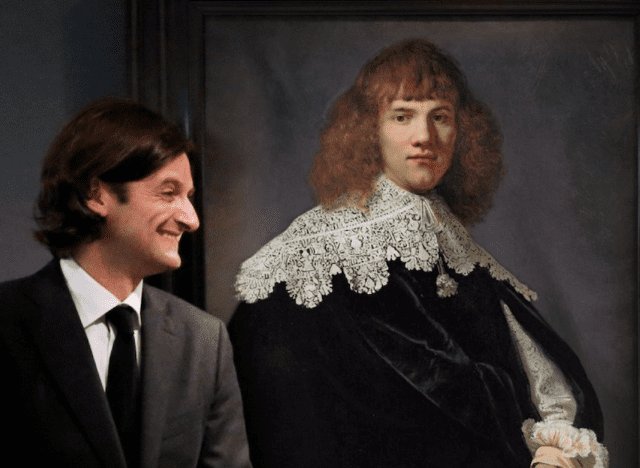
“We are fortunate. We have good projects,” Kowarsky said of the company’s eclectic line up. One high profile Dutch title receiving its world premiere in IDFA’s Masters this week is Oeke Hoogendijk’s My Rembrandt, which is both about the painter and about the most passionate of the contemporary owners of his work. The film was completed only days ago.
“No one in the world has seen it yet. It is stunningly shot and so beautiful that I couldn’t show anyone the film before it was ready,” Kowarsky said. “There is a tremendous amount of interest from distributors all over the world and also platforms.” All territories are available, other than Benelux where the film is being handled by Cineart.
Other new Cinephil titles include Rachel Leah Jones and Philippe Bellaiche’s Advocate, about inspirational human rights lawyer, Lea Tsemel. The film is already a hit in Israeli cinemas.
Kowarsky brands Gustav Hofer and Luca Ragazzi’s Dicktatorship – Macho Made in Italy (exploring machismo in Italian society) as “entertaining, funky and endearing.”
Also on the IDFA slate is Brazilian director Marcelo Gomes’ Waiting For The Carnival, about a self-owned family business, producing jeans.
Meanwhile, Cinephil is representing one of the highest profile documentaries in the festival, Tonje Hessen Schei’s iHuman, a provocative and wide ranging investigation into artificial intelligence and how it is affecting human behaviour, for better and for worse.
Another new title, Shay Fogelman’s Chasing Yehoshua, tells the extraordinary story of a journalist’s epic five year search for a settler who kills a Palestinian taxi driver.
One Cinephil Docs for Sale title which has already provoked fierce debate is Made in Auschwitz: The Untold Story of Block 10, directed by Sonya Winterbert and Sylvia Nagel, which tells the story of gynaecologist Carl Clauberg, a Mengele-like figure who conductect brutal experiments on women prisoners in Auschwitz. The moral complexity in his story comes from the fact that his experiments were successful. Some say that any woman who has ever taken the pill is enjoying the results of his experiments. The film features interviews with some of his subject.