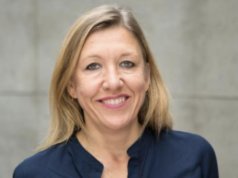
Business Doc Europe spoke to Madara Melberga of Latvian outfit FA Filma who is producing My Mother, the State, one of the documentary projects showcased in the Works-in-Progress section of this year’s AJB DOC Industry.
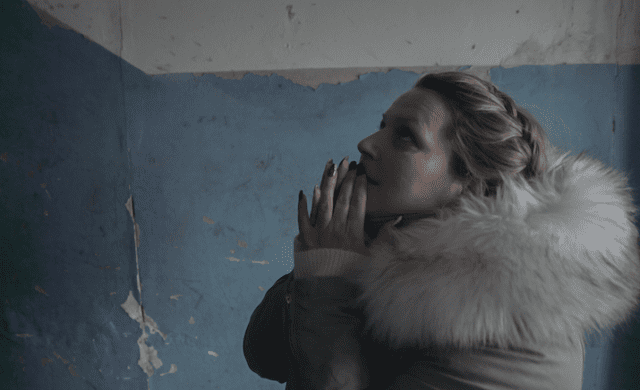
A co-production with Iceland helmed by Ieva Ozolina and budgeted €145,000, the picture zooms in on Una, who was the first person to use the change in Latvian Law to locate her sister, who had gone missing during an adoption process. The logline reads how, “after breaking through the bureaucratic jungle, she suddenly discovers that she has not one but four sisters, all adopted and scattered over the world. The search for the lost sisters becomes her mission, which brings her through Europe, Russia, and the United States. She posts her call in 32 different languages around the world. The media, friends, courage, and persistence all help with the nearly impossible endeavour.”
Speaking about the necessity of embarking on this project, both from an investment perspective and delivery to target audiences, Melberga comments: “We are deeply interested to deliver this film to as wide an audience as possible. From that point of view TV broadcasters are our priority. We are very close to finish gap financing for post and acquisitions are subjects in very right time.”
“The story is internationally ‘understandable’ and the fact we were shooting in five countries makes it even more friendly to a global audience. Our goal is to deliver to the audience a moving human story which turns into a personal investigative journey.”
When asked to elaborate on the hurdles she has been facing along the way, Melberga does not mince words. “Honestly, the project has always been on the border of red line. The law does not allow access to data of adopted siblings. We knew that from the beginning,” she insists. “Time to time, in documentaries we see this co-dependence between characters and us filmmakers. We needed the film but our character, Una, was dying to find her sisters. She knew that without us it would have been much more difficult.”
On the topic of running an associated impact campaign, Melberga says: “We are not planning impact campaigns like, let’s say, that of a well-known film such as The Oil Machine by Emma Davie. At the same time, we have to do something about this very sensitive adoption issue. For me the core question is: do we have the rights to know who we are?”
“Very often, these people who are adopted don’t even know that they are adopted. They can live all their life – or part of it – without knowing their roots, and in many countries there are no legal tools to gain access to this information. I think we have to address these impact activities to a precisely targeted audience who is dealing with adoption issues.”
Talking about the research process, Melberga reveals: “Before we started shooting we had realised how unjust it was for many kids to be taken away from their families. So we carried out a broad research on the topic of adoption. It turned out to be a very wide topic and, I have to say, in many cases a dirty or even evil matter.”
“In the Baltic countries, where we are based, we can adopt white children with blue eyes, which is still considered in some cases a ‘desirable’ thing to do. That was not Una’s case, but when we met her, we witnessed the tragedy of a grown-up woman. We saw how desperate she is and how important it is for her to find her lost sisters.”
Speaking about the visual look of the film, she discloses: “What we see on the screen is happening at that particular moment. In this film, our priority is the ‘first, real moment.’ If our character discovers she has four sisters, not only one, we see that actual moment.”
Ozolina was the best fit for directing this project, Melberga points out, owing to her very special skills at portraying characters at a close distance. “I think we share a common understanding of what we call filmmaking. Besides, we share similar sense of humour. I can say that we are black sheep interested in dilemmas and we like to go deeper than skin deep.”
“Documentary filmmaking is a priority in her [Ozolina’s] life, [as] she has never been much interested in what we call daily life. She is one of the best directors in the country and I, as a producer and person, can always trust her taste,” Melberga ends.