This week, Berlin-based Doxumentale will screen two documentaries curated by Another Story, the new pan-European initiative dedicated to “reclaiming and recontextualising women’s contributions to documentary cinema.” The stated aim of the organisation is to rediscover and share forgotten female-directed documentary films from the 20th century, “ensuring their legacy reaches new generations in Europe.”
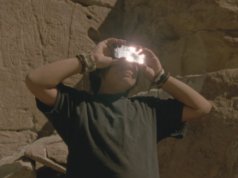
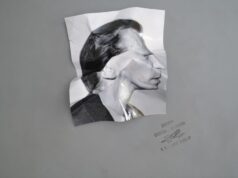
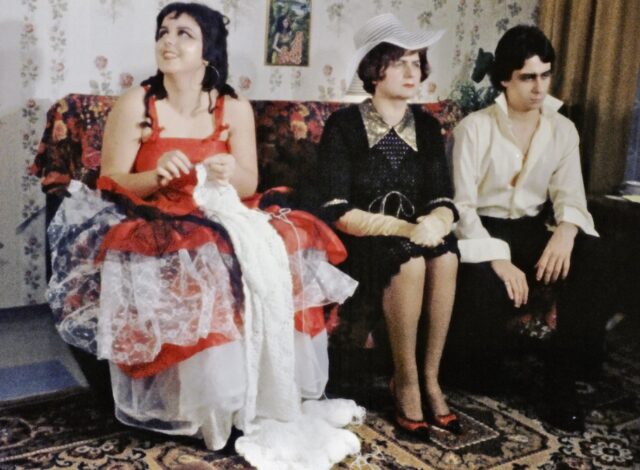
On June 3 and 6, Doxumentale will present Elfi Mikesch’s I Often Think of Hawaii (Germany, 1978). Gertrud Pinkus’s The Woman’s Greatest Value is Her Silence (Germany, Switzerland, 1980) will screen on June 4 and 6. Both directors will be present at the screenings in Berlin.
Another Story has curated at total of 11 non-fiction features* and 10 shorts* for presentation at doc events during 2026 and 2027. Right now, the organisation is partnered with the festivals of Doxumentale (Germany), Festival dei Popoli (Italy), HER Docs (Poland) and Sofia DocuMental (Bulgaria), as well as Cineuropa. More partner festivals and events will be added over the following months.
Supported by Creative Europe, other partners of the Another Story programme are The Eye Filmmuseum (The Netherlands), Loreley Films (Switzerland). Loreley Films is a guest curator on the project, with an upcoming screening of Nightshift by Robina Rose Geneva’s Cinémas du Grütli. Other Swiss screenings and activities are scheduled for later in the year, in Basel, Lugano and Bern.
“By connecting audiences with both rediscovered works and contemporary perspectives, the project aims to reshape the canon and foster a deeper understanding of women’s role in shaping cinematic language and storytelling,” the organisation stresses.
“Existence does not always mean visibility. Women’s film work often disappeared from history because it used to be valued less, while many great directors did tell their stories over the past decades,” the organisation continues. “Another Story joins the existing feminist movement to recover women’s documentary cinema for audiences around Europe and rewrite the history in a way it should be told: with multitude of voices and women’s perspective on reality.”
Other features of the initiative include hands-on, immersive Critics’ Labs, in which participants engage in film analysis, discussion and writing under expert mentorship. Right now, the labs are organized at 3 festivals: Doxumentale (2026 lab successfully completed), Festival dei Popoli in Florence, and HER Docs in Warsaw. Each festival will host two critics’ labs over 2026/27.
Another Story is also promoting Wikipedia workshops to contribute to the writing of articles on women filmmakers who are not currently on Wikipedia, and to raise public awareness of the fact that only around 20% of articles are devoted to women, and only 10% of the contributors are women.
The Another Story initiative will be launching its website in June 2026.
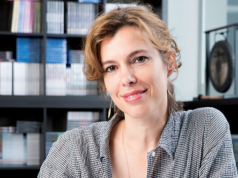
Kasia Swiatoniowska of HER Docs Foundation explains to Business Doc Europe that the idea for Another Story derived from the fact that “a lot of contributions in culture and film by women have been overlooked,” and that now “there are many organisations who are in the process of rediscovering or reclaiming and talking about it more and more, because they [women’s works] are just missing in the canon, in [film] programmes and in educational programmes.”
“We feel that [change] should go faster, and it should go more deeply into the history,” she adds. “So that’s the main idea of this programme, to be able to say, yes, there have been women directors, there have been women and feminist topics, or general topics taken up by film directors and filmmakers who are women. But sometimes we just don’t have access to it.”
Colleague Marta Golba-Naumann comments: “In Europe, no more than 30% of women are directors, in the documentary field. How is it that there are none in the past? There were, but, they’re simply not known. As you know, male directors’ heritage is discussed. We want to start or join this discussion as well [with women directors].”
“We have recently seen some interesting insights around this topic, such as when Mark Cousins reflected on the Polish film 24 Hours of Jadwiga L. (1967) by Krystyna Gryczelowska as a precursor to Chantal Akerman’s Jeanne Dielman, 23, quai du Commerce, 1080 Bruxelles (1975),” Golba-Naumann adds. “This helps a lot to raise awareness around the contribution of women’s directors.”
Another Story wants to highlight the “intrinsic abilities” of the directors, Swiatoniowska continues. “Spreading the information about their achievements, discussing how their films are relevant today. And what did it mean to work as a woman director, as an author back then…and today? So it’s about the visibility, it’s about the outreach, it’s about bringing these pieces and directors to younger audiences to understand that they also had a place in film history.”
“We are inspired by what we know, but how can we be inspired by these directors if we don’t know them? We want people to just get to know them and to have as many screenings as possible, not only at the four festivals that are partners, but at many, many other institutions and events.”
* Feature films:
- Marisa della Magliana dir. Maricla Boggio, Italy 1976
- Essere donne dir. Cecilia Mangini, Italy 1965
- The Woman’s Greatest Value Is Her Silence dir. Gertrud Pinkus, Switzerland, Germany 1980
- Donna: Women in Revolt dir. Yvonne Scholten, Netherlands 1980
- I Often Think of Hawaii dir. Elfi Mikesch, Germany, Austria 1978
- Face and Back dir. Binka Zhelyazkova, Bulgaria 1981
- Lullaby dir. Binka Zhelyazkova, Bulgaria 1981
- The Ceiling dir. Vera Chytilova, Czech Rep. 1961
- Nightshift dir. Robina Rose, UK 1981
- Together dir. Lorenza Mazzetti, Italy, UK 1956
- SCUM Manifesto dir. Les insoumuses: Carole Roussopoulos, Delphine Seyrig, France 1976
* Short Films Program:
- Mine dir. Natalia Brzozowska, Poland 1947
- Everyone Knows Who Is Behind Whom dir. Maria Zmarz-Koczanowicz, Poland 1983
- Beginning dir. Dorota Kędzierzawska, Poland 1983
- Day By Day dir. Irena Kamieńska, Poland 1988
- 24 Hours of Jadwiga L. dir. Krystyna Gryczełowska, Poland 1967
- Forced Response dir. Jolanta Marcolla, Poland 1976
- Drawing TV dir. Ewa Partum, Poland 1976
- Relative Similarities III dir. Izabella Gustowska, Poland 1980-81
- Grain dir. Teresa Tyszkiewicz, Poland 1980
- Symptoms, dir. Ewa Zarzycka, Poland, 1980